Showing posts with label shirley jackson. Show all posts

10/10/2016

Recommendation: You'll Know When You Get There

I've been a fan of Lynda E. Rucker's fiction since reading her debut The Moon Will Look Strange, a fantastic collection of strange and haunting fiction. Her second collection, You'll Know When You Get There, is if anything even better.

The first story, The Receiver Of Tales, is the perfect opener, introducing the reader to many reoccurring themes in the collection as a whole. Rucker's central character is isolated, both physically and emotionally, leaving her vulnerable to the events that follow. The Receiver Of Tales is a story about stories and how they might shape us: a idea represented here by the fact the titular tales are physically scrawled into the protagonist's body. Stories might be things we literally can't escape from.

Many of the finest tales in this book are about the intersection between fiction and reality and the darkness to be found there. Rucker's knowledge of the writers who have come before her is clear, but never deployed in an obvious, derivative or cheap way. There are nods to M.R. James, Charlotte Perkins Gillman, Robert W. Chambers and Shirley Jackson, but Rucker's work stands proudly apart from any of her influences. Indeed, a story like Who Is This Who Is Coming?, a narrative set firmly in M.R. James country, might be considered a warning about the dangers of identifying too closely with such past masters of horror, lest what we see in their works turns out to be all too true. It's quite simply a masterpiece.

What also comes across is how damn good Rucker is at evoking a sense of place, both the physical character of a landscape and how it might affect the people within it. The stories take us from the Irish countryside of Widdershins (one of the scariest stories here), via the American lakes in This Time of Day, This Time Of Year, to a strange and decaying forest which doesn't appear on any map in The Wife's Lament. Into these places stumble Rucker's characters, unsure of the rules that govern these landscapes until it might be too late.

One of the finest pieces here, quietly devastating, is Where The Summer Dwells. A nostalgic, elegaic piece about the American South and the way we might be haunted by our memories, it's a horror story which aspires to more than mere scares. It is, in the most heartbreaking sense of the word, beautiful.

And then, there's not one but two stunningly original takes on the haunted house story. The House on Cobb Street is a twisted masterpiece: the titular house may or may not be real, and its unclear if those haunted were real either. Also in doubt is the reality of the abode in The Haunting House; does it exist outside the confused narrator's dreams of it? Regardless, she leaves her life behind to try and find it (and maybe find the mysterious being she has dreamt might be inside it) as if it were calling to her. "Journeys end in lovers meeting", indeed.

It's a brilliant end to what is, quite simply, one of the short story collections of the year. You'll Know When You'll Get There is available in a beautiful hardback edition from Swan River Press. You can order it here.

5/25/2016

A-Z Of Books

I saw this blog challenge thingy on the site of the excellent horror author Thana Niveau who picked some great books. So I thought sod it, I'll give it a go too. Because it's basically just another excuse to talk about books... not that I really need excuses.

AUTHOR YOU’VE READ THE MOST BOOKS BY: A score-draw threeway between Ramsey Campbell, Stephen King and Terry Pratchett.

BEST SEQUEL EVER: The Restaurant At The End Of The Universe by Douglas Adams.

CURRENTLY READING: A Cold Season by Alison Littlewood - as you might expect, so far this is bloody brilliant. Oh and I'm also rereading The King In Yellow.

DRINK OF CHOICE WHILE READING: Currently a glass of Marston's Pedigree. 

E-READER OR PHYSICAL BOOK: I read both; in fact I'm normally reading a book on each at any given time.

FICTIONAL CHARACTER YOU WOULD HAVE DATED IN HIGH SCHOOL: Knowing my luck, Carrie White.

GLAD YOU GAVE THIS BOOK A CHANCE: Emma by Jane Austin. I guess my view of what Austin was like was coloured by half-watched TV adaptations. But she's so much more cynical and astute than her reputation for period romance might suggest.

HIDDEN GEM BOOK: Ice Age by Iain Rowan. A stunning collection of weird-creepy-shit stories.

IMPORTANT MOMENT IN YOUR READING LIFE: I've mentioned this before on here, but when my Dad handed me a copy of Salem's Lot from his bookshelves.
JUST FINISHED: The Wanderer by Timothy J. Jarvis, which was fantastic, and the The Best Horror Of The Year 6 edited by Ellen Datlow.

KIND OF BOOKS YOU WON’T READ: Anything where it's so obviously been written aiming for a film adaptation. Plus anything where the blurb is some kind of mashup such as "Like Harry Potter in Space!" or something equally repellent & cynical.

LONGEST BOOK YOU’VE READ: Not sure really. Vanity Fair? Anna Karenina? Crime & Punishment? Spot Bakes A Cake? 

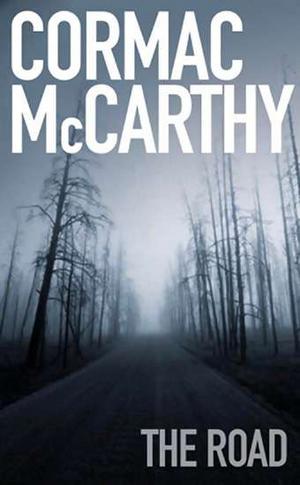
MAJOR BOOK HANGOVER: The Road by Cormac McCarthy. An absolutely stunning achievement. But Christ, it makes most end of the world novels seem like Enid Blyton.

NUMBER OF BOOKCASES YOU OWN: Eight.

ONE BOOK YOU’VE READ MULTIPLE TIMES: The Waste-Land & Other Poems by T.S. Eliot. The language is so breathtakingly poweful and precise, sometimes I just reread the same lines.

PREFERRED PLACE TO READ: Somewhere with a view of the sea.

QUOTE THAT INSPIRES YOU FROM A BOOK YOU’VE READ: I'm not going to pick anything trite and inspirational, I'm just going to pick what I consider to be one of the most perfect openings to a novel ever written. It's inspirational because it's what I'm aiming for, and constantly falling short of:

“My name is Mary Katherine Blackwood. I am eighteen years old, and I live with my sister Constance. I have often thought that with any luck at all, I could have been born a werewolf, because the two middle fingers on both my hands are the same length, but I have had to be content with what I had. I dislike washing myself, and dogs, and noise. I like my sister Constance, and Richard Plantagenet, and Amanita phalloides, the death-cup mushroom. Everyone else in our family is dead.”
We Have Always Lived In The Castle, Shirley Jackson

READING REGRET: That I'll die before I read everything I want to, even if people stopped writing now. And yet, non-reading people get to live on average the same length of time. There's no justice; their years should be mine.

SERIES YOU STARTED AND NEED TO FINISH: The Culture novels by Iain M. Banks.

THREE OF YOUR ALL-TIME FAVOURITE BOOKS: Three? Three? Jesus, it was bad enough picking five for a recent interview. So here's three that I didn't include there:

  1. The Robber Bride by Margaret Atwood
  2. House Of Leaves by Mark Z. Danielewski
  3. The Secret Agent by Joseph Conrad

UNAPOLOGETIC FANGIRL/BOY FOR: Ramsey Campbell. He's the guvnor.

VERY EXCITED ABOUT THIS RELEASE: Too many to mention, obviously, but I'm very much looking forward to The Grieving Stones by Gary McMahon.

WORST BOOKISH HABIT: When I'm reading and someone comes to talk to me and I look like I'm listening to what they're saying, but really I'm still thinking about the book...

X MARKS THE SPOT: START ON THE TOP LEFT OF YOUR SHELF AND PICK THE 27TH BOOK: The Woman In The Dunes by Kōbō Abe.

YOUR LATEST PURCHASE: Bodies Of Water by V.H. Leslie and Oh! The Places You'll Go by Dr. Seuss, for my daughter because it was one of the readings at her Naming Day.

ZZZZ-SNATCHER BOOK (LAST BOOK THAT KEPT YOU UP WAY TOO LATE): Phonogram 3: The Immaterial Girl. I love these graphic novels, in which music really is magic. There's some fantastic use of pop-cultutral imagery and references in this third volume, especially when the protagonist becomes trapped in a murderous version of the video for Take On Me. And the Appendix, explaining all of the musical references is a delight, so I stayed up late reading it and looking up various music videos on the internet.

2/20/2015

Recommendation: Hangsaman by Shirley Jackson

Last year Penguin republished Shirley Jackson’s first four novels; I blogged about The Road Through The Wall last year and now I’ve just read her second book, Hangsaman.

Hangsaman is a strange novel by any standards; as if trying to remember a dream I feel the urge to write this blog quickly as I can, before it’s unique internal logic fades from my mind. Its central character is Natalie Whaite, a seventeen-year old American girl on the verge of going to college. The surface level events of the story are mundane, trite even: Natalie has bourgeois parents, and goes to a respectable girls-only college. But what happens externally is not really the point; this is a story about Natalie’s inner life, and how she reacts to and absorbs the world around her: parties thrown by her parents; the machinations of cliquey and spiteful college girls; the strangeness of returning to her family abode after months away. Transformed by Jackson’s inimitable prose, these mundane events seem vividly odd; sinister even. How much of this sense of threat is real and how much projected onto the world by Natalie’s precocious yet vulnerable psyche is one of the central ambiguities of the book.

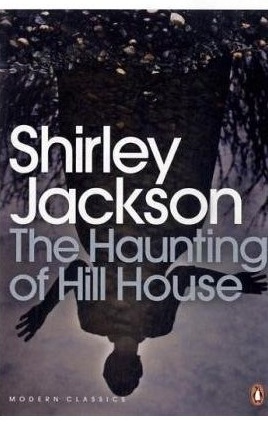
Right from the start it is clear Natalie has a vivid imagination; much like Eleanor from The Haunting Of Hill House, Natalie is someone whose propensity for daydreaming and fantasy seems alarmingly strong. If her urge for escapism is so dominant, what is she escaping from? Early on in the story a potentially traumatic event is hinted at, and it is clear that Natalie is repressing something – but exactly what occurred is opaque, repressed by Jackson’s narrative as much as by Natalie’s mind. Exactly what Natalie is thinking and feeling is often obscure – it certainly isn’t revealed directly in her chirpy interactions with a college professor and his young wife, or in her playful letters home to her father. But what the reader becomes alert to is the brief glimpses that Natalie might actually feel unbearably lonely and distanced from the world. And it’s easy to understand why Natalie might be so alienated, when it and the characters it is peopled with are presented with satirical humour by Jackson. In part this works so well because isn’t this how we see the world as a teenager, as something faintly unrealistic, as a joke being played on us? Because everything is focused through the character of Natalie, the differences in tone (the novel can be cruelly humorous one minute, and disturbingly sinister the next) don’t seem to jar. It shouldn’t work, but it does.

As the book reaches its final third, it darkens considerably, and the exact extent of what is real and what Natalie imagines is unclear, with double and triple bluffs confounding the reader. It’s a compelling read, and despite similarities to The Bell Jar and The Catcher In The Rye, a unique experience. There’s no one quite like Shirley Jackson andHangsaman seems to me to be her first queer, twisted masterpiece.

6/29/2014

Recommendation: The Unquiet House by Alison Littlewood

The Unquiet House
I love haunted houses, me. I love Hill House, I love Hell House, I love The House Next Door and the House Of Leaves.

And now I think I love Mire House, too.

For Alison Littlewood's new(ish) novel is a haunted house novel to rank with all the above; where the house is not just a home for spooky beings, but a corruption of all a house should actually be; an archetypal 'bad place'; a mirror of its inhabitant's hopes and fears; a trap.

The Unquiet House is told in four interlocking sections, starting in the present day and then working back to the 1973, then to 1939, before finally coming back to 2013 - it almost reads like three self-contained novellas about a different generation's experiences at Mire House. But the historical parts of the novel provide a rich and plausible justification for the terrors in the present, and at the end Mire House is left still standing, still unquiet (still "not sane" as Shirley Jackson would no doubt have it) and still occupied by... something. And there's a strong suggestion that all is not over, and that another generation is about to be trapped and consumed by the horrors of the past.

I love haunted houses, me.

4/09/2014

Recommendation: The Road Through The Wall by Shirley Jackson

I doubt I'm winning any awards for originality when I say that Shirley Jackson is one of my favourite authors. The Haunting Of Hill House, The Beautiful Stranger, We Have Always Lived In The Castle, The Lottery, A Visit… classics one and all: original, chilling, and written with a distinctive Jackson intelligence and flair.
So it’s always been a particular annoyance that her earlier work has not been easily available in the UK. Fortunately that’s an omission that Penguin are now putting right, starting with Jackson’s first novel The Road Through The Wall.
First impressions: The Road Through The Wall begins with a paragraph which is, in its own way, equal to the celebrated openings to Hill House and We Have Always Lived In The Castle:
"The weather falls more gently on some places than on others, the world looks down more paternally on some people. Some spots are proverbially warm, and keep, through falling snow, their untarnished reputation as summer resorts; some people are automatically above suspicion..."
It's probably not giving away too much to reveal that the characters in this book who are viewed by the world as being "above suspicion" don't deserve such a thing. Unlike much of Jackson’s more well-known work The Road Through The Wall is a realistic story, about a number of families in ‘respectable’ Pepper Street in suburban America. It has an episodic structure, with scenes of everyday life for both the adults and children on the street revealing the snobbery, egotism, bigotry, and petty envy behind the respectable façade. Then the wall that separates Pepper Street from its less bourgeois neighbours is breached by a new road,  things comes to a head, and the community experiences a dreadful double tragedy.
Fortunately or unfortunately, depending on your point of view, I didn't buy a copy with this hilariously inappropriate cover design from the 1950s. "A married woman prowls the back streets"....!
There’s a lot of characters for such a small book, and sometimes they are hard to keep track of, but that seems almost the point – nearly everyone on the street ascribes to a kind of middle-class Groupthink, a suburban hive-mind that sometimes seems to stifle and paralyse them – they read each other’s diaries, they constantly reaffirm each other’s attitudes, they cannot make a decision about the pettiest of things , such as which local shop to direct a newcomer to, without worrying if it's the correct thing. And during key scenes towards the end, Jackson ceases to describe them as individuals, but as a crowd on the hunt for someone to blame for what has happened:
 "The people in the street [...] had gathered so close together than it was impossible to single out any of them [...] they were so close together that there were no names for any of the faces, and the hands might be clasped together tight in the hands of strangers. " 
Readers of The Lottery will already know how well Jackson understands mob-think and the punishment of scapegoats.
It’s a slighter book than some of her later work, but A Road Through The Walls is a splendid book in its own way, and shows how damn good a writer Jackson was right from the start.

4/05/2014

Fictional Emotions; Emotional Fictions

'I Hated This Book!' - it was one of those arguments on Goodreads where both sides had become entrenched before I even saw the thread. Arguing about whether a book was any good or if it "sucked". The whole thing was completely impenetrable unless you'd read the YA book in question, but the arguments seemed the same as a thousand other similar threads and reviews: "I didn't like the main character one bit!"; "I finished this book and I felt nothing..."

I felt nothing - that was said as if it should end all discussion (although no arguments are ever won or lost on Goodreads) which seems reasonable enough. Isn't that why we read - to feel? But it got me thinking - what exactly do we mean when we say this? It seems to me there are a whole range of ways books can create an emotional response, and many of the endless and tedious arguments about reading are caused by a failure to acknowledge one or more of them.

I've put some very loose and blurry definitions of different types of emotion response to fiction below; no doubt these are biased towards my own reading and writing preferences. Comments, criticism and additions very much welcomed below the line.


1. Experiencing the emotions the main character(s) are experiencing

This is probably what most people think of when they think of an emotional response to a story: the main character is excited and so you feel a vicarious excitement, the main character is conflicted and hence so are you. Much commercial and YA fiction is written to create just this kind of response, and it seems to me to be the driving force behind the idea that a story should have a POV character that is sympathetic; that there shouldn't be too much of an emotional leap required from the reader.

Much so-called literary fiction claims to be more 'sophisticated' than commercial fiction merely because the character you are invited to emotionally identify with for the duration of the story is unattractive or abnormal in some way: a murderer (The Outsider), a child murderer (Beloved), a child lover (Lolita). And this seems a good thing to me; one of the reasons reading is a valuable activity is precisely because it allows you to emotionally experience the world from someone else's perspective, which may be radically different to your own. And it's the reason I find the commercial insistence that the central character of a story should be someone the reader can easily identify with so dispiriting. 


2. Experiencing different or conflicting emotions to what the main character(s) are experiencing


Sometimes the emotional response the reader feels to what a character is going through is conflicting or at odds with what the character themselves would be feeling. Put simplistically, if a chapter about a villain's downfall is told from the villain's point of view, the reader will be experiencing some kind of positive reaction to the villain's own frustration and woe. More interestingly, someone like Jane Austin is great at writing scenes where the characters appear, even to themselves, to be acting civilly and rationally but the reader can perceive the more human and subjective reasons, such as pride (and, um, prejudice) for their behaviour underneath. In Austin's case this doesn't necessarily stop us from also empathising with the characters, but in a book like Carrie it might, at least to an extent. Carrie's actions are in one sense perfectly understandable, and in another monstrous; and the different points of view in the story dramatise this paradox.


3. Atmosphere 


Of course, emotions don't have to have anything to do with characters at all; it's an odd fact about writing that almost anything, no matter how inanimate, can be be described emotionally. This is especially important in horror writing, where a sense of dread is frequently achieved by describing everyday locations in such de-familiarising ways that they seem full of portent and threat. Think of the brilliant opening to The Haunting Of Hill House - the sense that something is very wrong about the house is palpable but there is no viewpoint character to be experiencing this; it's all in our heads. And of course this kind of effect is not just limited to fear or tension; a good writer is selecting every detail to evoke whatever mood is desired.


4. The thrill of well-written sentence

Being able to actual write well is of course key to evoking any emotional responses in the reader. But separate and beyond that, I think, is the way a well crafted sentence can evoke an emotional response like a piece of music can - by the way it sounds:
"And I said I do, I do.So daddy, I'm finally through [...]If I've killed one man, I've killed two—The vampire who said he was you."

Or if poetry's too much for you on a blurry Saturday morning, how about this from Douglas Adams:
“He turned slowly like a fridge door opening.”
I'm not sure there's much point in trying to explain that - you either get it or you don't. Either feel the rightness of those words in that order, or you don't. Subjective, sure. But as much a part of the reading experience as anything else.


5. Game-playing, Plotting, and Climaxes

The plot of a book drives much of the character's emotional responses, but we as reader's can respond to it on an entirely different level as well - because we know it is a plot. This is best described as that feeling we get at a 'twist' ending to a story, or when the murderer is revealed at the end of a whodunit. In a sense, the author and the reader have been playing a game, the reader trying to guess the ending, the writer trying to stop them (whilst still playing fair and leaving enough clues). There's something pleasurable about being tricked by something like The Murder Of Roger Ackroyd and then having that trick explained to us at the end. And that 'Aha!' moment of realisation is an emotional response that came only come from a story, not from life, which doesn't play games.

More broadly, just knowing a story is nearing its end shapes our emotional responses to what occurs. We don't have to think, for example, about what the events of Romeo &Juliet mean to the poor sods who are left to pick up the pieces in the months and years afterwards because we're already back outside of the theatre, blinking in the light.


6. Intellectual Emotions


I read somewhere that we all belong to one of two camps with regard to facts: those people who think it's only worth knowing something if it's of use, and those who value knowledge for its own sake regardless of its usefulness. The fact that I've remembered this, when it's never been of the slightest use in my life, probably shows what type of person I am.

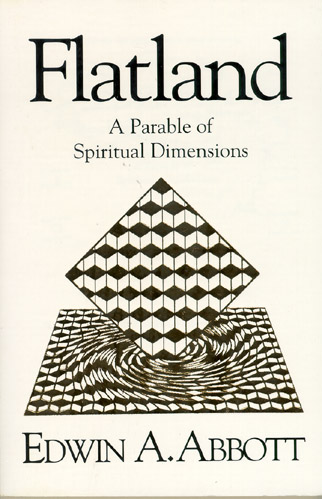
I think for at least some people the use of intellectual ideas in a piece of fiction triggers a peculiar kind of emotional response, one which is hard to describe (we really should have a specific word for it). Novels like Flatland by Edwin A. Abbot work almost entirely because of this play of intellectual ideas - and that's the best way I can describe it, as "play". Like the music of a piece of poetry, this is one you either get or you don't, I think. 


7. Fill In The Blanks

I'm pretty sure we all know that as readers we bring our own emotional baggage and experiences to a piece of fiction. And some books play on this by presenting events in such a flat, blank canvas way that we are tempted to fill in the void. We ascribe motivation, beliefs and emotions to characters based on their actions without any textual justification for doing so. Less Than Zero by Brett Easton Ellis (indeed, nearly all of Easton Ellis's books) seems to me to work at least in part because of this - it presents to us scenes so flat it's like an itch we can't quite scratch. 

And of course, if what you're after from a book is a likeable hero or heroine with whom you can share their ups and downs, this itch might drive you to close the covers before you finish it. Which is fine; it would be a boring world if we were all the same. But on that principle maybe avoid ranting about how you couldn't relate to the characters at all! on Goodreads. If only because, no arguments are ever won or lost on Goodreads.


8. And Finally, One For The Authors:

That crippling sense of bitter envy and self-doubt when you read something so bloody good it makes any talent of your own seem insignificant and counterfeit in comparison. That.

2/04/2013

Scary Women Mixtape

Apparently, it's Women In Horror Month. As part of this you'll find many great female horror writers talking about their work, which can only be a good thing - I don't know if there's any residual sexism meaning woman have a harder time getting accepted as a horror author than their male counterparts, but given that dickheads like Vox Day exist, the answer is probably yes.

(Don't google "Vox Day" if you are unaware of the man or his views. Seriously, don't. You'll end up feeling worse about people in general, which is never good.)

Anyway, for Women In Horror Month I thought I'd post 20 of my favourite horror short stories by female authors. For no other reason than I like compiling imaginary anthologies; it's like making mix-tapes all over again...

This list is off the top of my head, so it's pretty biased towards stories I've read recently, but I've tried to include both classic and contemporary stories. I've only picked one story per author and as ever my definition of what makes a story 'horror' is pretty loose.

Further suggestions very much welcome in the comments...

In The Waterworks (Birmingham, Alabama, 1883) - Caitlin R Kiernan
The Yellow Wallpaper - Charlotte Perkins Gilman
Idolised - Emma Newman
The Screwfly Solution - James Tiptree Jr.
The Little Dirty Girl - Joanna Russ
Don't Look Now - Daphne du Maurier
Cold Coffee Cups & Curious Things - Cate Gardner
A.G.A. - S.P. Miskowski
The Summer People - Shirley Jackson
The Dark - Karen Joy Fowler
Replacement - Lisa Tuttle
Under Fog - Tanith Lee
The Dog That Bit Her - Autumn Christian
The Ones Who Walk Away from Omelas - Ursula K. Le Guin
The Room Upstairs - Sarah Pinborough
The Devil of Delery Street - Poppy Z Brite
Where Are You Going, Where Have You Been? - Joyce Carol Oates
The Hortlak - Kelly Link
Afterward - Edith Wharton
White Roses, Bloody Silk - Thana Niveau

12/03/2012

Strange Story #19: The Beautiful Stranger


Strange Story #19: The Beautiful Stranger
Author: Shirley Jackson
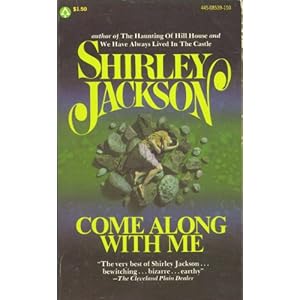
Collected In: Come Along With Me
Anthologised In: The Dark Descent

What might be called the first intimation of strangeness occurred at the railway station...

For me, the best of Shirley Jackson's novels and short stories are among the very best the genre has to offer. (Frustratingly, not all her books are easily available in the UK, although I believe Penguin is rectifying that in 2013.) The Lottery is by far her most famous story but she wrote many others equally as good if not better. The Beautiful Stranger is one such tale, a mini-masterpiece in a few thousand words. Warning: it's hard to describe without spoilers.

It begins with the words I quoted above, but then proceeds to describe a rather mundane, humdrum situation: a wife waiting at a train station for her husband, who is returning from a work trip to Boston. Margaret is slightly worried because she argued with John before they parted, but other than that everything seems normal. (Jackson is always spot on when writing about families and their interactions.)

But back at home, Margaret looks at John and thinks:

Who? .... Is he taller? That is not my husband.

The story describes Margaret's conviction that the man who has returned from Boston is not her husband, (despite his acting the same, speaking the same, dressing the same) but the beautiful stranger of the title. Beautiful - for this isn't a body-snatcher tale of paranoia and fear; Margaret doesn't want the man to be her husband. And whether he is or not (somehow it almost seems a moot point to the story itself) there does seem to be a genuine relief and happiness felt by Margaret; a genuine, albeit small, realignment of their marriage that was perhaps troubled. How could that be, if 'John' wasn't actually the same person? But then, how could it be if he was? 

It is he reader, not Margaret, who is unnerved - how much of what is happening is in Margaret's head? Her own behaviour to 'John' changes when she thinks he is someone else; is that the cause of his supposed differences? Who changed first?

The ending of the story is troubling and ambiguous - it's probably no surprise that Margaret's new happiness was more fragile than she might have supposed. The last few sentences seem to hint at a whole different explanation for the proceeding events, without being quite clear what that explanation is. Certainly the tale as a whole seems to be a (feminist) warning about the dangers of living your life through and for other people and of the seductive danger of fantasy (many of Jackson's heroines are dreamers). But there's room for endless interpretations here, and endless rereading. It truly is one of those tales that can be read again and again; one that despite its short length is bottomless.

11/11/2012

Review: The Little Stranger

A quick review of The Little Stranger by Sarah Waters. I thought this was a stunning achievement in terms of character voice and point of view; in terms of period detail and depiction of a changing society; and in terms of its use of an unreliable narrator.

The book is set in post WW2 England, and the narrator is a local Doctor with self-confessed humble beginnings, who gradually becomes involved with the old-money family who live in Hundreds Hall. As in all classic ghost stories, the house is central to the tale, and Hundreds, with its boarded up wings and echoes of former glory, is a great haunted house.

The supernatural element is disturbing and creepy, and it only gradually dawns on the reader that there might be another explanation other than the rather obvious haunting initially suggested. From the reviews, some people seem to think the twists and ambiguities in the novel end here, but I disagree. There's ample evidence of multiple theories - that there is a specific spirit haunting the house; that someone living is psychically responsible; that someone living is responsible in a rather more mundane way; or that the house itself, like Hill House before it, is preying on each victim's weaknesses. There doesn't appear to me to be any definitive explanation (indeed several of the above could overlap) and foe me the book displays the same kind of eerie ambiguity as The Turn Of The Screw.

What frightens us most is what we don't know.

10/30/2012

Big Bulky Horror Novels for Halloween


Halloween is an odd time of year, when people who never normally watch horror movies or read ghost stories seem to find an excuse to do so. The webpage of a national newspaper might discuss a short story by Robert Aickman, and a respectable broadcaster might devote an hour to an informed discussion of European horror films.
 
I'm probably guilty on this blog of discussing the more obscure aspects of horror fiction, at the expense of commercial books that a wider audience will have heard of. So in tribute to Halloween and the temporary mass celebration of all things scary, I've decided to do a post on my favourite BIG horror best-sellers. These were the kind of books that introduced me to the genre when I was a teenager and it’s unlikely I’d be reading Aickman & Co. if I’d not read the likes of King and Simmons first.
 
I've imposed some strict rules on my selections here: no tricksy post-modernism (sorry, House Of Leaves); no psychological ambiguity (bye bye Turn of The Screw and Hill House); nothing old (stop moaning,  Doctor Jekyll And Mister Hyde) and no short stories or novellas (adiós just about every weird, under-appreciated book I've ever featured here). Instead, these are the block-busters. The writers of cracking action scenes with unambiguously evil villains. At least three have been made into movies, and the other two should be.
 

I guess it’s obvious from the above that this list would include King, so I thought I might as well start with him. IT is probably my favourites of his horror novels, and it exemplifies the kind of book I'm talking about here: vast, with a sprawling cast of characters, and a ‘big bad’ who has been responsible for decades of fear in the Maine town (of course) of Derry. The story takes place across two timelines – the characters repeat scenes from their childhood as flawed and weaker adults… King’s handling of this, and the creepy effects associated with time repeating itself, are a highlight of the novel and really call into question those people who think he can’t write with any subtlety. (Just because the books I'm talking about here are big bulky blockbusters doesn't mean they’re big bulky dumb blockbusters.)


For me, Ghost Story is Straub’s best book by a country mile – forget the singular title, this book should really be called Ghost Stories, containing as it does multiple stories told by a group of old men know as the ‘Chowder Society’. Straub takes the Stephen King approach of using an American small town as a setting for his horrors, and as a microcosm of society as a whole, but this is distinctly his own style. As the story progresses it becomes clear that each of the individual ghosts and monsters are just facets of the real evil; that each of the separate stories being told, are in fact just elements of one story after all.


Probably the most ‘arty’ book in this list, and arguably not horror, being told as it is from the point of view of a monster. But there are bigger monsters in this tale than the vampire doing the talking, and the real horror may be the slow falling away of his humanity… I like this book for it’s lavish set pieces (the whole book is nothing more than a series of set pieces, really) and the darkly luxurious feel of the prose, particularly in its descriptions of night-time New Orleans and Paris. Maybe this was the start of the trend towards Twilight and everything bad associated with that, but here the vampires still have a decadent, almost nihilistic  edge. (Everything else I've read by Rice, including the sequels to this, I've not liked at all.)


An absolute whopper of a book, which has a premise that makes it sound like the worst tripe imaginable: ‘mind vampires’ have been controlling human affairs for decades. But this was back when Simmons was at the top of his game (by contrast his last book was one part plot to nine parts Tea Party ranting) and he plays the idea of mind vampires with a completely straight bat. They become almost the ultimate villain, responsible for humanity’s evils both big and small. And like all the best villains they are completely compelling. The odds seem ridiculously stacked against the human heroes and despite the simple good versus evil plot, the book has an air of desperation in places that makes it stand out.

 
The most recent book on the list and yet another one about vampires. I don’t know if Lindqvist has read Interview With The Vampire, but given it’s English-language ubiquity it at least seems likely he might have. One of the minor characters in that book might have been the inspiration for this one – a child vampire. A creature that has lived for centuries but still has the body of a kid. In some ways this is the darkest of the books in this list, with its setting of an 80s Swedish housing estate, and its background themes of addiction and child-abuse. In this setting the child-vampire is only partly horrific, and the tale of her relationship with a lonely schoolboy has a real emotional core, twisted and bleak, but there. The kind of book that gives best-sellers a good name.

Feel free to mention your own big bulky favourite horror novels in the comments...

6/04/2012

By the time you read this, I shall be dead - Pt 2.

Another post from beyond the grave northern Majorca, in which I repost a piece I originally wrote as a guest blog piece for another site. This piece originally appeared on the website of the excellent Greyhart Press, headed up by Tim C. Taylor and publisher of such authors as Mark West, who I've reviewed very positively on here in the past.

Anyway, this piece was originally called Ghostly Stories.


If you visit your local bookstore, or browse online, and look at the titles in the horror/paranormal section, what do you see?

Vampires.
Zombies.
Vampires.
Werewolves.
Vampires.
Cthulhu.
Zombies.
Vampires.

All well and good, but the current vogue for such fleshy, corporeal monsters leaves readers and writers in want of what is, for me, the mother-lode of supernatural fiction: the ghost story. The term was a virtual synonym for horror stories once, when MR James & Co. were scaring each other around coal fires of a Christmas. Never mind that not all James's stories actually featured ghosts - maybe ghostly stories would be a better description.

What I mean by 'ghostly' is a certain level of ambiguity about the proceedings, a doubt on the part of the reader about what is or isn't objectively true at the level of the story. There's an obvious example here, but obvious due in part to its greatness, so I'll just say it: The Turn Of The Screw by Henry James. (The name 'James' obviously being a sign of a great ghost story writer, heh heh). Hundreds of thousands of words have probably been written arguing that the ghosts in the book are a product of the governess's imagination, and hundreds of thousands probably written arguing for the opposite point that the ghosts are real.

All of them miss the point. A novel like The Turn Of The Screw (and most novels, to an extent) can be compared to one of those pictures that looks like an old woman or a young woman depending on how you look at it:


Arguing about whether this image is really a picture of an old or young woman is besides the point, despite the evidence that can be mustered either way. The whole point is that it as an image of both, and the whole point of The Turn Of The Screw is that the uncertainty about what is real is what creates the doubt, creates the unease. I think that, as a species, we instinctively want to determine whether something we hear or read is true or not, and we try and do this to fiction too. Even though we know it's all untrue we want to know what is real in the context of the story. And I believe the failure to do so disturbs us at some fundamental, subconscious level. Which is perhaps why some critics are so vehement that, no, the ghosts the governess sees are real, or aren't (it is a picture of an old woman, and I have a hundred thousand words of proof!)

I think this ambiguity about what is literally real in the context of the story runs through much great horror fiction, possibly without the authors always being aware of its presence. I'd bet that out of any genre horror fiction has the greatest percentage of unreliable narrators - the mad, the delusional, the dead. Lovecraft's twisted geometries and vagaries of description work in the same way, I think - the reader finds it hard to visualise what is actually being described, which creates its own ambiguity. Shirley Jackson, in stories like The Visit and The Summer People, was a genius and knowing what to miss out of a story to make it scary. Robert Aickman's self-called 'strange stories' work in a similar way - despite all the details that seem significant, they refuse to cohere into something easily understandable and digestible. Contemporary writers like Robert Shearman, Cate Gardner  and Dennis Etchison seem to me to be doing similar things, in their own differing ways.

And the ghost, of the all the traditional horror monsters, is ideally suited to this kind of ambiguous story. Of course it can be done with the more trendy, physical monsters that current bedevil our horror fiction, but it's harder - how many times have you wanted to shout at the characters in a vampire novel that of course the vampires are real, why else has half the town got holes in their necks? The characters might be unsure of the reality or otherwise of the vampire, but the reader rarely is - bloodsuckers are all too obvious for that, usually.

Like most horror authors, I've dabbled with zombies, I've dallied with vampires and werewolves. But for me, the truly scary monster is the one that I just saw out of the corner of my eye, and that I might have imagined anyway - the ghost.

11/02/2011

The Scattershot Writing Horror Anthology - As Chosen By You...

So I thought it would be interesting to list all the stories suggested in my competition post below - consider this some kind of ultimate Scattershot Writing anthology of goodness:


Robert Aickman: The Cicerones
Clive Barker: In The Hills, The Cities (2 votes)
Clive Barker: Tortured Souls
Algernon Blackwood: The Willows
Ray Bradbury: The Foghorn
Ray Bradbury: Mars Is Heaven
Ray Bradbury: The October Game
Poppy Z Brite: The Sixth Sentinel
Truman Capote: Miriam
Harlan Ellison: Jeffty is Five (2 votes)
Harlan Ellison: Sensible City
Neil Gaiman: Other People
Neil Gaiman: The Price
Charlotte Perkins Gilman: The Yellow Wallpaper (2 votes)
Elizabeth Hand: Cleopatra Brimstone
M John Harrison: The Incalling 
Joe Hill: The Cape
WW Jacobs: The Monkey's Paw
Shirley Jackson: The Lottery (2 votes)
MR James: A Warning To The Curious
Kafka: Metamorphosis
Stephen King: Chattery Teeth
Stephen King: Mrs. Todd's Shortcut
Stephen King: Survivor Type
Neil LaBute: Iphigenia in Orem
Fritz Leiber: Smoke Ghost
Robert Leman: There Are Feesters In the Lake
Kelly Link: Louise's Ghost
Kelly Link: The Hortlak (2 votes)
HP Lovecraft: The Colour Out of Space
HP Lovecraft: The Rats In The Walls
HP Lovecraft: Pickman's Model (2 votes)
Arthur Machen: The White People
Richard Matheson: Born Of Man And Woman
Joyce Carol Oates: Family
Joyce Carol Oates: Smother
Edgar Allen Poe: The Pit And The Pendulum (2 votes)
Edgar Allen Poe: The Raven
Edgar Allen Poe: The Tell Tale Heart
Aaron Polson: Tesoro's Magic Bullet
Jim Shepard: The Creature From The Black Lagoon
Michael Marshall Smith: What Happens When You Wake Up In The Night
Margaret St. Clair: Horror Howce
Theodore Sturgeon: It!
F Paul Wilson: The Barrens


Well if it was a real anthology I'd buy it. You guys sure have good taste... I think everyone who contributed managed to list both stories I really love, and some that were new to me. Definitely some ones I will be checking out. Bradbury, King, Lovecraft and Poe were the most popular in terms of numbers of stories nominated.

We'd also have to find room for these less than precise suggestions:


"[Can't remember title*] by Richard Matheson * sure it has a child, locked in a room, and faces painted on the wall with glow in the dark paint, not Born Of."


"A story about people in the arctic purposefully freezing and amputating their limbs that I am sure I read at chizine.com but which I can find no mention of. "

"A lot of Ligotti stories." 

9/10/2011

A Drunken Conversation about Ghost Stories...

I was talking to some of my non-reader friends in the pub the other night (non-readers are people too, apparently) and the somewhat boozy conversation got round to hobbies, and while I don't view it as a 'hobby' I told them about the stories I'd written. It was the first time I'd mentioned the subject to them, and they naturally asked what my stories were about. So I gave them a rough synopsis of the plot of my forthcoming novella The Shelter and a few stories from The Other Room...

"What? You write ghost stories?"

I was a bit taken aback by that shocked "you". Why shouldn't I write ghost stories? I asked what they meant by that comment, and amid the general beer-confusion I got the answer out of them: they wouldn't expect someone like me to believe in ghosts.

Well no. I wouldn't expect that of someone like me either. I can be pretty scathing toward people who believe in mumbo-jumbo, good-luck, or attributing significance to coincidental oddities. I can't stand people who argue by constructing straw-men or from conflicting premises (hello, internet discussion groups!). As well as fiction, my bookshelf comprises of non-fiction works of popular science, philosophy and logic...

So for the record: no, I don't believe that ghosts, or any of the other supernatural gubbins in my stories, actually exist.

I guess this a statement that only horror stories would routinely have to make. For realistic fiction, the question doesn't generally apply. For the other kinds of speculative fiction, fantasy and sci fi, the tendency is for the author to build a whole world - internally consistent but not mimetic. Horror is the only genre which generally strives to create a realistic view of the world, but then introduces a single unrealistic element into that world.

Neither of my drunken companions continued the conversation beyond this point, but if they'd been sober I suspect the natural next question would have been, "Okay, so why do you write ghost stories then, if you don't believe in such things?"

Good question.

There's a somewhat trite assumption that the creations and monsters of horror are just analogies for our real world fears - vampires = fear of sex; zombies = fear of plague; and so on. But I don't believe that equations apply to literature, or that the complexity of a great story can be reduced to a mere binary relationship with a small part of the real world. But removing the over-simplification, there's some truth to the idea that horror fiction plays on what we find disturbing, on things that we find creepy or just, somehow... wrong.

If I look back at the science and philosophy books I proudly displayed as evidence of my rationalism above, I find I'm fascinated by all sorts of oddities, paradoxes where logic seems a flimsy construction. Schordinger's Cat and Hempel's Ravens. Fascinated, and maybe just a little... scared.

And I find this same sense of rationality being more flimsy than we'd like to think in the best horror stories: in Call Of Cthulhu and the elder gods lurking out there somewhere; in The Turn of The Screw and the ambiguity of not knowing whether the ghost is real or not (by which I mean real in the context of the story); in stories as different as The Stand and The Summer People where society and its conventions are shown to be paper-thin; in stories by Ramsey Campbell where even descriptions of the mundane seem to convey a hazy sense of menace...

Capturing that feeling - that's why I write ghost stories. (And thinking up blog posts like this is why I drink beer with my non-reader friends in pubs.)

Am I alone in this - other horror authors, do you believe that the things you write about could actually exist? Or are your views like mine, or somewhere else entirely?

7/30/2011

Free Words!

The always great Maria Savva has interviewed me about The Other Room over on her Goodreads blog.

And what's more, two lucky people who either leave a Comment or Like the interview will receive a free copy of The Other Room. If you lose on the lottery tonight (hopefully not in the Shirley Jackson sense) then you might find the odds somewhat less than a million to one for this give-away,

Check out the interview here, and don't forget to comment.

p.s. if anyone out there wants to check out my Goodreads profile and send me a friend request, feel free...

6/13/2011

Why Indie Authors Encourage Axe Murderers

I posted earlier about mutual back slapping (MBS) among the self-published community. But of course it existed long before the recent self-publishing boom, and I came across this anecdote the other day...

The author Shirley Jackson had just published her story The Lottery in the New Yorker, and caused a storm of controversy (which she describes in her essay 'Biography of a Short Story'). In amid the ton of hate mail, and the hundreds of letters asking where in the US this tradition happened (no, really) was a rare letter of praise.

Jackson knew she recognised the name, but she had no idea where from. After trying to remember without success for a few days, she wrote a "complimentary but non-committal" (MBS alert...!) reply and posted it. A few days later she was talking to some friends from California (where the letter from the mystery correspondent had come from) and mentioned the name. Really they said, you had a letter from him? His name had been all over the press for weeks; he had been been acquitted on a technicality of murdering his family with an axe. With a horrible sense of realisation, Jackson went and looked at the carbon of the letter she had written; the last line was:

"Thank you very much for your kind letter about my story. I admire your work, too."

5/04/2011

The Other Room - Out Now!


The Other Room 

I'm not one to use exclamation marks in post titles excessively (and multiple exclamation marks are a real no-no) but I feel justified here. (!) Because 'The Other Room' is out - a collection of twelve short stories for your e-reading pleasure.  Here's the same cover image I've been posting a lot, along with some links:

Kindle (UK)
Kindle (US)
Kindle (Germany)

And here's the official blurb:

The Other Room is a collection of weird horror fiction, containing twelve stories of the uncanny and the surreal. 

A naive student finds that his crumbling bedsit can be as haunted as any Gothic mansion.

A man stumbles across another world which is the mirror image of his own.

A young woman who everyone thinks is beautiful wonders why, given what she sees in the mirror each morning.

Influenced by writers such as Ramsey Campbell, Shirley Jackson, and Robert Aickman these tales, like all good horror stories, are as much about the psychology of the protagonist as the fate that awaits them.

The Other Room contains both new and previously published stories that will challenge your conceptions of horror and literary fiction.

3/11/2011

"Would 'The Lottery' by Shirley Jackson be six times better if it was six times the length?

The Book Brouhaha blog, as well as having an excellent name, has posted some interesting things about the short story form recently; I've added my 2p worth to a few of the posts. One comment I made on a discussion about how short stories seemed somewhat undervalued was "Would 'The Lottery' by Shirley Jackson be six times better if it was six times the length?" and interestingly the host of the blog, Alain, has used this quote as inspiration for a whole new posting - see here: Book Brouhaha. 


Product Details


Interesting stuff; if you like short stories and/or Shirley Jackson, check it out and make some comments. I will. And if you haven't read The Lottery, do it. Do it now.