Showing posts with label review. Show all posts

12/14/2025

A new review for 'The Quarantined City'


Always nice when you see proof something you wrote years ago is still finding new readers... a friend on Facebook recently shared this review of The Quarantined City (among others) on a substack called The Upstairs Window. I'd never come across the site before, but it seems to be a real gold-mine of bookish recommendations. And, it's a really lovely review that made my day:

"When I was about a quarter of the way into this book, I went back to the beginning and started again. I had a burgeoning feeling it was something special..."

Do check out the rest of the site, it's obviously written by someone with a real passion for books and literature and all the right things in life. 

And if you'd like to check out The Quarantined City yourself, there's links here and here.

4/07/2021

A New Review for 'The Quarantined City'

It's always nice when an older work keeps connecting with new readers, and I could ask for no more perceptive a new reader of The Quarantined City than author Terry Grimwood, who's given the book a wonderful review on theEXAGGERATEDwebsite:

"...The Quarantined City is absolutely the child of its author and a highly original one at that. The dislocating sense of being shut-in, of a world that has come to a halt is something which all of us have experienced during the covid-19 lockdown and it is that experience that intensified my relationship with this novel. The Quarantined City is a delight. It keeps the reader guessing and unsettled."

The Quarantined City was conceived and written long-before our current strangeness, but it's really interesting that it seems to speak to our times now more than ever.


The Quarantined City is out now from Infinity Plus / Amazon (UK | US)


7/21/2016

The Quarantined City reviewed at Dark Musings

Many thanks to Anthony Watson who reviewed The Quarantined City on his Dark Musings site:

"All that has gone before is masterfully tied up in a brilliantly constructed conclusion. There is great joy to be had as each revelation is made; as each of the perplexing riddles seeded throughout the narrative are answered; as sense is finally made of the skilfully created confusion... It’s a masterclass in technique...I was blown away by The Quarantined City, loved its structure and its intelligence."

7/15/2016

The Quarantined City reviewed by The Guardian

The Quarantined City was reviewed today... in The Guardian. THE Guardian. Fucking hell.

Even better, it was a good review. A great one in fact - I'm slightly gobsmacked. After comparisons with a number of my favourite authors and inspirations, it ends like this:

"The triumph of Everington’s first novel is that, while hinting at lofty literary precedents, it cumulatively takes on an unsettling voice all of its own." The Guardian


Ebook: Amazon US; Amazon UK; Amazon Canada; Barnes & Noble; Kobo;Apple; Smashwords
Paperback (ISBN: 1533255660): Amazon US; Amazon UK; Amazon Canada; CreateSpace


5/30/2016

Shouting About Trying To Be So Quiet

More reviews for Trying To Be So Quiet recently which have made my day.

Des Lewis conducted one of his fabulous 'real time reviews' here, concluding with

"This work felt both devastating and uplifting to me. But how can that possibly be? And a great ghost story, to boot."

Anthony Watson praised by the production design and the story itself on his Dark Musings site.

And even one of my favourite current writers, Gary McMahon, had some kind words to say about it on Facebook:

"A small, quiet, poignant novella about grief and significance... No noise, no fuss, just good, honest writing about the things that matter. Recommended."

If any of these reviews have piqued your interest about TTBSQ, you can order it here.

5/12/2016

"What loss actually feels like... "

Many thanks to the author Gary Fry for his advance review of Trying To Be So Quiet which is out very soon. Gary's an author whose work I enjoy and admire very much, so I was very pleased (not to mention surprised) that he has such good things to say about it:

 "I really enjoyed this short, condensed novelette, which is packed full of bitterness and yearning, defeatism and aspiration. It’s what loss actually feels like... It’s a fine piece of work."


You can read the whole review here (and while you're there, do yourself a favour and buy one of Fry's books too). Trying To Be So Quiet is available to preorder from Boo Books now.

4/14/2016

A fantastic review of The Hyde Hotel over at Matthew Fryer's Hellforge site:
"This book succeeds on both premise and delivery. It plays on the fact that inner-city hotels are a functional if soulless segment of many people’s lives, and uses this familiarity as a canvas for horror. Anything could be hiding in all those empty rooms..."

It then goes on to praise all of the authors' contributions. It's a really well-written and perceptive review, too – even I learnt something new about The Hyde...

You can read the full review here.

1/13/2016

Hyde Happenings

As readers of this blog will know, The Hyde Hotel (edited by myself and Dan Howarth) was released by Black Shuck Books last week. It seems to be doing well so far, hitting several Amazon top tens and also getting it's first review over on Anthony Watson's Dark Musings site:

"... this is an impressive collection of stories and one that provided an excellent start to 2016... a hugely satisfying anthology." (full review here)

Dan and I also recorded an interview talking all things Hyde with Michael Wilson over at This Is Horror, which you can listen to here. We're grilled on the genesis of the idea, the practicalities of seeing it to fruition, and I also get asked which author most intimidates me...

The Hyde Hotel is available now from Black Shuck Books.


4/13/2015

The Quarantined City Parts 1 & 2 Reviewed...

Daniel Ausema reviews the first two parts of The Quarantined City on the Geekiary site.

"There is a wonderfully surreal quality to this story so far... the writing skill here and the narrative hooks are enough to keep readers coming back to see how it will all play out."

Nicely balance review, with the odd worry that I'm attempting to spin too many plates at once with this project... Hopefully they'll still all be spinning at the end, and it won't end with me weeping into a mound of broken china... :)


You can read the full review here.

12/19/2014

Gifts For The One Who Comes After by Helen Marshall

GiftsGifts For The One Who Comes After by Helen Marshall is a collection of short stories as good as it's title, and I recently had the pleasure not just of reviewing it, but of interviewing Helen as well. Links to the relevant This Is Horror pages below:


10/20/2014

Falling Over reviewed for the British Fantasy Society

"There are times when you read a new author’s work and you simply sit back and admire. This is one of those times." 

Got to say, when you read a review as good as this new one from Phil Sloman on the British Fantasy Society website, it makes all the days when the writing is like pulling teeth seem worthwhile. Made my day.

Have a read here, if you're so inclined.

Falling Over ebook (UK | US) & Paperback (UK | US),

11/18/2013

Off Its Arse

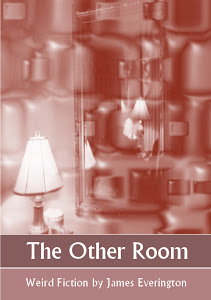
CoverThe Other Room, fed up that Falling Over has been getting all the attention recently, has got up off its arse and got itself a new review:

"The horror here deals less with gore and more with the way people respond horrifically to negative or unconventional situations... I recommend you take the time to get lost in this book"

Read the whole review on Horror Novels Reviews here.

10/16/2013

The Ritual & Wilderness Horror

I recently finished The Ritual by Adam Nevill, a horror novel set, to quote the blurb, in "the Scandinavian wilderness of the Arctic Circle". It's a fine novel, albeit one that I felt lost a bit of steam in its second half. It's also a very pure horror novel too: it's essentially about a group of friends lost in the woods, with 'something' stalking them. Even more essentially, it's a book about the fear of death.

That might sound a trite, even pointless description - aren't all horror novels about the fear of death? After all, what else is there actually to be afraid of, underneath? Maybe that's true, but it's surprising how many horror books and films pussyfoot around the issue. Very few put us inside the head of someone facing death for any length of time. The gory kills, the entrails and innards spilt in the worst horror films and fictions actually seem a distraction, a sensationalist focusing on the external side of death. The real horror is inside.

The Ritual dares to show us the thoughts of someone who believes they are going to die for a very long time. The sense of dread, of hopelessness, is almost palpable and is as scary as anything I've read for a long time.

Maybe the starkness of the wilderness setting increases this feeling. After all, the central characters are in a hell of a mess before the supernatural element really makes itself known. They are lost, wet, alone, running out of food and a couple of them are injured, slowing the group down. They're suffering that modern dislocation that comes when suddenly, somehow in the middle of our routine lives we can be mortally in danger: they were on holiday for Christ's sake, and now this... But theirs is also an ageless fear, too: the fear of being lost in the woods.

It's the same fear Stephen King plays on in The Girl Who Loved Tom Gordon - one of his best books I think, because it's so simple: the titular girl is also lost in the woods and scared she's not alone. It's a very different book, both in terms of plot and tone, to The Ritual but there's a similarity there. As there is with The Terror by Dan Simmons, another book where the horrors of the Arctic wilderness the characters can't escape (stranded this time, rather than lost) almost seem to dwarf the supernatural element of the plot.

So why, we might ask, do these books even need a monster - is it a mere sop to the horror audience? A set of stabilisers that these writers can't write without?

Well no, I don't think so. I think it's important to the effect of these stories, and The Ritual in particular, that the 'thing' is barely described, a shadowy but constant presence at the characters' backs. No matter how far they walk, it keeps pace with them; no matter where they hide it seeks them out. It's like Death itself, in fact. Not so much a symbol, but an externalisation of the character's plight.

But, these being stories, the monster can also be evaded, fought off- temporarily and at great cost it can be defeated. Sometimes we can make it out of the wilderness, of the woods we have got lost in. Despite a sense of hopelessness as great as any I've encountered in a novel, there are brief moments of respite in The Ritual, of light and hope. But I won't give the game away about whether they are ultimately groundless or how the novel ends - this really is one you need to read yourself.

The Ritual (UK |US)

10/09/2013

Horrifically Horrifying Horror reviews Falling Over

Falling Over has had another review, this time from Anthony Cowin on the Horrifically Horrifying Horror blog. I could quote the whole thing it's pleased me so much, but I'll put my ego back in its box and just pick out a couple of sentences:

"The author obviously loves his chosen genre, the carefully crafted twisting tales are testament to that... I've been reading a lot of anthologies lately... This is my favourite solo work by far.

Everington’s precise use of language and almost instant setting of tone made each story easy to fall into. And falling does seem to be the theme here...  

That dread lifts from the page with Everington’s stripped back prose and storytelling talent.

James Everington has created a fine collection in
Falling Over."


Okay, that was more than a couple; fair cop.

You can read the full review here or find links to buy the ebook and paperback of Falling Over here.

9/01/2013

Review: Holes For Faces - Ramsey Campbell

Where to start writing a review of a new collection of Ramsey Campbell short stories? I guess many of you will be familiar enough with Campbell to make it almost seem redundant - most horror fans made up their mind about him years ago, one way or the other. If you admire him as much as I do, all you really need to know is that Holes For Faces collects fourteen recent stories, and that he's as good as he ever was.

So there you are: go buy.

Still here? Well okay, let me also add that if by some slim chance you are new to Campbell this is as good an introduction to his late style as any. You'll find all his key traits: the ambiguous imagery, the black humour, the treacherous wordplay. The protagonists of these stories tend to either be children or the elderly - outsiders unable to communicate to their family or colleagues the horrors they see, or think they see. This inability to communicate is key to Campbell's horror - words are as much foe as friend, slippery and keeping people apart rather than drawing them together. Campbell's prose is as sharp and intelligent as ever, as is his ability to conjure up a disturbing image in just a couple of sentences. The characters merely glimpse the phantoms and bogeymen in these stories, rather than seeing them straight on, leaving them (and us) unsure of exactly what they've seen, and how real it was.

Stand-out stories, for me were: Passing through Peacehaven, The Room Beyond, The Rounds (which adds a nice touch of Philip K Dick style uncertainty to Campbell's usual paranoia), the title story, and The Long Way.

8/21/2013

Review: Pretty Little Dead Things – Gary McMahon

After loving a number of his short stories & novellas, I've been meaning to read one of Gary McMahon’s novels for a stupidly long time now. So when my goody-bag at Edgelit2 contained the second of his Thomas Usher books, Dead Bad Things, I took it as a sign, and purchased the first in the series – Pretty Little Dead Things. And I'm very glad I did.

(Actually, my goody-bag didn't contain Dead Bad Things but I swapped one of the books I did get for it. "It's still a good sign, by anyone's standards")
 
Pretty Little Dead Things is an interesting mixture of horror and crime; Thomas Usher is a man who can see the dead, following the deaths of his wife and daughter fifteen years earlier. He is reluctantly caught up in the murder of three young girls as well as the disappearance of a child. The story is told in the first person and Usher is a complex, compelling character. His powers are more a curse than a blessing, causing him to see hideous and gruesome things without actually being able to influence them. The only ghosts he wants to appear – those of his family – he has never seen and this has left Usher unable to move on, still living in the ‘family’ house on his own hoping they return to haunt it. It's a pretty brutal metaphor for grief and guilt, but no less effective for that.
 
The book is structured like a crime novel, but as it progresses the supernatural elements become more overt and fantastical; there’s some very scary scenes involving the MTs – revenants of delinquent gang members, their hoods now full of nothing but ash. And McMahon isn't the kind of writer to allow his characters easy escapes, or sometimes any escape at all. The tone is downbeat and bleak throughout, and the story moves from deprived housing estates to squalid strip-clubs to anonymous hotel rooms: it’s set in Leeds but it will seem familiar to anyone who knows the UK’s urban landscapes. There’s an oppressive nature to the setting, allowing no sense of escape – even when the action moves to another plane of existence it’s just a twisted version of the same blighted estate Usher has been visiting. Some readers will no doubt find the relentlessly downbeat tone equally oppressive, feel the same lack of escape from the novel’s atmosphere. There’s little light here, little hope. But it’s in this way that the book achieves its unity and totality of effect. There's a certain breathless exhilaration, too, at realising how far the book is prepared to push things; at how bad things can get.

Very hard hitting and one of the most memorable horror novels I've read for a long time. Looks like the goody-bag ruse worked, and I’ll be buying yet more of Gary McMahon’s novels.

8/15/2013

Falling Over by James Everington Really very pleased by this review of Falling Over on the Amazing Stories website:

"Falling Over is certainly weird fiction in the British tradition of Aickman, subtle, understated, enigmatic... an excellent collection, well-crafted, imaginative and chilling."
Read it the whole thing here.

8/13/2013

Review: The Side Effects Of The Medication - Lauren James

Lauren James’s book The Side Effects Of The Medication is one of the strongest short story collections I've read all year, and almost certainly the best from a début author bursting into the party out of nowhere. The stories veer between horror, crime, and even science fiction. The tone is equally varied, James handling black comedy and grim horror with equal aplomb. She even writes a story in the second person that doesn't sound awful.
 
Fences starts the collection and it’s a riveting tale about the fear of our neighbours, and of trespass. Marianne and her husband have their garden invaded by their neighbour's big, black dogs, and put up a fence to stop them returning. But the intrusions, of various kinds, keep occurring... and escalating. As the plural title suggests, there are multiple boundaries erected and being crossed here, not just the physical one that marks off one property from another. The theme of lines being crossed – physical, mental, or ethical – and of boundaries being blurred is central to many of the stories here. As such, Fences is a perfect opening story to the collection, and one of my favourites.
 
Others that especially stood out were:

Cover Yourself – here James mixes science fiction with the kind of ambiguity found in the best weird fiction: although ‘what’ is happening is clear enough, the significance of it to those participating is vague; in fact exactly who is participating is vague. (As is this description, because I don’t want to ruin things for you.) 
 
The Devils is the first of two stories about an exorcist called Reese Campbell, who deals with human created horrors as much as anything supernatural. The lesson being, I guess, that if we believe in devils and demons of any stripe we legitimise evil behaviour in ourselves. Not that this story is that simply black and white, for there is an outside evil here too. The final story in the collection, Full, is also about Campbell, investigating a too-perfect house.
 
Maybe best is The Side Effects Of The Medication - the title story contains the kind of surreal magic realism you might find in someone like David Barthelme’s work. In this story some people’s dreams are physical, fragile things like soap bubbles – these dreams are the ‘side effects’ of the title. And other, dreamless people, pay good money to see the dreams. Again, boundaries are crossed as the personal becomes public and all too visible.

The Side Effects Of The Medication (UK | US)

6/29/2013

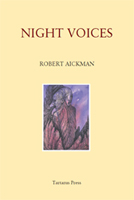
Review: Night Voices - Robert Aickman

I've not reviewed any Robert Aickman books on this blog before, despite how much I admire his writing. The final Tartarus Press reissue of his work is a fine time to rectify that. Night Voices was originally published as a posthumous collection which gathered together Aickman stories not available elsewhere. This lovely Tartarus edition omits The Trains (which they reprinted elsewhere) but adds the novella The Model, a selection of Aickman's non-fiction writing, and Robert Remembered by Ramsey Campbell - a nice tribute.

It starts brilliantly - The Stains is a classic Aickman story, with his trademark slow build, exquisite prose, and tantalising symbolism. That sense that more is being implied that is said. It's a showcase of Aickman's ability to delineate a realistic, English setting and characters but yet evoke a faint, surreal sense of disquiet. I don't want to spoil the plot, but I will say the stains themselves are one of Aickman's more hideous little touches.

Just A Song At Twilight is almost as good; a shorter tale with an ending that took me by surprise. I like the fact that Aickman can still surprise me; that I don't yet know all his tricks and techniques. This is the first one I'll reread, seeking out all those tantalising Aickman details...

After that strong start, I have to say the rest of the short stories were definitely second-rate (the presence of The Trains is missed). Aickman, even second-rate Aickman, is always worth reading and his prose is always a pleasure, but I found Laura a somewhat derivative retelling of a common supernatural trope, and I must confess that all I took from a Rosamund's Bower was a sort of pleasurable bafflement. Mark Ingestre: A Customer's Tale is better, another of Aickman's patented 'strange stories' but not quite first-rate, covering themes Aickman did better in  his masterly The Swords. Nevertheless it's a suggestive tale and the historical setting is a nice change.

The novella The Model is an interesting read, but nothing like Aickman's other fiction, being a picaresque tale set in pre-revolutionary Russia, about a young girl who wants to be a ballerina. It's not a realistic piece, having a dream-like, fairytale atmosphere. It was a lovely journey, but I can't say I felt I actually arrived anywhere.

The non-fiction section of the book largely consists of Aickman's series of introductions to the Fontana Book Of Great Ghost Stories series, which he edited. Taken together, they form a virtual manifesto of the ghost story, which Aickman is at great pains to distinguish from the horror story. Although I disagree with a lot of what he says, the manifestos of geniuses are always fascinating. Suggestive ideas abound; I will quote just one:

"I should like to suggest that the now the word 'ghost' should be seen more as the German geist: that ghost stories should be concerned not with appearance and consistency, but with the spirit behind the appearance..."  

These essays are full of such gems, and any writers of horror (sorry, Robert!) are certain to find much to think over, much inspiration.

Overall, this book is like one of those rarities albums bands release when they're no longer together - interesting to the fans and obsessives, but hardly the best place to start for someone new. Night Voices contains much of Aickman's brilliance but, for this reader, some misfires and duds as well . If you're new to Aickman, start with Cold Hand In Mine or Dark Entries. But if you're already under his spell, you'll find nothing in this volume to break that spell; Aickman was one of the best there's ever been, it's simple as that.

4/06/2013

Review: Barbed Wire Hearts – Cate Gardner


This is the third Cate Gardner book I’ve read. It's sort of horror, kinda fantasy, but I’ve come to the conclusion that really Gardner is a genre all unto herself. Her stories tend to be weird but whimsical, bringing the darkness of the best fairy tales into the modern day. 
 
It’s a testament to Gardner’s uniqueness that describing the plot in any detail is a mug’s game, because coming from anyone else but her it doesn’t sound right. In fact it sounds gaga. But here it goes anyway:
 
Eddie’s heart has been broken by a girl. Literally – he feels it crack and dribble down his legs. Simultaneously, a girl who should be dead has a heart that refuses to stop beating. And a strange man called Ghoate who lives in the forest (which wasn’t even there yesterday) collects hearts and reanimates shop mannequins. And Seth - his name badge says Seth, anyway - eats hearts. Oh, and there's a ghost and these spiders that jump down people’s throats when they kiss and...
 
…and…
 
Look, I told you it wasn’t easy to describe Gardner’s books.
 
But it's easy enough to describe how damn good they are. And this novella (published by Delirium Books) strikes me as possibly the strongest book of hers I've read – in common with the best novellas, the form allows the plot to be fully satisfying but without any extraneous fat. In the end, despite the high levels of strangeness, this is a book with a lot of heart (aptly enough). The characters are strong, the plot lively, the calm prose making even the wildest of ideas sound plausible whilst you’re reading, just like the best dreams seem realistic whilst you’re dreaming them.
 
Spend awhile in Cate Gardner’s dreams, why don’t you? (Barbed Wire Hearts UK | US)