Showing posts with label The Other Room. Show all posts

9/08/2015

Bad Memories

Just a quick note to say that my story, Bad Memories, is included in Dark Lane Anthology Volume 2 from Dark Lane books, which is out now.

The book also features tales by Rebecca Lloyd, Tim Major, and Kelda Crich plus many others, so it is well worth a read. The interior and exterior artwork are both great as well.

Bad Memories is a slightly unusual story for me, being set in the future. Or at least, a version of the future. The future of the world outside the Other Room, perhaps? It's a story about the relationship between a psychiatrist and a patient with an unusual malady...

Dark Lane Anthology Volume 2 is available now (UK | US)

In other news, the final two parts of The Quarantined City should be out this month from Spectral Press - it will be interesting to see what people make of the whole thing...

11/18/2013

Off Its Arse

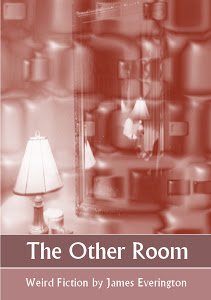
CoverThe Other Room, fed up that Falling Over has been getting all the attention recently, has got up off its arse and got itself a new review:

"The horror here deals less with gore and more with the way people respond horrifically to negative or unconventional situations... I recommend you take the time to get lost in this book"

Read the whole review on Horror Novels Reviews here.

5/06/2012

The Other Room - One Year On...

Almost exactly a year ago, I took my first bare-foot steps into the chilly waters of self-publishing, and released my collection The Other Room. Some of these stories had already been published in magazines, but most were new to the world. I honestly had no idea how the book would be received, either in terms of sales or reviews.

The Other RoomFortunately, it's gone far, far better than I ever imagined. I mean, a book that cites Robert Aickman as an influence in its blurb is never going to be the next Twilight but by my own standards The Other Room has sold well, and the responses from readers from been both humbling and exciting. And at least one person let me know in an email that they bought it because of the Aickman reference.

The book also featured in the 2011 Red Adept Reviews Indie Awards short story category.

The Other Room is available on Amazon (UK | US | GE | FR | ES | IT) and Smashwords.


And to celebrate, for the next week it is available for free from Smashwords, if you enter the following code at the checkout: QD54K. If you do pick up a copy, I'd love to know what you think of it.

And a year anniversary is an excellent time to start seriously thinking about what stories to include in a second collection, isn't it? You betcha.

1/09/2012

Strange Stories #0: An Introduction

Introducing a new weekly(ish) column... 'Strange Stories'.

When I released The Other Room I called it a collection of 'weird fiction' rather than horror stories. Weird fiction is a term that was first used with reference to fiction by the likes of Lovecraft and Machen, and has been used intermittently by writers ever since. It's a term which seems to have come into vogue again, especially with the publication of The Weird, a vast (and I do mean vast) new anthology which you do need to get. You do.

In a similar vein, Robert Aickman called his fiction 'strange stories' meaning much the same thing, I think - horror fiction that wasn't quite horror, ghost stories that didn't necessarily feature ghosts - weird, odd, strange, ghostly, uncanny fiction.

In this weekly feature I plan to talk about some of my favourite 'strange stories' (I also plan to open up the slot for some guest posts). Each post will be about a single story, whether short story, novella, or novel length (although a lot of the best of this kind of fiction has been done in the short story form).

But what distinguishes strange stories, or weird fiction, from normal tales of horror?

Well, for certain it's a sprawling and largely undefined tradition of writing, but one I feel very much a part of. I don't think it has rigid boundaries or borders; some authors write almost nothing but 'strange stories' and some more traditional horror or literary writers occasionally wander into its strange territory, and report back on what they find.

One of the key things that distinguishes this kind of writing, for me, is ambiguity (a topic I recently touched upon in a guest post on the Greyhart Press site). Maybe it's perverse to try and define 'ambiguity' to any great degree, but the kind of things I mean are:


  • Ambiguity of perception - how much of the story is real (in the context of the story) and how much is a product of the central character's distorted, confused perception? 
  • Ambiguity of events - how certain can the reader be exactly what has happened?
  • Ambiguity of significance - how certain can the reader be of what the things that have happened mean? Both to the characters themselves, and symbolically?
  • Ambiguity of omission - do important details or emotional responses seem lacking from the story, stopping the reader make full sense of it?
  • Ambiguity of reality - does the story imply in some way that we can't trust our senses, and reality may be slightly or completely different to how we perceive it?
I'm sure there's more, and I'm sure I'll feature stories that don't seem to meet the above criteria, but the literary weirdness or strangeness I'm after is more a feeling than anything. I'll certainly aim to feature stories by writers such as Julio Cortazar, Charlotte Perkins Gilman, T.E.D. Klein, and Algernon Blackwood. But first...


Next Week: Strange Stories #1. What Water Reveals by Adam Golaski


Coming soon...! Volume Two of Penny Dreadnought.


11/21/2011

One Year(ish) On...

So it's been about a year since I became a published author.

I'm using the word 'published' in about the most minimal sense it can be used here - my short story Feed The Enemy was published as an ebook by Books To Go Now about a year ago, and another called Home Time was accepted by Morpheus Tales... and I was pleased obviously, but also wondering where I was going with this writing malarkey, given that I was cruising towards my 34th birthday.

And now I'm cruising towards my 35th. So forgive me, I'm in a retrospective mood...

In the last year I've concentrated on self-publishing at the expense of trying to break the more traditional markets, which I don't regret for a second. (I may also have concentrated on it at the expense of the actual writing too, which I do regret.) Like many writers I suffer from quite a lack of confidence in my own talent, and the fact that self-publishing The Other Room and The Shelter has allowed me to get my stories read by so many people so quickly, and that they actually seem to like it is probably the best thing that could happen to me at this stage in my writing 'career'. And whilst it's true I can't stand the MBS practised by some members of the self-publishing community, it's also true that I've met some very talented authors, many of whom have been generous with their time, advice, and just basic friendship. (You know who you are.) That's been great too.

I do hope to get another collection of short stories self-published next year - I have enough. But I also want to return to trying to get some stories published in magazines and the like. Aaron Polson recently wrote a post with a line that summed it up for me: "Rejection is your friend, folks. Really." And it is. I'm glad I had a few years of sending stories out and getting rejections to sharpen and hone me as a writer before self-publishing became a viable option. I don't want to get complacent - just because anything I can write will probably sell a few copies on Amazon doesn't meant that it should. There's a lot of crap being self-published and I don't want to add to that.

I've already had a couple of acceptances for stories for more traditional markets, although the lag between acceptance and actual publication can be slow. Which is why there will be another self-published collection next year - I don't want to lose any momentum I might have gained. But I don't want all my irons in the same fire either...

I'm resorting to cliche so I'd better shut up now. If you've actually read this far, then thanks. Here's to the next year...

10/23/2011

Coffin Hop - Tales From Around The Camp Fire


Halloween is almost upon us, and that can only mean one thing - annoying teenagers who aren't even in costumes wanting money and sweets from me all week.

Oh no, two things: annoying teenagers and horror stories.

This post is about horror stories, and is my contribution to the Coffin Hop blog tour - if you check out their site you'll see all the authors involved, and the best thing is they're all giving prizes away. As am I... read on to find out more.

But anyway, horror stories; ones told around a camp fire by a group of kids, each trying to outdo each other, each swearing their story is true. Stories called things like The White Lady; The Killer In The Backseat... and The Hook.

And despite all the literary sophistication that we horror authors try to bring to their tales, I like to think at heart we're all just kids around that camp fire, each trying to make people believe that no, really, this actually did happen.

But sometimes the stories we tell say more about ourselves than we realise:.

Some Stories For Escapists #4: The Hook

 - “OK, I’ve got one, I’ve got one. There’s this boy and girl right, and they’re going somewhere in this car to get off with each other, like The Drop right? And…” 
- “That’s where my brother goes with his girlfriend, when Mum wouldn’t let him in the home with her after…” 
- “Your brother aint got no girlfriend, he just goes up The Drop with a Razzle!” 
 [Laughter]
- “Right, so they’re up there and snogging and it’s all dark and he’s got his hands on her tits and the radio’s on and in between songs this guy says, the news guy, there’s been a break out from the local mental home, which is right near where they are. Some psycho's escaped, and instead of a hand right, he’s got this hook, real sharp, which he uses to kill his victims, rippin’ up their guts. That’s what the radio says, and they’re still snogging each other, but she’s scared now, typical girl, thinking the killer might be around. ‘Let’s go home,’ she says, ‘Get off me, I want to go home.’ He doesn’t want to but she keeps sayin’ it, ‘Get off, I’m scared, let’s go, get off me!’ So he eventually lets her go and speeds off, real fast cos he’s pissed off right. And when they get back they find, in the driver door handle, this ripped off hook…” 
 [They all stare into the camp fire]
- “Your brother really get her pregnant?” 
- “Yeah. My parents gonna kill him!" 
- “Didn't he use a johnny?” 
- “Dunno.” 
- “He shoulda done it to her when she had her period. You can’t get pregnant then.” 
- “No, aint it after she’s had it?” 
- “How would you know, you aint even kissed a girl!”
[They all pause and stare into the fire] 
- “You don’t even know what a period is.” 
- “I do, my sister told me!”
- “What is it then?” 
 [Pause] 
- “I aint telling you lot!” 
[Pause] 
- “Do they really bleed? The first time you… Do they really bleed?”
[Pause] 
- “My mum’s gonna kill him.” 

Anyway, competition time. As regular readers will know, I've had some great guest bloggers on here to celebrate the art of the short story. And I think horror is one genre particularly well suited to short stories; I love reading  good anthology of horror stories by a host of different and varied writers.

So the competition is to make up your ultimate Horror Story Anthology. For every one that contains some stories I love, or that are new to me but that I rush out and buy, I'll give that person a free download of my horror novella The Shelter. And for the one I judge the absolute best, I'll also give a free download of my collection The Other Room. (All entrants are also very welcome to a copy of First Time Buyers  but as that's currently free anyway that's not much of a prize!)

The rules:
1. Leave a comment containing a list of the 5-10 stories that make up your anthology - you're favourite horror stories of all time
2. Any horror or horror-ish story welcome, as long as you didn't write it yourself
3. Anything from 100 to 15k words I'll consider a short story for the purposes of this competition

Good luck. And don't forget to check out the other authors on the Coffin Hop blog tour...!

10/14/2011

Spooky


Pleased to say that my story Red Route will be appearing in the forthcoming Dark Moon Digest Ghosts special edition. Not sure when it is out yet, but I think before Halloween sometime...

Do any of us stop to think as we get in the car that it's most likely the riskiest thing we'll do all day?


It's a slightly differently edited version to the one that appears in The Other Room, but probably not so you'd notice. It's like the different between this and this.


9/10/2011

A Drunken Conversation about Ghost Stories...

I was talking to some of my non-reader friends in the pub the other night (non-readers are people too, apparently) and the somewhat boozy conversation got round to hobbies, and while I don't view it as a 'hobby' I told them about the stories I'd written. It was the first time I'd mentioned the subject to them, and they naturally asked what my stories were about. So I gave them a rough synopsis of the plot of my forthcoming novella The Shelter and a few stories from The Other Room...

"What? You write ghost stories?"

I was a bit taken aback by that shocked "you". Why shouldn't I write ghost stories? I asked what they meant by that comment, and amid the general beer-confusion I got the answer out of them: they wouldn't expect someone like me to believe in ghosts.

Well no. I wouldn't expect that of someone like me either. I can be pretty scathing toward people who believe in mumbo-jumbo, good-luck, or attributing significance to coincidental oddities. I can't stand people who argue by constructing straw-men or from conflicting premises (hello, internet discussion groups!). As well as fiction, my bookshelf comprises of non-fiction works of popular science, philosophy and logic...

So for the record: no, I don't believe that ghosts, or any of the other supernatural gubbins in my stories, actually exist.

I guess this a statement that only horror stories would routinely have to make. For realistic fiction, the question doesn't generally apply. For the other kinds of speculative fiction, fantasy and sci fi, the tendency is for the author to build a whole world - internally consistent but not mimetic. Horror is the only genre which generally strives to create a realistic view of the world, but then introduces a single unrealistic element into that world.

Neither of my drunken companions continued the conversation beyond this point, but if they'd been sober I suspect the natural next question would have been, "Okay, so why do you write ghost stories then, if you don't believe in such things?"

Good question.

There's a somewhat trite assumption that the creations and monsters of horror are just analogies for our real world fears - vampires = fear of sex; zombies = fear of plague; and so on. But I don't believe that equations apply to literature, or that the complexity of a great story can be reduced to a mere binary relationship with a small part of the real world. But removing the over-simplification, there's some truth to the idea that horror fiction plays on what we find disturbing, on things that we find creepy or just, somehow... wrong.

If I look back at the science and philosophy books I proudly displayed as evidence of my rationalism above, I find I'm fascinated by all sorts of oddities, paradoxes where logic seems a flimsy construction. Schordinger's Cat and Hempel's Ravens. Fascinated, and maybe just a little... scared.

And I find this same sense of rationality being more flimsy than we'd like to think in the best horror stories: in Call Of Cthulhu and the elder gods lurking out there somewhere; in The Turn of The Screw and the ambiguity of not knowing whether the ghost is real or not (by which I mean real in the context of the story); in stories as different as The Stand and The Summer People where society and its conventions are shown to be paper-thin; in stories by Ramsey Campbell where even descriptions of the mundane seem to convey a hazy sense of menace...

Capturing that feeling - that's why I write ghost stories. (And thinking up blog posts like this is why I drink beer with my non-reader friends in pubs.)

Am I alone in this - other horror authors, do you believe that the things you write about could actually exist? Or are your views like mine, or somewhere else entirely?

7/30/2011

Free Words!

The always great Maria Savva has interviewed me about The Other Room over on her Goodreads blog.

And what's more, two lucky people who either leave a Comment or Like the interview will receive a free copy of The Other Room. If you lose on the lottery tonight (hopefully not in the Shirley Jackson sense) then you might find the odds somewhat less than a million to one for this give-away,

Check out the interview here, and don't forget to comment.

p.s. if anyone out there wants to check out my Goodreads profile and send me a friend request, feel free...

7/28/2011

My Dad, Stephen King, and Me

I'm sure it's very uncool to talk about Stephen King nowadays - the guys been too popular for too long now. There was a brief period when it seemed semi-fashionable in literary circles to praise him as being a 'natural storyteller' or some other patronising drivel, and to mention how he didn't just write horror, oh no. Which he doesn't, obviously; he's written children's books, crime novellas, coming of age stories, and whatever the hell we're supposed to call The Dark Tower series (meta-textual cowboy alternative-reality fantasy?) But liking King only for his non-horror work is a bit like being one of those people who only like Nirvana's acoustic album. Basically, you're missing the point.

But I get too excited about things I like to ever be considered cool, and I've reached an age now when I can cease worrying about that. I doubt my Dad ever seriously worried about it either.

But, if you like books; scratch that, if you love books, you might well find my Dad cool, in his own way. And you'd certain find what was called "the spare room" in my parent's house cool. Because it was full of books. It still is, ever month he seems to find a way to stuff more in. I suspect my Mum likes the fact he's now bought a Kindle purely because it might stop them having to take out a second mortgage just to store all his books. (And I've still got 100+ stored there too, besides the 500+ in my current house. Sorry Mum - one day I will take them away, I promise. And this time, I mean it.)

As a kid and young teenager I wanted to raid my Dad's book collection; rather than stopping me read his 'adult' books, he carefully recommend ones to me. At quite a young age I was reading a lot of his classic sci-fi: Asimov, Clarke and the like. I mean, a lot of it was over my head, but there was no real sex or violence in those books for my dad to worry about. Nothing scary.

But I exhausted those, and kept pestering him for other books, and one day when I was about fifteen he handed me this:

Salem's Lot, 1977


I'm sure not the only person who remember this cover; it certainly made an impression at the time - a stark image with only one small splash of colour, no writing at all, with an embossed face as black as the background it rises up from. What you can't tell from this picture is how the cover changed if you turned it in the light - at one angle the girl's face looked happy, at another blank. Depending on the light, she could look alive or dead. The image above really doesn't do it justice, but I think it's one of the greatest covers I've ever seen.

It is of course Salem's Lot by Stephen King.

I read it in about a day. And then I read Thinner I think (what a one to pick next!) and then Night Shift and then...

What impressed me at the time was how serious the writing seemed. Even writing about something like vampires, he treated them - and more importantly the people of Salem's Lot - seriously. (Not that Asimov & Co. weren't serious writers, I just wasn't at an age to appreciate it then.) It wasn't a dramatic epiphany or anything, just a gradual realisation that books were actually better, and deeper, and more important than even a book obsessed child like me had realised. I'm wary of people describing events as 'life-changing', but that moment when my Dad handed me Salem's Lot certainly seems like one to me. It seems to be the moment something started. To me, it seems like there's a chain of cause and effect from that moment, to the publication of  The Other Room - and teasing you, I know my next book, The Shelter, certainly wouldn't have been written unless I'd discovered Stephen King at an early age...

So that's why Stephen King will always be a bit cool to me. But more importantly, so will my Dad.

5/14/2011

Music vs. Books

I love music - songs are almost as good as stories, and if I had an atom of musical ability in my body I might even have gone further... but I haven't. If you think my writing is ham-fisted, you should have seen my teenage attempts to learn the guitar.

Songs, and the ideas and words from them, have always informed my writing - not in a conscious way necessarily, but just in the way that certain songs have sunk down deep into me, and will obviously bubble up now and again.

These are some of the obvious connections to songs in my writing, but I'm sure there's many buried in there. Click the links for youtubes...

Feed The Enemy - a great song by the under-valued Magazine (post-punk Manchester band, like a more sarcastic and witty Joy Division). Like all the best music, it sounds profound, but I've no idea what it's actually about. "No room to move, no room to doubt" - well quite. Source of the title for my stand-alone short story Feed The Enemy.

When The Walls Bend - a line from The Gloaming, by Radiohead. Amazing, but you already knew that. What you may not have known is that it's also the title for a story in my collection The Other Room available from all good booksellers. Well, Amazon.

Wilder - achingly beautiful song from The Boo Radleys. "Beautiful" is an over-used word when writing about music, but go and listen to this and tell me what else I could have said? I used a line from this ("maybe it's brighter down there, maybe it's wilder") as a heading for my as yet unpublished story 'Long Distance Relationships'.

Trying To Be So Quiet - "Aint it just like the night, to play tricks when we're trying to be so quiet..."  C'mon, you know which song opens like that don't you? Surely you don't have to click the link to find out...? Title of yet unpublished ghost story; didn't make the grade for The Other Room.

5/04/2011

The Other Room - Out Now!


The Other Room 

I'm not one to use exclamation marks in post titles excessively (and multiple exclamation marks are a real no-no) but I feel justified here. (!) Because 'The Other Room' is out - a collection of twelve short stories for your e-reading pleasure.  Here's the same cover image I've been posting a lot, along with some links:

Kindle (UK)
Kindle (US)
Kindle (Germany)

And here's the official blurb:

The Other Room is a collection of weird horror fiction, containing twelve stories of the uncanny and the surreal. 

A naive student finds that his crumbling bedsit can be as haunted as any Gothic mansion.

A man stumbles across another world which is the mirror image of his own.

A young woman who everyone thinks is beautiful wonders why, given what she sees in the mirror each morning.

Influenced by writers such as Ramsey Campbell, Shirley Jackson, and Robert Aickman these tales, like all good horror stories, are as much about the psychology of the protagonist as the fate that awaits them.

The Other Room contains both new and previously published stories that will challenge your conceptions of horror and literary fiction.

5/02/2011

The Other Room - Author's Notes Part 3


... Continued From Previous Post

The Final Wish


This is an odd one. I wrote this at university - one winter I got sick with some kind of flu, and barely left my room for days. I took the kind of flu medicine that knocks you out for a bit rather than cures you, and then when awake drank either coffee or whisky depending on whether it looked light or dark outside my window.


Obviously whatever assignment or other writing I had on at that point was halted, but when I recovered this was scrawled on my notepad. I vaguely remember writing it. but those memories are tinted by the fever-like quality of my illness.


All I've ever done to alter it is give it a title; the whole story is mysterious to me and reading it back I get no sense of having written it myself. Despite that, I've always found it the one story of mine I can't form any objective opinion on. I'd be genuinely interested in hearing what readers think of it.


I suppose a Freudian reading through this would have a field day - I'd like to point out that my relationships with my parents and brother are completely normal...


A Writer's Words


Yes, yes, I know the title is bad - awful, pretentious, and trite. But I've never been able to think of a better one. (I often struggle with titles - I can get all the way to the end of a third draft of a story and still have no idea what the damn thing should be called.)


Like The Other Room the inspiration for this one came from another minor incident which I then took to its extreme. Like the main character I was on a train when I became concerned it was the wrong one, and there was a note with back-to-front writing stuck to the window. From that brief spasm of anxiety (and it's always slightly nerve-wracking, using public transport for long journeys) came this story.


Red Route


These Lincolnshire roads, with signs showing the number of fatalities, are real. I guess this complements the previous story, but this time it's about personal not public transport. Do any of us stop to think as we get in the car that it's most likely the riskiest thing we'll do all day?

When The Walls Bend


I've a tendency to over-think when I'm writing, to believe that a story needs some kind of intellectual underpinning before I can begin it. To compensate, I often force myself to write something based on a simple, archetypal idea. Here I just wanted to write a haunted house story.

I had to have some way in though, and the idea for this story came when I wondered why so many haunted houses in fiction were big, sprawling mansions owned by screwy upper-class people. Do the rich really have a monopoly on the afterlife as well? I wanted my haunted house to be small, cramped, and squalid. I also love ghosts stories which are as much about the person being haunted as the ghost.

This was another story for which I struggled finding a title; I was playing Radiohead's Hail To The Thief album constantly at the time, and eventually I 'borrowed' the title from a lyric from a track called The Gloaming.

I've always liked the last line of this story, and it seemed an appropriate way to end the collection as a whole.

4/29/2011

The Other Room - Author's Notes Part 2


... Continued From Previous Post

First Time Buyers  

It's a truism that horror stories, for all their ghosts and ghouls, are reflections of our real worries and fears. And while it's true that the Big things like Death and Fate are scary, the fact is we spend a lot of our time worrying about comparatively little things - money, our jobs. Unemployment and homelessness.

And maybe because we are worried about these things, we tend to demonise those people who are made redundant or who lose their homes. It's easier to think that what has happened to them is their fault somehow, rather than something that could have happened to anyone.

The real monster in this story is not the white figure running in the mist; like Frankenstein's monster, it's one we've created ourselves.


Schrodinger's Box

I've read a smattering of modern cosmology and physics books, and while it's fascinating I can't say I understand it all. But it's always struck me that there's huge level of imagination to such writing, a scale and scope that is awesome, in the original sense of the word.

The 'thought experiment' known as Schrodinger's Cat also has a perverse and malicious ingenuity to it - it's easy to imagine an alternative reality where Schrodinger wrote Twilight Zone style horror stories. In fact, if you believe some theories of modern physics, this reality actually exists somewhere...

The quotation that heads the story is from Schrodinger's original 1935 article where he describes the experiment, which has the marvellous title Die gegenwärtige Situation in der Quantenmechanik. A description of the experiment and its implications simple enough for even a humanities graduate like me to understand can be found in the excellent God and The New Physics by Paul Davies.


The Watchers

This is the kind of story that makes me wish I hadn't decide to write these notes at the back of the book, as I've no idea where the central idea came from. There's some references to philosophy, and obviously the whole thing is an exaggeration of feminist ideas about the objectification of women... But other than that, I don't know. I just picked up a pen one day (I still write all my first drafts by hand) and started writing it. Sometimes it really is that easy.

Note to readers: when an author tells you where he or she 'gets their ideas' they're probably confused or lying.


To Be Continued...


Oh, and a couple of other things:


'Feed The Enemy' is now available on the German Amazon site (in English) as a Kindle Book. Click here if anyone is interested.


And this is a link to The Daily Bev, a 'newspaper' constructed from selected stories and links from my Twitter feed each day. It mainly details the ducking and diving of various indie authors, although there's sometimes a smattering of music, politics, and talking shite on there. It's a great site and easy to use, I really like the results. Check it out. (I'm @JHEverington  on Twitter should anyone care...)

4/25/2011

The Other Room - Author's Notes Part 1


I've always loved short story collections where the author describes some of the background and inspiration behind the stories in the book. Stephen King and Neil Gaiman, for example, both do this very well - see Skeleton Crew and Smoke and Mirrors for evidence (in fact in the latter Gaiman goes one better and hides an entire extra story in the notes).

Maybe such explanations are even more interesting for surreal or supernatural fiction, where a simple autobiographical explanation isn't available from the story itself.

And maybe, also, it's only wannabe writers who read the author's notes so avidly? I don't know, but as soon as I decided to put out some stories in a self published collection, I knew I'd do some notes of my own for them.

In order to give people a taster of what The Other Room contains I'm going to start posting these notes on this blog as a sneak preview (they may need editing slightly from the versions that will appear in the actual book to avoid spoilers). I start with the title story itself...


The Other Room

I've the kind of job where I occasionally have to stay in hotel rooms on my own, but not often enough to get used to it. And there's something weird about the experience, a sense of anonymity to go alongside the anonymity of the cheap hotel rooms themselves - no one knows you. You could be anyone.

Returning from the hotel bar on one of these occasions, I put my hotel swipe-card in the wrong door. Although nothing happened the thought occurred to me - what if it had opened? This story pretty much wrote itself after that initial thought. I didn't plan it, and things I wrote without thinking turned out felicitously, such as the whole Waits/Straw thing. If I'd planned that before hand, I would have spent ages getting two names which were exact reversals of each other. But of course the world outside the Other Room isn't an exact opposite of our own.

I chose this as the title for this collection because reading fiction, in particularly weird or fantastical fiction is like stepping into a strange room. One where everything initially seems familiar and safe, but you still feel that something, somewhere, is off-key...

Home Time

I'm sure it will surprise no one that I wrote this whilst living in Oxford; like the central character I did grow up in a Nottinghamshire mining village, although the one presented in the story is an exaggeration.

This was originally going to be a much longer piece, but in order to submit it to a magazine I had to slim it down to make it fit a lower word count. They rejected it, but fortunately Morpheus Tales accepted it - my first accepted piece of fiction.

Slimming this down made it better, I think; the whole thing now pivots around the garbled quotation from Larkin. The poem is The Explosion from High Windows.

I see this as a ghost story, for what are ghosts but the past come back for us?

Some Stories for Escapists

I wrote a ton of these while I was at university; I think I was inspired both by Labyrinths by Borges and Stephen King's description of horror archetypes in his non-fiction exploration of the genre Dance Macabre. I interlaced these archetypes with personal, subjective views of my own on horror stories...  The result was rubbish, but that's fine - every writer needs to write some rubbish before they become any good. And being at university gives you a perfect opportunity to write such rubbish, particularly if it is pretentious rubbish, which this certainly was. Fortunately I put the finished thing in a drawer and never showed anyone.

About ten years later I mined and revised the best bits from the bloated original when I first saw the phrase 'flash fiction' on some trendy new website. 


To Be Continued...