Showing posts with label alan ryker. Show all posts

2/15/2013

Eleven Facts, Eleven People, Eleven Questions

So, I've been nominated by Martin Cosby (a new weird fiction author who I suspect you might be hearing more of...) for one of these blog thingies; it's called a Leibster apparently, and I have to:

a) reveal eleven facts about myself
b) answer eleven questions from Martin
c) set eleven questions for eleven other people

So without further ado, eleven facts:
  1. Six days out of seven I will be wearing a Fred Perry polo shirt. 
  2. As I type this I am listening to the song Wonderful Excuse by The Family Cat. I also own a cat called George (or as much as anyone ‘owns’ a cat, at any rate). 
  3. I have never broken any bones. Well, not my own. 
  4. I suffer frequently from déjà-vu. 
  5. I once dressed as ‘boy from Kes’ for a film themed fancy dress party. This involved hasty manipulation of a rubber glove, some shoe-laces, and a kestrel I coloured in with felt-tips on some cardboard. 
  6. I run the Headington Shark Appreciation Society (new members welcome). 
  7. The first film I ever saw at the cinema was The Empire Strikes Back. It was a double-bill with the first film but my parents got the times wrong, so I saw them the wrong way round. I suspect this explains a lot. 
  8. My favourite cocktail is a Whisky Sour. 
  9. I am 89% sure that my life is not a Truman Show style hoax. 
  10. I contend that the best album of the 90s is Giant Steps by The Boo Radleys. 
  11. I suffer frequently from déjà-vu.


Martin's questions for me: 

1. Do you write your first drafts by hand?
Yes I do. Writing by hand has lots of pluses (more speed, less distractions) and few negatives. I know some people would view having to type it up the first draft as a negative, but for me that's a plus too: it means going over every single line of prose again at least once.

2. Do you follow more than 10 blogs?
Yes - see sidebar >>>>>>>>

3. Do you play a musical instrument?
No. I'd love to be able to play guitar but I tried a few times as a teen, and good Christ I was bad. And not even bad in a sounds-cool-feedbacky kind of way, but just bad.

4. Given the choice, which opera would you attend?
Ummm, I know nothing about opera. Nothing. What was that one Mark Twain compared to an orphanage burning down? I'll go for that one.

5. e-book or paper book?
Both. I don't care if it's against the rules - both!

6. Do you use an electric blanket?
No. I don't know how to expand on that answer to make it vaguely interesting, sorry.

7. Do you write in cafes?
No, but I'd like to. Life isn't that luxurious at the moment.

8. Is there a film that has influenced you greatly? 
The Empires Strikes Back - see above.

9. Do you keep a diary?
Not a personal one, but I do have a 'writing diary'. Like so much else in my life it is sporadic, partially illegible, and woefully behind schedule.

10. Which foodstuff do you like the least?
I had something in France - the name escapes me - I love most French food, including snails and the like, but this was vile. It stank to high heaven and ruined a perfectly good piece of fish beneath it. When we looked up the translation, it just said it was a dish consisting of 'innards stuffed with innards'.

11. Do you listen to music while you work? If so, what?
Yes, all the time unless I'm doing final editing of a story. Favourite artists include The Auteurs, Laura Marling, Bob Dylan, EMA, Pavement, Viva Voce, Radiohead...

And now, my eleven questions for eleven fine people:

Alan Ryker, Iain Rowan, Robert Dunbar, Cate Gardner, Dan Holloway, Colin Barnes, Victoria Hooper, Greg James, Anne Michaud, Luca Veste and Neil Schiller.

  1. Who’s the most underrated author out there that you know of? 
  2. You need to pick one song to be used to torture unpleasant terrorist types, by playing it to them full volume 24/7. What do you pick? 
  3. As a writer, what is your own personal definition of success? 
  4. How do you like your steak? 
  5. A genie grants you get an extra hour every day, meaning your days are 25 hours long. The condition is you must use this hour to take up a brand new hobby. What do you pick? 
  6. What’s the most overrated piece of writing advice you’ve ever been given? 
  7. If you were in a band, what would your band name be? 
  8. Oxford Commas – yes or no? 
  9. What’s the most embarrassing typo or mistake you’ve ever found in your work after publication? 
  10. Who’s your favourite Muppet? 
  11. Will you write me a haiku?
11/17/2012

Five Reasons I Loved The Hoard by Alan Ryker

Five reasons I loved Alan Ryker's new novella from DarkFuse, The Hoard:
  1. The story tells of Anna, a compulsive hoarder; in lesser hands such a character would merely be the subject of mistrust but Ryker deals with the theme subtly, showing her actions and their emotional consequences not just on herself but on her family too. The interior of Anna's house, full of junk and grime, is described with clarity and detail, and it is a vivid and original setting for a horror story. Similarly, the wider setting of a Kansas small town is made real to the reader, much like in the author's equally impressive Burden Kansas.
  2. It's got a pun in the title. The title!
  3. There's a low key start, where the main focus is on the revelation of Anna's hoarding to her family, but when the horror comes, it really comes. The story ends with a deluge of rain after a summer draught, and the change in the narrative feels much like that: foreshadowed by an increase in pressure, but still shockingly sudden and violent.
  4. Despite the fact I normally hate any story with a chapter from the point of view of an animal, I didn't hate this one, even though really early on there is a part from the point of view of a rat. *
  5. Whilst I'm not sure that any monster in horror fiction can be 100% original any more, the one in The Hoard is at least originally unoriginal - The Thing crossed with The Bodysnatchers crossed with the alien possession of The Autopsy (by Michael Shea), perhaps.

So there you have it. You can buy The Hoard in Paperback (UK | US) or Ebook (UK | US).

* I admit this dislike may be slightly irrational. I don't mind books told entirely from the point of view of animals like Watership Down. I just can't stand it when, in the middle of an ordinary narrative, suddenly there's a section where we see events from a Llama's point of view or whatever. Particularly when the animal seems to have human-esque feelings or be 'thinking' in English. **

** I reserve the right to use animal points of view in my future stories should the need arise.

10/31/2012

Penny Dreadnought Omnibus! Volume 1 Paperback

The Abominable Gentlemen are the worst people you don't know.

And the first Omnibus of their works is now available as a paperback (UK | US) as well as an ebook (UK | US).

Penny Dreadnought Omnibus! Volume 1 contains all sixteen stories from the first four volumes of Penny Dreadnought, as well as a bonus gallery of alternative cover art. That's four stories apiece from myself, Alan Ryker, Iain Rowan, and Aaron Polson.

It makes the perfect holiday gift for friends and family, especially strange 'Uncle Pete' who you only ever see at occasional family gatherings and who doesn't seem to be allowed near pets, children, or real cutlery.

Enjoy.

8/22/2012

Strange Stories #17: THYXXOLQU by Mark Samuels

Strange Story #17: THYXXOLQU 
Author: Mark Samuels
Collected In: The Man Who Collected Machen & Other Weird Tales


“Please,” she said, “let’s not jhjkzz, there’s no juxxchu fzzzghal..."

We don't really stop and think about words very much, do we? Which is odd because we rely on them to think about everything else. We rely on them so much it would be pretty scary if words went wrong... which might sound ridiculous, but is it really any more a ridiculous concept than others in horror fiction: more unlikely than ghosts? less plausible than vampires?

Of course writers have extra special reasons to be wary of words; I've written about how the loss of words might lead to the loss of self in my story A Writer's Words; my fellow Abominable Gentlemen Alan Ryker's story The New Words deals with the same theme but showing the external fall of society (it's my favourite story of his). And those two examples illustrate an important point: words are both internal and external to us; they are the bridge between inside and outside.

The author Mark Samuels seems drawn to the theme too; his excellent collection The Man Who Collected Machen & Other Weird Tales from Chomu Press contains the stories A Contaminated Text and the utterly captivating and disorientating THYXXOLQU.

The story starts with a character called Barclay on his daily commute, observing some writing on a billboard that he can't read:


...the characters were not in Western, Arabic, Cyrillic, Mandarin, Japanese nor any other type of alphabet that he recognised... Although he didn't recognise the language, it seemed somehow distantly familiar...

The unknown languages preys on Barclay's mind all day; and also his ability to concentrate on correspondence in English and other languages appears to weaken. His attempts to find out about the unknown language prove futile. The next day he sees it in a newspaper article and on a T-shirt worn by a colleague... which he claims to have bought in a country called 'Qxwthyyothl' whose native language is 'Thyxxolqus'

Barclay continues to research the language, finding somewhat disturbing references in De Quincey. But this is no ordinary language, and Barclay starts to see and hear it more and more, replacing English and other languages. He also starts to see more and more people with decayed mouths full of rotten teeth...

The invading language is explicitly compared to Samuels to an infectious disease, one which has disturbing physical manifestations:


...the mouths of the patients listening were the same; like a soggy hole in a crumpled sheet of paper...

This mingling of body-horror revulsion and the metaphysical horror of the 'new words' of Thyxxolqus is one of the real triumphs of Samuels' story; another is the way that everyday sayings come to have double meanings: "let's find somewhere we can talk".

I won't reveal any more of the story, but suffice to say that the final scene is a dizzying one set in the British Library (where else?)

Intelligent, scary, and profound, THYXXOLQU is a stunning example of a 'strange story'. It alone it would make Samuels one of my favourite authors, and I look jhjkzz to reading more of his fzzzghal in jkzz hjkfffhj.


Next Time: Strange Stories #18:  Objects In Dreams May Be Closer Than They Appear by Lisa Tuttle

7/05/2012

Penny Dreadnought Omnibus Volume 1 Out Now


Very pleased to say that the Abominable Gentlemen's diabolical plan is coming to fruition, with the release of the first Penny Dreadnought Omnibus!

(For those who don't know, Penny Dreadnought is a series of themed weird fiction anthologies from myself, Alan Ryker, Iain Rowan, and Aaron Polson).

It contains all sixteen stories from the first four volumes of Penny Dreadnought as well as a bonus gallery of cover art. Side effects may vary from reader to reader, but are likely to include: trembling hands; creeping dread; visions of the end times; speaking in tongues; existential doubt, and an intolerance to sparkly vampires.

Experience it at Amazon UK | Amazon US
 
The stories are:
 
‘Lilies’ - Iain Rowan
‘Cargo’ - Aaron Polson
‘First Time Buyers’ - James Everington
‘Invasion of the Shark-Men’ - Alan Ryker
‘Falling Over’ by James Everington
‘All the Pretty Yellow Flowers’ by Aaron Polson
‘Ice Age’ by Iain Rowan
‘A Face to Meet the Faces that You Meet’ by Alan Ryker
‘Precious Metal’ by Aaron Polson
‘Only the Lonely’ by Iain Rowan
‘The New Words’ by Alan Ryker
‘He’ by James Everington
‘Occupational Hazard’ by Iain Rowan
‘The Aerialist’ by Alan Ryker
‘Packob's Reward’ by James Everington
‘Poe's Blender’ by Aaron Polson

4/20/2012

Two New Stories


Awhile ago I was looking through some websites when I came across Sirens Call Publications. The second issue of their e-zine was accepting submissions for short stories based on the theme of 'horror from the point of view of the observer'.

The observer - that's interesting, I thought, but I haven't got any stories that fit right now, and the deadline is in a few days so I haven't time to come up with anything... Ah well.


Around this time I'd also been turning over a vague idea in my head about a story about a soldier in a modern day war, who did little but stare at computer screens all day like any other office worker. And about what he might see on those screens that wasn't strictly speaking there. Now you'd think my conscious mind would have been smart enough to think: computer screens? from the point of view of the observer? there's a connection there..! but no. But my subconscious, which is obviously the brains of the outfit, must have made the connection overnight, for the next morning I awoke with a story called 'Drones' in my head.

Not just the idea for 'Drones' mind you, but the whole shebang: the plot, the lead character's voice, the first lines, the last lines... This has happened to me only occasionally; when it does the story seems very fragile, like a soap bubble, and I know I have to get it written down as quickly as I can before it bursts. So I went straight downstairs, boiled the kettle, and wrote the first complete draft of 'Drones' in a couple of hours.

The next day I attempted to decipher my cramped and frantic handwriting, and wrote out a second draft; the day after that it was typed up and sent off. It's been years since I've written anything so quickly, and although the story is only about 2.5k words, it's still a good feeling.

Anyway, given that the story wouldn't even have existed without the nudge from the Sirens Call submissions page there was no messing around on Duotrope with this one - the story went straight across to SR, a few days before the deadline closed. And I'm very pleased to say they accepted it.

I really like it, as a story, but then I would say that because the writing of the story was so quick and easy - writers tend to like best the stories they liked writing best I find, rather than the ones where they've had to slog through redraft after redraft. But whether inspiration and writer's cramp or hard graft and heartache produces the best stories for readers to read I'm not so sure.

Anyway, you can read 'Drones' in Issue Two of The Siren's Call e-zine, available to purchase here. I'm off to check it out, and see what kind of company I'm keeping...


In addition, the Abominable Gentlemen have been busy in the lab again, and after much boiling of test-tubes and loss of eyebrows, I am pleased to say that fourth volumes of Penny Dreadnought is available now.

This issue's honorary Gentlemen is Theodor W. Adorno, whose quote “Behind every work of art lies an uncommitted crime” was the inspiration for the title. That was my idea; I'm the Abominable Gentlemen who brings unnecessary pretentiousness to the group.

The issue contains four tales of murder, malfeasance and malarky:

Occupational Hazard by Iain Rowan
The Aerialist by Alan Ryker
Packob's Reward by James Everington
Poe's Blender by Aaron Polson

Commit your own crime by downloading it from Amazon (UK | US), Barnes & Noble, or Smashwords.


2/23/2012

Find Out....

Find out why the Abominable Gentlemen think Romantic poet Shelley was a bit of dick here...

... find out what I had to say when interviewed on the E-Book Bin site here...

And find out that there's going to be a Phonogram 3 here...! (uh, well, maybe....) And if you don't know why that's such an exciting prospect, check out this essay on the Phonogram graphic novels here...)

1/10/2012

Penny Dreadnought Volume 2: Descartes' Demon

From the malignant minds of the Abominable Gentlemen come fearful tales of paralyzing epistemic doubt. What do you do when you turn a corner and you find yourself where you hadn't intended to go, and you turn back and find that what's behind you isn't where you came from? When nothing makes sense, do you doubt your own sanity, or the world’s?

You’ll find no easy answers within the following tales:

“Falling Over” by James Everington
“All the Pretty Yellow Flowers” by Aaron Polson
“Ice Age” by Iain Rowan
“A Face to Meet the Faces that You Meet” by Alan Ryker

Penny Dreadnought: Descartes' Demon is approximately 23,000 words. Available from Amazon (US | UK), B&N, and Smashwords.


My story, Falling Over, is a brand new tale not available anywhere else. You lucky things. 

12/09/2011

Introducing... Penny Dreadnought

I'm genuinely excited about the news I've got to share in this post.

Penny Dreadnought is a new venture from myself, Alan Ryker, Aaron Polson and Iain Rowan - if you're a regular reader you'll know these are all guys I think are genuinely great writers, and did so well before I knew there was a chance my stories might appear alongside theirs. Future issues of Penny Dreadnought will feature new stories from all of us, plus some exciting guest authors, all based around a particular theme.

The first issue is an introduction to our work and contains:

“Lilies” by Iain Rowan
“Cargo” by Aaron Polson
“First Time Buyers”
“Invasion of the Shark-Men” by Alan Ryker


Introducing Penny Dreadnought, Insidious Indoctrination Engine of the Abominable Gentlemen is approximately 22,000 words, or 88 paper pages, and can be purchased at:


Amazon US
Amazon UK
Barnes and Noble
Smashwords

Also check out the Penny Dreadnought site for more info, including Alan's great introduction to the first volume.


11/02/2011

The Scattershot Writing Horror Anthology - As Chosen By You...

So I thought it would be interesting to list all the stories suggested in my competition post below - consider this some kind of ultimate Scattershot Writing anthology of goodness:


Robert Aickman: The Cicerones
Clive Barker: In The Hills, The Cities (2 votes)
Clive Barker: Tortured Souls
Algernon Blackwood: The Willows
Ray Bradbury: The Foghorn
Ray Bradbury: Mars Is Heaven
Ray Bradbury: The October Game
Poppy Z Brite: The Sixth Sentinel
Truman Capote: Miriam
Harlan Ellison: Jeffty is Five (2 votes)
Harlan Ellison: Sensible City
Neil Gaiman: Other People
Neil Gaiman: The Price
Charlotte Perkins Gilman: The Yellow Wallpaper (2 votes)
Elizabeth Hand: Cleopatra Brimstone
M John Harrison: The Incalling 
Joe Hill: The Cape
WW Jacobs: The Monkey's Paw
Shirley Jackson: The Lottery (2 votes)
MR James: A Warning To The Curious
Kafka: Metamorphosis
Stephen King: Chattery Teeth
Stephen King: Mrs. Todd's Shortcut
Stephen King: Survivor Type
Neil LaBute: Iphigenia in Orem
Fritz Leiber: Smoke Ghost
Robert Leman: There Are Feesters In the Lake
Kelly Link: Louise's Ghost
Kelly Link: The Hortlak (2 votes)
HP Lovecraft: The Colour Out of Space
HP Lovecraft: The Rats In The Walls
HP Lovecraft: Pickman's Model (2 votes)
Arthur Machen: The White People
Richard Matheson: Born Of Man And Woman
Joyce Carol Oates: Family
Joyce Carol Oates: Smother
Edgar Allen Poe: The Pit And The Pendulum (2 votes)
Edgar Allen Poe: The Raven
Edgar Allen Poe: The Tell Tale Heart
Aaron Polson: Tesoro's Magic Bullet
Jim Shepard: The Creature From The Black Lagoon
Michael Marshall Smith: What Happens When You Wake Up In The Night
Margaret St. Clair: Horror Howce
Theodore Sturgeon: It!
F Paul Wilson: The Barrens


Well if it was a real anthology I'd buy it. You guys sure have good taste... I think everyone who contributed managed to list both stories I really love, and some that were new to me. Definitely some ones I will be checking out. Bradbury, King, Lovecraft and Poe were the most popular in terms of numbers of stories nominated.

We'd also have to find room for these less than precise suggestions:


"[Can't remember title*] by Richard Matheson * sure it has a child, locked in a room, and faces painted on the wall with glow in the dark paint, not Born Of."


"A story about people in the arctic purposefully freezing and amputating their limbs that I am sure I read at chizine.com but which I can find no mention of. "

"A lot of Ligotti stories." 

6/08/2011

The Horror Genre and Cardamom Ice Cream


As I mentioned in my last post, Alan Ryker posted a pretty interesting piece about the horror genre the other day. Which got me thinking about the whole 'genre' concept in general. Some people have really strict definitions of horror, of sci-fi, etcetera, sometimes subdividing to a lunatic degree. It's essentially a book seller's view of genre, as opposed to a book writer's one.

Me I think of genre as more like food flavourings and spices. True, you get some books that are like, say, a curry. One flavour dominates. These are your true genre novels, if we have to call them that. But some of the most interesting cooks are those that use flavours and ingredients in new and exciting ways. Which is why we have cardamom ice cream nowadays, as well as curries.

The books below are all ones that I think of as being like cardamom ice-cream; they might not say 'horror' on the back, but they sure as hell have some of the tang of a horror story, at least to my palate. I've started with one where the flavour is strong and the case obvious to me, and moved on to some where there's a merest after-taste and you may disagree with me entirely; let me know in the comments.

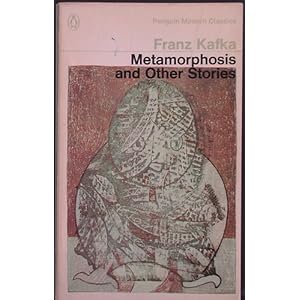
Kafka - Metamorphosis and Other Stories

Metamorphosis and Other Stories (Penguin Modern Classics)Now if you don't agree this tastes somewhat of turmeric, garam masala and cardamom, then you should probably stop reading now. While this is, from one angle, the surreal, modernist classic it's always talked up to be, stories like Metamorphosis, The Penal Colony and The Judgement have had an obvious impact on horror writers since they became well known. The obvious literary successor to Kafka would seem to me Robert Aickman more than anyone - The Swords or The Trains being blinding examples.


Doris Lessing - The Fifth Child


I studied this one at university. There was a lot of talk in the lecture halls and seminars about how it comments on modern nuclear families, on the media's obsession with either protecting or demonising young people, about autism maybe. And I agreed. And I said it was also a horror novel.

Notice the "also". I wasn't disagreeing with them that what they saw in the book was there, just that, look, here's something else too. Some cardamom, if you will. I mean, 'evil' children are a cliché in horror fiction and films, probably more so at the time the book was written than now. And it seemed a textbook example of how to get round the 'reveal' - that sometimes dreadfully clumsy moment where an author undoes pages and pages of suspense to reveal just what his or her monster is. Lessing doesn't do a reveal, the book seems to deliberately play with that expectation and then not satisfy it, in a way that I thought was interesting if not, well, fully satisfying.

I didn't think any of this was controversial or unjustified by "the text" as the lecturer insisted we call it, but you should have seen some of the looks I got. Some of the self appointed guardians of literature really don't like you sullying their word-view with genre fiction. Fortunately Lessing, with this book and the sci-fi of some of her others, ignores such philistines.


But of course, science-fiction readers don't always like it when you suggest there's an overlap between sci-fi and horror, either. I mean they'll accept Alien, which is basically Lovecraft in space, but not some of the genre's more intellectual output like that of Philip K Dick. I mean there's no monsters here, like there (arguably) are in The Fifth Child. And that's what horror is, right? Monsters?

No. Horror is an emotion, a spice... And often what it tastes like is this: the nagging, persistent feeling that although the world seems okay, something, somewhere, is horribly wrong. You can taste it in The Haunting of Hill House, you can taste it in The Shinning, and you sure can taste it in Philip K Dick's books. Again, I'm not arguing Time Out of Joint isn't sci-fi, it absolutely is. I just argue that doesn't mean it hasn't also got a tang and whiff of horror to it.


I suspect a few of you who were with me up until this point may be doubting me now. For a start, this is a play, not horror's most natural medium. And it's a play about plays, more specifically Hamlet, and two little people caught up in the action without understanding why. It's very funny, full of slapstick and philosophical humour, but also poignant too - the ending has always stuck with me. It's very British and a bravura display of word power and stagecraft. 

Horror?

Or, to describe R&GAD another way, it's about two people who begin to suspect that something, somewhere, is not quite right in their world... Sound familiar? Taste familiar? 

Seriously, read it again (or read it, if you haven't - it's a play that works well on the page too). Aren't the initial signs a little bit, well, unnerving (those coin tosses)? When the characters try and reassure each other and themselves all is well, isn't that sinking feeling that they're wrong familiar? 

And they all die at the end, which must count for something.

Now, after that post, I really fancy a curry...