Showing posts with label horror. Show all posts

9/15/2021

Hallowe'en Horrors

I'll be appearing at the Hallowe'en Horrors event at the Derby Quad on October 30th, running a workshop  on writing weird, strange, off-beat, and creepy fiction. Details and a link to get tickets are below:


Join us for the first part of a very special day of horror writing, with five workshop sessions looking at a wide range of aspects of the genre! QUAD’s Literature Officer Alex Davis will be your host throughout, and will be joined by acclaimed authors Sophie Draper, James Everington and Angeline Trevena for an exciting day of dark inspiration, imagination and information!

3:30pm-4:30pm: James Everington – The uncanny: making the everyday seem strange in fiction

Anyone can make a werewolf or spectre sound scary, but how do writers approach more mundane horrors? This workshop will focus on picking out those details in apparently innocuous, everyday situations and making them seem just that little bit ‘off'. Perfect for making your readers uneasy without them knowing quite why….

Further details & tickets here.

10/20/2020

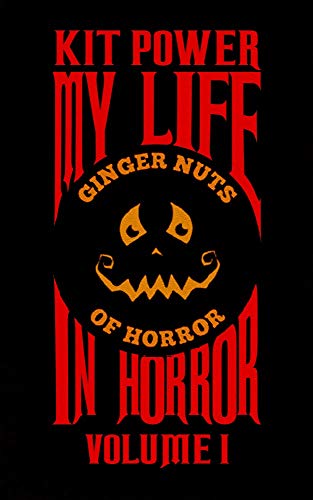
Recommendation: My Life In Horror #1 by Kit Power

Kit Power's My Life In Horror #1 is a non-fiction collection of essays originally published on Gingernuts Of Horror. In each, Kit describes a formative encounter with the horror genre in his childhood or young adulthood: not just books and films, but also music, a role-playing game, and real-life events. Kit's definition of what counts as 'horror' is pretty flexible, which makes for some delightful surprises in what he's included—as well as Hellraiser we get Robocop, as well as The Wasp Factory we get Sleepers. I thought I'd already read most of the content, but it turns out there was quite a lot I'd missed, especially where they relate to music. As an aside, Kit is very good writing about music, making we want to listen to tunes I either doubt will be to my taste (The Wildhearts) or even already know I loathe (bloody Queen). 

Kit and I are of a similar age, so I encountered a lot of the works he mentioned in my youth too (and I was struck by the notion, hinted at throughout the book, that the news we see as kids influences our view of horror as much as fiction; that footage of Hillsborough, Zeebrugge, the Challenger explosion, or the Ethiopian famines, form a bedrock of shared cultural experience and imagery similar to liking the same films) but I suspect nearly all fans of the genre will get a kick out of these pieces. And...

.... and, oh look, who am I kidding? This isn't how I wanted to write about this book.

There's a great moment in B.S. Johnson's Alberto Angelo where he interrupts his own novel by saying "fuck all this lying" and proceeds to tell the supposedly real-version of events that inspired the fiction up until that point. And while I've not been lying above, I have been circling round the real reason I loved this book: 

It's 2020.

It's Covid-time.

I haven't seen my writing friends in months, nor am I likely to for months more.

Like many I'm sure, my writing has taken a hit this year. My routine's all changed, I've lost some mojo. And part of it is that the conventions are cancelled, those semi-regular catch ups with fellow authors. I'm sure I'm not the only one who gets a burst of motivation & enthusiasm following Fantasycon or Edge-Lit, and while some of that is from the scheduled events, a lot is from being surrounded by so many amazing writers and fans and creatives, from talking to them during the day and well into the night.

Reading My Life In Horror feels as close to one of those conversations as I'm going to get this year. Indeed, the first chapter is about Stephen King's IT, and one of my favourite FCon memories is a late night conversation with Kit and Mark West when we talked about how much we loved IT for hours. And the great thing about this book is it's so personal, so much Kit's take of the horror genre, that it feels like a one-way conversation with him. My responses to the essays in the book weren't objective judgements, but me thinking what I would want to say back to him, if I could. (You're so wrong about Don't Look Now, Kit.)

In a very real way, it's fired me up like a convention would (I even read it Friday to Sunday, the same timescales as Fcon) and made me want to get back to my own writing, to my own life in horror. So it's pointless for me to pretend to describe this book like I did at the top of the review, to compose an objective sounding discussion of its many strengths and odd weaknesses. 

My Life In Horror #1 was quite simply just what I needed right now, in 2020, and it might be just what you need too. 

8/01/2014

Hauntings Launch

Hauntings: An AnthologyYesterday I travelled up to Manchester for the launch of Hauntings from Hic Dragones, which contains my story The Man In Blue Boots. It was a really fun event, with readings, a raffle, and free wine. It took place in the International Anthony Burgess Foundation, which was a great venue - if only it was closer to home! I think my reading went down well, and several people afterwards said they liked it so hopefully I'm not deluded (well, not about that anyway). I was especially chuffed and grateful to the people who said my story was one of their favourites in the book, especially as I had to then rather shamefacedly admit I'd not read any of Hauntings at that point (I started it on the train back today).

It was great to meet some of the writers from the book in the flesh, even if some only fleetingly: so hello to Rachel Halsall, Tracy Fahey, Michael Hitchins, Jeanette Greaves, Sarah Peploe, Daisy Black, Mark Forshaw and of course Hannah Kate, head honcho of Hic Dragones.

Hauntings is available from the Hic Dragones site, or from Amazon (UK | US). Naturally I'm biased but based on the quality of the readings and the stories I've read so far, it's a book I'm really pleased to be part of.

Edit: this is what I looked like, apparently:


6/29/2014

Recommendation: The Unquiet House by Alison Littlewood

The Unquiet House
I love haunted houses, me. I love Hill House, I love Hell House, I love The House Next Door and the House Of Leaves.

And now I think I love Mire House, too.

For Alison Littlewood's new(ish) novel is a haunted house novel to rank with all the above; where the house is not just a home for spooky beings, but a corruption of all a house should actually be; an archetypal 'bad place'; a mirror of its inhabitant's hopes and fears; a trap.

The Unquiet House is told in four interlocking sections, starting in the present day and then working back to the 1973, then to 1939, before finally coming back to 2013 - it almost reads like three self-contained novellas about a different generation's experiences at Mire House. But the historical parts of the novel provide a rich and plausible justification for the terrors in the present, and at the end Mire House is left still standing, still unquiet (still "not sane" as Shirley Jackson would no doubt have it) and still occupied by... something. And there's a strong suggestion that all is not over, and that another generation is about to be trapped and consumed by the horrors of the past.

I love haunted houses, me.

5/28/2014

Strange Story #21: Mortmain (Guest Post by MR Cosby)

Strange Story #21: Mortmain
Author: John 'Jack' Metcalfe
Collected In: Nightmare Jack & Other Tales

JE: Some time ago I was thinking about resurrecting the Strange Stories column with a series of guest posts. Unfortunately only one person ever actually completed a piece for me & so I forgot about the idea. Having just remembered that I never posted this piece by Martin Cosby I've posted it now... If anyone reading this has a strange story they'd like to write about on here, do get in touch. 

Martin's début collection, Dying Embers, is out now. So without further ado....

John Metcalfe, often known as 'Jack', lived a life as strange and enigmatic as many of his tales. Married to the manic-depressive novelist Evelyn Scott, they led an unlikely, globe-trotting and nomadic existence, until poverty and bad health intervened. Both their literary reputations declined over their years together; and after Evelyn's death, Metcalfe was left penniless and reliant upon the charity of friends until a fall led to his demise.

Nonetheless, in the midst of such a turbulent life he managed to write a number of novels which, despite critical acclaim and commercial success, have since disappeared without trace; and several collections of short stories, which almost managed the same fate. Luckily, Ash-Tree Press produced Nightmare Jack and other Stories in the late-1990s, thereby bringing his little-known short fiction back to print.

His best-known tale must be Nightmare Jack, famously judged by Robert Aickman to be "one of the finest supernatural tales in English literature", and included in his second Fontana Book of Great Ghost Stories (1966). Of similar stature are the much-anthologised Brenner's Boy, The Double Admiral, and The Bad Lands. All are masterpieces of creeping dread, creating both disturbing imagery and a cumulative sense of unease.

Mortmain (first published in his collection Judas in 1931) is typical of his best work and is surely influential; it's not just the subject matter that recalls Elizabeth Jane Howard's Three Miles Up from two decades later.

It starts as it means to go on. "In the cabin the rescued girl Salome, now his wife, was washing up the plates from supper." This juxtaposition of the intriguing alongside the everyday sums up the story. John Temple is on a boating holiday with his new wife, the recently widowed Salome; and despite both their best intentions, shadows of her previous marriage loom ever larger as the trip progresses. To begin with, the spectre of Salome's late husband Humphrey Child is embodied by the house they shared. 

"It must have stood within his view a quarter of an hour before he noticed it. From Penny Mile they had come dropping through the windless evening with the falling tide, and it had crept upon him unawares."

They leave the house behind, and make their way along the river. On the face of it, nothing could be more relaxing and familiar than the peaceful, easy rhythm of nature on the Hampshire coast, so familiar to them both. In contrast with this, however, is the rising sense of unease created by repeated sightings of what may or may not be the ghost of Humphrey Child's boat; a 'prestidigitating, pestilential hulk'. At first Temple tries to ignore the apparition, half-seen on distant moorings, hoping that his wife has not noticed its brooding presence. However, he soon realises that despite it being impossible, it cannot be ignored; and that Salome has been seeing it too, in fact more frequently than he.

By this time Salome's health seems to be deteriorating and Temple's state of mind is worsening. Nonetheless, she insists upon them persevering with their trip, and during the second week the sightings of Child's boat increase in frequency, getting relentlessly closer. Then, the encounters with the moths begin; and there can be no denying they are venturing recklessly into the land of the dead. Indeed, Temple's realisation that Salome's cannot resist the lure of Child's attraction from beyond the grave comes far too late. Is it too late for Temple too? 

I won't spoil the ending, but suffice to say the climax of this story is a triumph of the ambiguous story form, and must also be a pretty early example of such. As with most of Metcalfe's work, Mortmain is graced with economical yet beautiful descriptions of the featured landscape, under which lurks a more forbidding and at times frightening side to the natural world. The power comes from when and how this nether world bubbles to the surface.

5/15/2014

BlogHop: Three Things I Don’t Write (& Three Things I Do)

Another one of these author blog hops thingies, this time on the theme of three things I don't write about, and three I do. I was nominated by the always ace sci-fi author Neil Williamson, who also nominated Chris Beckett and Keith Brooke (who's such a swot he's written his already). My own nominations are at the end of my piece. 
So without further ado...
Three Things I Don’t Write About:
  • Real Places: I set stories in real places where the story itself seems to demand it, but most of the time I don't feel the urge. A lot of my stories are set in unnamed urban settings; recognisably British maybe, but not somewhere you could actually recognise as being Nottingham or Basingstoke or Widnes or wherever. As long as the readers recognise the details of the place that I'm using for atmosphere - the lonely bus-stop or the graffiti ridden alleyway - then I don't think it needs to be a specific town or city. Indeed I think such detail in a short story, where everything needs to dovetail together, could be counter productive. As I said, there are exceptions in my work such as Home Time (very specifically about the contrast between Oxford and a Nottinghamshire mining village) but even here it's what the place means to the character and the story that's important, not accurately depicting it as is in real life.
  • ‘Monsters’ That Might As Well Be Real Animals: A lot of horror deals with death, and so obviously a lot of horror deals with things that kill people. But what bores me is to write the kind of horror where the ‘monster’ – be it vampire, psycho, or blob from the plant K – is just a physical threat which people either run from, fight, or get eaten by. As far as the plot goes, the monster might just as well be a wild dog. Which isn't to say physical beasts don’t feature in my work; it's just I like my monsters to mean something and for the characters to be fighting for more than their brute survival – for their sanity, perhaps, or their view of the world, or to preserve their illusions. I especially like to write about horrors that might not be physical at all – The Other Room being an example.
  • Cthulhu & Co: For a writer who portrayed cultist as mad degenerates, it’s ironic how much of a cult has built up around HP Lovecraft’s so-called mythos. I find it odd how Cthulhu and the like, vast and literally indescribable beings who induce awe and madness in equal measure, have been minimised by later generations into generic horror tropes, or t-shirt designs, cuddly toys or RPG monsters with their stats spelt out for you like a kobold’s. Some authors, obviously, have taken Lovecraft's ideas and twisted them to their own ends – TED Klein and Ramsey Campbell spring immediately to mind – and Neil Gaiman’s inspired spoof Shoggoth's Old Peculiar is brilliant. But in general I don’t understand the urge to write ‘straight’ Lovecraft homages nor do I have much interest in the plethora of anthologies called things like Cthulhu In The Wild West or Dagon In The West End. It seems doubly strange because it’s so obvious from reading his work that Lovecraft was using the imagery of his mythos to help articulate a highly philosophical and personal view of existence. He wasn't just thinking Ohhhh Godzilla with a squid for a head – cool!

 Three Things I Do Write About:
  • Doubles & Doppelgängers: I think anyone who’s read even a fraction of my work will probably have picked up on this. There’s the obvious doppelgänger stories like Falling Over or New Boy, where there’s a physical copy of someone (maybe)  but there’s also the Jekyll and Hyde like parallels within people’s personalities that I exploit in stories like The Other Room and The Time Of Their Lives. Coming at it all from a completely different angle is Dark Reflections (forthcoming from Knightwatch Press next year) which, as you can possibly guess from the title is about that doppelgänger we all have on the other side of the mirror… There’s also a second aspect to this, where two different stories serve as partial reflections of each other – for example in the collection Falling Over, the story The Time Of Their Lives tells of some sinister adult behaviour from the uncomprehending point of view of a child… whereas Sick Leave shows an adult protagonist struggling to grasp the equally incomprehensible behaviour of a group of eerie children… I didn't write these stories to be conscious reflections of each other (indeed, they were written years apart) but when putting together a collection of stories I like finding these kinds of echoes in my work and to exploit them where I can.
  •   Ambiguity: I love endings where you're still not sure what will happen next, or still not sure what has happened, and especially endings where you're not really sure what it all means. There's lots of different types of ambiguity in narrative, and I've argued before that if anything distinguishes 'weird fiction' from straight horror it's ambiguity. That's not to say that my stories simply just stop, or become so weird as to be impenetrable - trying to get the emotional kick of an ending whilst not tying everything up with a neat bow is what I'm going for. 
  •  Flawed People: God, is there anything more boring to write about than happy well-adjusted people? Or even worse, people with so many abilities and advantages that they overcome everything they face? This is something Neil included in his three things, actually, where he said he’d never write about superheroes and I completely see his point. Even where people in my stories do have abilities beyond the ordinary (Regina in The Watchers for example) their ‘powers’ are as much a curse as a blessing, and not really under their control. But I'm not much drawn to this theme, and much prefer to write about flawed, two-faced, self-deceiving and even downright repellent people in my fiction. Part of his goes back to the idea that the horrors of the story should have some connection to the protagonist, and part of it is the much simpler horror trope that an unpleasant protagonist should get their comeuppance in the end.
Passing The Baton...
Up next are Mark West, Amelia Mangan, and Jennifer Williams. Fabulous writers one and all, so do see what they have to say for themselves.

4/24/2014

Recommendation: House Of Small Shadows by Adam Nevill

One thing I always like about Adam Nevill’s books is that, as well as thinking about the story itself, his work always makes me think about the horror genre in general - about my own beliefs about how horror works. From his novels I assume (perhaps wrongly) that Nevill is the kind of writer who is thoroughly aware of the tradition he works in as he writes, and some of that consciousness about the tropes and themes of horror seems to rub off on me when reading.

Which is possibly the most self-absorbed and pretentious start to a review I've written, but sod it.

Nevill’s latest novel, House Of Small Shadows, is a very different beast to the last of his books I mentioned on here: The Ritual was a wilderness based horror about people trying to stay alive - as I said at the time, it was a novel driven by the fear of death. By contrast, House Of Small Shadows never seems to place its central character (an antique valuer called Catherine) in any mortal peril. Instead, the novel is shot-through with another, equal, terror: the terror of losing one’s own sense of self.

Death is a loss of self, of course, but so is madness, especially when madness is seen not as something internal but as some external force, remaking someone's thoughts in its own image. Catherine is subjected to just such a force when she is invited to value a treasure-trove of taxidermy, puppets, and priceless dolls at The Red House. The house is occupied by the wheelchair bound Edith and her silent housekeeper Maude, and neither it nor they seem to have changed in nearly a hundred years. Isolated, remote, and with a somewhat clichéd lack of phone signal, The Red House is a world unto itself, a microcosm that Catherine becomes trapped in.

It’s a better reader than me, I'm afraid, who won’t become frustrated with Catherine’s repeated decisions to leave the house which she she fails to follow through on. To be fair, the threat she half-senses in the house is somewhat nebulous, but Catherine’s listlessness in the face of it causes a few pacing issues around the halfway mark, at least for me. Still, when she does finally attempt to leave, the resulting episode in the nearby village, where strange rituals and pageants are enacted by what she takes to be wizened, shrunken old people, is like a Ramsey Campbell or Ligotti story in its intensity and half-seen imagery.

And really, this is where Nevill seems to excel - at vivid imagery, at atmosphere. And what is horror fiction if not the art of sustaining atmosphere? The book overflows with macabre detail and suggestion, the implications piling up for the reader in the same way they seem to be piling up for Catherine - each event perhaps something she could cope with individually, but the cumulative effect threatens to overwhelm her. The fevered, claustrophobic Red House (like Hill House before it...) seems to reflect and amplify the fears and neuroses that Catherine brings with her from the outside world, from her troubled past. (Her back-story is wonderfully dovetailed with the present day action). There's the constant sense that her sanity is being eroded by what she encounters in the Red House, and that the space which sanity leaves is open for invasion by something more dominant. The reader worries that, like the stuffed animals and the taxidermy displays, Catherine will be remade, twisted into another’s poses, fashioned by an older and crueller view of existence into something she's not. Or is the real fear that she was like that, or along? The ending of the novel is without respite, without pity, and a finale that is, in its own way, darker than anything in The Ritual.

Overall, this is another fine horror novel whose minor flaws are overshadowed by its many manifest strengths. If you're anything like me, this is one you’ll remember for a long time afterwards.

4/05/2014

Fictional Emotions; Emotional Fictions

'I Hated This Book!' - it was one of those arguments on Goodreads where both sides had become entrenched before I even saw the thread. Arguing about whether a book was any good or if it "sucked". The whole thing was completely impenetrable unless you'd read the YA book in question, but the arguments seemed the same as a thousand other similar threads and reviews: "I didn't like the main character one bit!"; "I finished this book and I felt nothing..."

I felt nothing - that was said as if it should end all discussion (although no arguments are ever won or lost on Goodreads) which seems reasonable enough. Isn't that why we read - to feel? But it got me thinking - what exactly do we mean when we say this? It seems to me there are a whole range of ways books can create an emotional response, and many of the endless and tedious arguments about reading are caused by a failure to acknowledge one or more of them.

I've put some very loose and blurry definitions of different types of emotion response to fiction below; no doubt these are biased towards my own reading and writing preferences. Comments, criticism and additions very much welcomed below the line.


1. Experiencing the emotions the main character(s) are experiencing

This is probably what most people think of when they think of an emotional response to a story: the main character is excited and so you feel a vicarious excitement, the main character is conflicted and hence so are you. Much commercial and YA fiction is written to create just this kind of response, and it seems to me to be the driving force behind the idea that a story should have a POV character that is sympathetic; that there shouldn't be too much of an emotional leap required from the reader.

Much so-called literary fiction claims to be more 'sophisticated' than commercial fiction merely because the character you are invited to emotionally identify with for the duration of the story is unattractive or abnormal in some way: a murderer (The Outsider), a child murderer (Beloved), a child lover (Lolita). And this seems a good thing to me; one of the reasons reading is a valuable activity is precisely because it allows you to emotionally experience the world from someone else's perspective, which may be radically different to your own. And it's the reason I find the commercial insistence that the central character of a story should be someone the reader can easily identify with so dispiriting. 


2. Experiencing different or conflicting emotions to what the main character(s) are experiencing


Sometimes the emotional response the reader feels to what a character is going through is conflicting or at odds with what the character themselves would be feeling. Put simplistically, if a chapter about a villain's downfall is told from the villain's point of view, the reader will be experiencing some kind of positive reaction to the villain's own frustration and woe. More interestingly, someone like Jane Austin is great at writing scenes where the characters appear, even to themselves, to be acting civilly and rationally but the reader can perceive the more human and subjective reasons, such as pride (and, um, prejudice) for their behaviour underneath. In Austin's case this doesn't necessarily stop us from also empathising with the characters, but in a book like Carrie it might, at least to an extent. Carrie's actions are in one sense perfectly understandable, and in another monstrous; and the different points of view in the story dramatise this paradox.


3. Atmosphere 


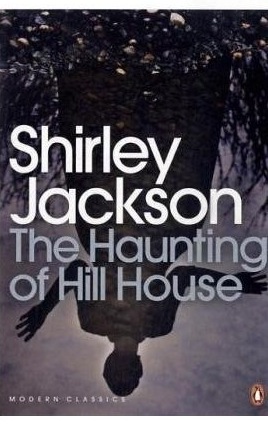
Of course, emotions don't have to have anything to do with characters at all; it's an odd fact about writing that almost anything, no matter how inanimate, can be be described emotionally. This is especially important in horror writing, where a sense of dread is frequently achieved by describing everyday locations in such de-familiarising ways that they seem full of portent and threat. Think of the brilliant opening to The Haunting Of Hill House - the sense that something is very wrong about the house is palpable but there is no viewpoint character to be experiencing this; it's all in our heads. And of course this kind of effect is not just limited to fear or tension; a good writer is selecting every detail to evoke whatever mood is desired.


4. The thrill of well-written sentence

Being able to actual write well is of course key to evoking any emotional responses in the reader. But separate and beyond that, I think, is the way a well crafted sentence can evoke an emotional response like a piece of music can - by the way it sounds:
"And I said I do, I do.So daddy, I'm finally through [...]If I've killed one man, I've killed two—The vampire who said he was you."

Or if poetry's too much for you on a blurry Saturday morning, how about this from Douglas Adams:
“He turned slowly like a fridge door opening.”
I'm not sure there's much point in trying to explain that - you either get it or you don't. Either feel the rightness of those words in that order, or you don't. Subjective, sure. But as much a part of the reading experience as anything else.


5. Game-playing, Plotting, and Climaxes

The plot of a book drives much of the character's emotional responses, but we as reader's can respond to it on an entirely different level as well - because we know it is a plot. This is best described as that feeling we get at a 'twist' ending to a story, or when the murderer is revealed at the end of a whodunit. In a sense, the author and the reader have been playing a game, the reader trying to guess the ending, the writer trying to stop them (whilst still playing fair and leaving enough clues). There's something pleasurable about being tricked by something like The Murder Of Roger Ackroyd and then having that trick explained to us at the end. And that 'Aha!' moment of realisation is an emotional response that came only come from a story, not from life, which doesn't play games.

More broadly, just knowing a story is nearing its end shapes our emotional responses to what occurs. We don't have to think, for example, about what the events of Romeo &Juliet mean to the poor sods who are left to pick up the pieces in the months and years afterwards because we're already back outside of the theatre, blinking in the light.


6. Intellectual Emotions


I read somewhere that we all belong to one of two camps with regard to facts: those people who think it's only worth knowing something if it's of use, and those who value knowledge for its own sake regardless of its usefulness. The fact that I've remembered this, when it's never been of the slightest use in my life, probably shows what type of person I am.

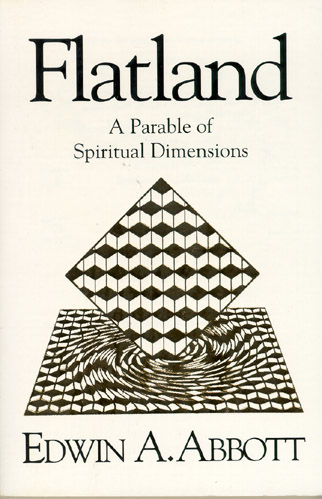
I think for at least some people the use of intellectual ideas in a piece of fiction triggers a peculiar kind of emotional response, one which is hard to describe (we really should have a specific word for it). Novels like Flatland by Edwin A. Abbot work almost entirely because of this play of intellectual ideas - and that's the best way I can describe it, as "play". Like the music of a piece of poetry, this is one you either get or you don't, I think. 


7. Fill In The Blanks

I'm pretty sure we all know that as readers we bring our own emotional baggage and experiences to a piece of fiction. And some books play on this by presenting events in such a flat, blank canvas way that we are tempted to fill in the void. We ascribe motivation, beliefs and emotions to characters based on their actions without any textual justification for doing so. Less Than Zero by Brett Easton Ellis (indeed, nearly all of Easton Ellis's books) seems to me to work at least in part because of this - it presents to us scenes so flat it's like an itch we can't quite scratch. 

And of course, if what you're after from a book is a likeable hero or heroine with whom you can share their ups and downs, this itch might drive you to close the covers before you finish it. Which is fine; it would be a boring world if we were all the same. But on that principle maybe avoid ranting about how you couldn't relate to the characters at all! on Goodreads. If only because, no arguments are ever won or lost on Goodreads.


8. And Finally, One For The Authors:

That crippling sense of bitter envy and self-doubt when you read something so bloody good it makes any talent of your own seem insignificant and counterfeit in comparison. That.

3/25/2014

Recommendation: Ghostwriting by Eric Brown

Ghostwriting is a collection of stories by Eric Brown, who is normally a science-fiction writer. As the title suggests, this collection brings together Brown's occasional forays into the world of supernatural horror and the ghost story.
Ghostwriting
In his introduction, Brown wonders why an avowed rationalist like himself is occasionally drawn to such subject-matter (it's something I've written about in the context of my own stories in the post A Drunken Conversation About Ghost Stories). You can read his thoughts for yourself, but what struck me as interesting was how many of his characters in these stories echoed the same thoughts as they found themselves wrapped up in the irrational and supernatural; for example in the first story (the fabulous The Man Who Never Read Novels) the central character has this to say to the decidedly non-rationalist titular character he meets on a train:

“I'm a rationalist,” Russell said, “a believer in science. I'm also a novelist.”

And of course, the point where Russell says this is exactly at the point where the reader is beginning to doubt the rationality of this particular novelistic world; and at the point, too, where maybe Russell is beginning to doubt it himself... It's a sentence echoed by many of the other characters in these stories. And is it really that odd? Surely the irrational is more frightening for a believer in science, messing as it does with the very fulcrum of his or her beliefs? (Much as The Exorcist is presumably more frightening for a Christian reader.)

Regardless, Ghostwriting is a fine collection of stories, nearly all of which can be read in different ways - as explorations of characters haunted either by the supernatural or purely by their own mental demons. Particular favourites of mine were the aforementioned The Man Who Never Read Novels; Li Ketsuwan, a tale of compulsion and comeuppance set in Thailand; and the superb The Disciples Of Apollo, a story of someone who goes to a remote island facility after being diagnosed with a fatal disease, and which plays it's cards very close to its chest until its explosive last line... 

A strong and thought-provoking book, I wolfed this down during a single-train journey, and I am still thinking about many of the stories afterwards. Let's here it for the rationalist horror writers.


Ghostwriting is out now from Infinity Plus - sales links here.


3/20/2014

Horror Fields and Amazing Stories

I'm pleased to say that my story, Across The Water, is out now in the Morpheus Tales Rural Horror Special - The Horror Fields. Mine is a jolly little tale about prejudice, strange insects, and lock-keeping.

There's some great authors featured, including Richard Farren Barber and Rosalie Parker, so I'm really looking forward to reading this one myself. The cover art is really cool too.

The Horror Fields is available now in paperback from Lulu and ebook from Smashwords, with Amazon coming soon.


Also, I've been interviewed by Gary Dalkin on the Amazing Stories website - one of the most enjoyable interviews I've done to date. You can read it here.

3/10/2014

My Writing Process


So, I've been tagged by MR Cosby (author of the forthcoming Dying Embers from Satalyte Publishing) in this Writing Process chain thingy. The idea is that I answer the following four questions on the same day as Martin's other chosen writer (
Mark Fuller Dillon) and then tag some other writers to continue the chain. So without further ado, the questions...

1) What am I working on?
A new collection of nightmare stories.I'm on the second draft of a new novella called Other People's Ghosts, which is about poltergeists and guilt and all sorts of dark and fun things like that... Structurally it's one of the most ambitious things I've written, because the timeline is deliberately non-chronological, and there's a lot of work and trial and error going into getting that right at the moment.

I'm also working on a short story called Premonition which is a bit of a Dorian Gray style-thing.

2) How does my work differ from others of its genre?
God, that's a hard one to answer without sounding like a smug idiot. I'm not one to sing my own praises... I don't deliberately set out to write something 'different' or genre-bending, I think it's just a case of reading and thinking about as many books as I can (not limited to horror) and then just trying to write true to that and to my own experiences and beliefs. Weird fiction is a very personal type of writing, I think, because you rely on subconscious and non-logical judgements sometimes, so I think it's inevitable writer's personalities and sensibilities come through when they're writing. So in the sense that we're all individuals, originality comes for free. Of course this kind of 'originality' doesn't mean that it's necessarily any good...

3) Why do I write what I do?
I don't particularly feel like I have a choice, to be honest. The ideas for stories come to me - sometimes fully formed, more often a nebulous image or intriguing first line - and those are the stories I write. Of course there's conscious decision making after that, and I spend a lot of time thinking how horror fiction works and try and apply that to my work, but the initial moment of conception is pretty much spontaneous. Every time I've tried to force myself to write in a particular mode or genre, it's been a failure.

That's not to say that the initial moment of inspirations is completely beyond my control; for example I've been mulling over writing something novella-length for awhile and deliberately reading other people's work at that length before the ideas for Other People's Ghosts fell into place. So you you can try and 'hack' your subconscious. Invites and submission calls for themed anthologies work in the same kind of way.

4) How does my writing process work?
I think "process" is a rather grander word than whatever I do deserves. But usual it's a little something like this:

I mainly write all my first drafts by hand, because I prefer the speed and spontaneity, plus psychologically the words feel less fixed scribbled onto paper than neat on a screen, and so it helps me be ruthless when rewriting and editing. It forces a certain discipline because it means that every sentence gets rewritten and re-thought out. I might do a second handwritten draft to sort out the more structural problems, and then the third draft is where I type it up and fix all the sentence level stuff.

That said, neither of the two things I'm working on at the moment have followed that process at all! The above is probably my ideal process, each story deviates from it by varying amounts. 
---

I'm supposed to pick three writers to keep this blog chain going, but as of yet I haven't and because I'm full of cold I don't think I'll manage to do so in time. So if you're a writer reading this and I like you (and if you read my blog then I do like you, automatically and without reservation) then feel free to take up the baton.

1/18/2014

The Book That Made Me


Picture
Delighted to be taking part in a new special feature on the Ginger Nuts Of Horror site where various authors talk about 'The Book That Made Me'.

I chose the Dark Feasts by Ramsey Campbell, which blew my mind as an impressionable teenager.

You can read what I had to say about it here.


Below is a picture of the Dalek ride that I mention in my piece; you'll have to read it to find out the connection between Daleks and Ramsey Campbell. (It's pretty tenuous to be honest.)


11/16/2013

Recommendation: Phoenix by Steve Byrne

I was lucky enough to win a copy of Phoenix by Steve Byrne in the Andromeda One con raffle, and after just finishing it I can safely say it was a fantastic prize. Phoenix is a horror-thriller set in the Vietnam war, moving from 1967 all the way to the fall of Saigon. The horrors of war, the sheer bloody waste of it all, are all too evident, as the central character - an Englishman called Bram Curtis -  travels around Vietnam, initially accompanying his sister who is looking to adopt a Vietnamese orphan from a village deep in the combat zone... and near an ancient Montagnard temple. 

It's a tricky thing to do, to make mere supernatural creepiness seem relevant amidst the man-made horrors of war, but Phoenix pulls it off. Partly that's because the supernatural element is part of the war, or of all wars, and the scope of the story keeps expanding as Bram's quest becomes ever more desperate. There's a touch of early Dan Simmons evident in the skilful way Byrne sets his story against real life events and in the expertly written set pieces, including a particularly thrilling attack on a steam train. But Phoenix is darker, and more nihilistic in its ultimate message than most pieces of commercial fiction. It's a long book but never boring, and it has a large cast of characters, nearly all of whom - American, Vietnamese or English - are well realised. Bram in particular changes out of all recognition from the somewhat purposeless, naive young man we meet at the start of the novel. And the final chapter - hell, even the final word - provide a final surprise, a final twist to Bram's journey. Or maybe not so final at all.

Phoenix (UK | US)

10/16/2013

The Ritual & Wilderness Horror

I recently finished The Ritual by Adam Nevill, a horror novel set, to quote the blurb, in "the Scandinavian wilderness of the Arctic Circle". It's a fine novel, albeit one that I felt lost a bit of steam in its second half. It's also a very pure horror novel too: it's essentially about a group of friends lost in the woods, with 'something' stalking them. Even more essentially, it's a book about the fear of death.

That might sound a trite, even pointless description - aren't all horror novels about the fear of death? After all, what else is there actually to be afraid of, underneath? Maybe that's true, but it's surprising how many horror books and films pussyfoot around the issue. Very few put us inside the head of someone facing death for any length of time. The gory kills, the entrails and innards spilt in the worst horror films and fictions actually seem a distraction, a sensationalist focusing on the external side of death. The real horror is inside.

The Ritual dares to show us the thoughts of someone who believes they are going to die for a very long time. The sense of dread, of hopelessness, is almost palpable and is as scary as anything I've read for a long time.

Maybe the starkness of the wilderness setting increases this feeling. After all, the central characters are in a hell of a mess before the supernatural element really makes itself known. They are lost, wet, alone, running out of food and a couple of them are injured, slowing the group down. They're suffering that modern dislocation that comes when suddenly, somehow in the middle of our routine lives we can be mortally in danger: they were on holiday for Christ's sake, and now this... But theirs is also an ageless fear, too: the fear of being lost in the woods.

It's the same fear Stephen King plays on in The Girl Who Loved Tom Gordon - one of his best books I think, because it's so simple: the titular girl is also lost in the woods and scared she's not alone. It's a very different book, both in terms of plot and tone, to The Ritual but there's a similarity there. As there is with The Terror by Dan Simmons, another book where the horrors of the Arctic wilderness the characters can't escape (stranded this time, rather than lost) almost seem to dwarf the supernatural element of the plot.

So why, we might ask, do these books even need a monster - is it a mere sop to the horror audience? A set of stabilisers that these writers can't write without?

Well no, I don't think so. I think it's important to the effect of these stories, and The Ritual in particular, that the 'thing' is barely described, a shadowy but constant presence at the characters' backs. No matter how far they walk, it keeps pace with them; no matter where they hide it seeks them out. It's like Death itself, in fact. Not so much a symbol, but an externalisation of the character's plight.

But, these being stories, the monster can also be evaded, fought off- temporarily and at great cost it can be defeated. Sometimes we can make it out of the wilderness, of the woods we have got lost in. Despite a sense of hopelessness as great as any I've encountered in a novel, there are brief moments of respite in The Ritual, of light and hope. But I won't give the game away about whether they are ultimately groundless or how the novel ends - this really is one you need to read yourself.

The Ritual (UK |US)