Showing posts with label guest blog. Show all posts

5/29/2018

Music For Writers #6: Ray Cluley

After a pause for holidays, Music For Writers is back, this week with selections from Ray Cluley. Ray is one of my favourite authors writing at the moment (his was the first story for The Hyde Hotel); if you're reading this blog chances are you'll agree with me; on the off-chance you aren't aware of his work why not try his collection Probably Monsters or the chapbook Water For Drowning...

And if the below is anything to go by, he likes some good tunes as well, so let's get this show on the road.

Take it away, Ray:


Like many other writers (such as this lot James has gathered up), I like to use music when I’m writing. Music can put me in the zone. Music can lend a helpful atmosphere or provide a suitable emotional backdrop. Music can inspire (muse-sic). 

Usually I favour scores and soundtracks from films and TV – I could fill an entire blog with my favourites of those, easy – taking what has been used to support an existing narrative and using it to either support my own or inspire one. If it’s the former, I’ll pick something in keeping with the mood I want or the genre and put it on repeat. Not only does it get me in the right mood-set but I’m convinced it affects my word choices and the structure of the work as well.

Listen to how Angelo Badalamenti so beautifully describes and performs (with a passion that is practically sexual!) the relationship between narrative and music here:


Incidentally, the Twin Peaks score, and the soundtrack used for Fire Walk with Me, are two of my favourites albums for writing to. However, for this ‘Music for Writers’ project I’m going to (try to) list music that does not fall into the score or soundtrack category…


I’ve made it pretty clear once or twice in the past that I’m a huge fan of this Icelandic band. Their music (avant-rock, apparently) is ethereal, elegiac, mournful… They have some happy songs, too, but it’s the more otherworldly contemplative material I like best. The melancholy music. The haunting music. Like ‘Lúppulagiđ’:


Sigur Rós were most directly influential regarding my novella, Within the Wind, Beneath the Snow, which I wrote entirely while listening to a repeated mix of their albums. I did the same recently for a story called ‘The Whalers Song’ which I wrote for Ellen Datlow’s horror stories of the sea anthology, The Devil and the Deep.

[Disclaimer: Okay, so their music has been used plenty of times in films and TV, but that wasn’t how I discovered them and so it doesn’t break my self-imposed rule.]


I was lucky enough to see Pook perform at St George’s in Bristol and I’ll be treasuring that memory forever (not least of all because I went with the wonderful Volks). This song – ‘Backwards Priests’ – is one of my favourites:


Again, it breaks my own self-imposed rules a little as part of this particular track was used in Stanley Kubric’s Eyes Wide Shut, but I’m allowing it (I’m generous like that) because I didn’t know it from a film when I first came across it. A dance teacher I once knew used it (brilliantly) for a piece she choreographed with her students, and I in turn used the music in my Creative Writing class. I showed the students a clip from The Ring remake – the black and white images and sequences from the cursed video footage – and then played this music and asked them to write their own version of the cursed tape, just free-writing to the music, noting anything and everything they thought of while it played. They came up with some beautiful ideas. I do the same thing myself as a writing warm-up sometimes.


Right, turns out I’m rubbish at not including scores or soundtracks. I discovered Clannad via the wonderful Robin of Sherwood series, and they provided the theme to Harry’s Game, as well as a superb song for The Last of the Mohicans. But this one, ‘Coinleach Glas An Fhómhair’, is my favourite.


I like folk music a lot and, as with Sigur Rós, I like it when lyrics are foreign so I can’t understand the words, otherwise I’d likely be distracted and/or overly influenced by them. When I first started writing I was a fantasy nerd and Clannad were great for that genre (not least of all because of the Robin Hood link). I may not write that kind of fantasy often any more, but I do still listen to Clannad while I write. There’s a great deal of comfort in the familiarity. I also like the music of former band member Enya, and also Loreena McKennitt, for the same sort of vibe.

[Note: By fantasy nerd I mean I was a huge fan of Dungeons & Dragons and other roleplaying games, and there’s a lot to be said for the benefits of such a hobby when it comes to honing narrative skills and ideas concerning character creation and development. Besides, it’s great fun. I fully recommend it.]


I heard their debut album – Dummy – in a record shop back in 1994 and bought it immediately. I’d never felt so instantly compelled to buy an album before (and only once again since – see below). I’d heard less than one full song before handing over my cash and did not regret the purchase one tiny bit: Dummy is not only one of my favourite writing albums, but one of my favourite albums of all time. I love the second album, too (Third, not so much) and desperately wish there were more.


Portishead are trip hop, but I just thought the music sounded spooky. Melody Maker described it as “musique noire for a movie not yet made”. Perfect for writing, in other words.


Turns out Facebook can be good for some things, sometimes. Nathan Ballingrud once posted a link to this song he liked, ‘Both Sides’, by She Keeps Bees, and – curious – I had a listen. I bought the album immediately afterwards (this being the only time post-Portishead that I’ve been so compelled).


Goes well with whiskey.

Bonus track: Elton John (sort of)

I’m not really a fan of Elton John’s music at all. In fact, I really dislike Elton John’s music, if I’m being honest. But when I was writing ‘Pins and Needles’ I made a play list of space-themed songs (something the main character had in the story) and included at as part of that mix. There were songs like ‘Out of Space’ by The Prodigy and ‘Space Dog’ by Tori Amos and a fair few songs by David Bowie (I love The Prodigy, and I love Tori Amos, and who doesn’t love David Bowie?) but it was Elton John’s ‘Rocket Man’ that proved crucial for the story’s… climax. And because of that, because the song (which I’ve never voluntarily listened to ever again since) was so directly important to the story itself, it feel it needs to get a mention here.

[Ray is right, never voluntarily listen to this song - JE]


Note: The only other time a song has had such a direct impact on a story was ‘Red Right Hand’ by Nick Cave and the Bad Seeds, which I used with more subtlety in ‘When the Devil’s Driving’.


So there you are, a few of the songs and albums that help me write. Thanks for inviting me to share, James. I’m looking forward to seeing what other people use…

5/15/2018

Music For Writers #5: Tim Major

This week's Music For Writers is courtesy of Tim Major, an author of some of my favourite stories of the last few years (I first read his work when I reviewed his debut novella Carus & Mitch). And - hurrah! - it looks like he has a great taste in music too, based on his selections below.

Take it away, Tim:

I always listen to music when I’m working and when I’m writing. Nowadays I work from home as a freelance editor; without a commute, the time I spend at my desk is my main opportunity to listen to music. Incidentally, when I was younger I daydreamed about a jukebox that would allow you to play any song from any point in history, and today Spotify comes close to fulfilling that dream. I listen to around 300 new albums each year and replay many of those, and old favourites, a great deal more.

The music I choose when I’m writing needs to function as a background – dreaminess is a must. This also means the only music with lyrics I can write to are those that are so familiar that they don’t intrude, or performed by singers I can’t understand – either because of a quirk of delivery, audio effects, or because they’re singing in another language. Finland’s Fonal Records is a great source of ethereal albums, my favourite being Lau Nau’s HEM. Någonstans, which Last.fm tells me is the album I’ve listened to most in the last five years, which I’ll confess comes as something of a surprise until I start playing the album again: it taps into something in my brain. Immediately, I feel serene. Other vocal artists that fit the bill include Grouper, Julia Holter and Thom Yorke (at least, his first solo album, The Eraser). This year’s debut album from Holy Motors, Slow Sundown, contains a raft of songs that would have all fit as Roadhouse end-credits songs for Twin Peaks: The Return and which settle at the back of the brain rather than prodding at the front. But for my first selection I’m going to go with Hope Sandoval and Kurt Vile’s ‘Let Me Get There’ from Until the Hunter: ever since her time fronting Mazzy Star, I’ve found Hope Sandoval’s voice to be a shortcut to bliss.


I’m not afraid of dullness or repetition, as everyone I know socially will attest. Take one of my favourite films, Stalker – I’ve watched it half a dozen times and I swear I’ve fallen asleep every time. (See also, to lesser degree, Pickpocket, In the Mood for Love, Les Vampires.) The first recording of modern minimalist music I heard was Steve Reich’s Music for 18 Musicians, a performance staggering in its precision and hypnotic power. (Possibly, the roots of repetitive were sown early for me: when I was a baby, Mike Oldfield’s Tubular Bells was the only album that would soothe me to sleep.) Albums in the same vein that put me in the zone for writing include Donato Dozzy’s Plays Bee Mask, Porter Ricks’ Biokinetics, Kara-Lis Coverdale’s Grafts, Rafael Anton Irisarri’s A Fragile Geography, Mind Over Mirrors’ The Voice Rolling, Folke Rabe’s What?? and William Basinski’s The Disintegration Tapes. But I’m going to pick a track from one of Alex Zhang Hungtai / Dirty Beaches’ ‘minor’ works, the soundtrack to Water Park (I haven’t seen the film – see note below). I couldn’t begin to estimate how many of my stories have been written to this music.


There are two artists that deserve their own category in a list of my listening tastes. Jim O’Rourke is one of the most prolific experimental musicians imaginable, having worked with Wilco, Sonic Youth, Joanna Newsom, as well as making up half of my favourite post-rock band, Gastr Del Sol, and also finding time to create a handful of sublime pop albums for Drag City. His experimental work with Fennesz (It’s Hard for Me to Say I’m Sorry) and Fire! (Unreleased?) are some of the albums I often return to while writing. Oren Ambarchi has had a similar stellar, and similarly collaborative, career, and his solo albums make me cross-eyed with contentment. Selecting an Oren Ambarchi album means immediately shutting out the world and retreating to a comfortable, secluded place which I imagine to be rather like Roald Dahl’s writing hut. I’m picking ‘Remedios the Beauty’ from my favourite of Ambarchi’s albums, Grapes from the Estate. It’s 15 minutes long, but usually after the first couple of minutes I can barely hear it, like the hubbub of a café, except it’s a café filled with customers that hum happily instead of chatting.


I love jazz, but I listen to it only rarely as a background to writing – usually when I want a hit of adrenaline, and often at the editing stage when my motivation may be flagging. Charles Mingus’ Ah Um hits the spot, as does Thelonious Monk’s Monk’s Music and Sun Ra’s Sleeping Beauty. The one I’ve been returning to most recently while editing my most recent novel is Duke Ellington’s Money Jungle, so that’s my next pick.


Sometimes intensity is what’s required as a background. I rarely write action scenes – possibly a failing of mine – and so when I do, I really need to gear up. Splazsh by Actress works fantastically well, as does the space-techno STRGTHS by SHXCXCHCXSH. For now, I’ll pick an incredible, disorienting live recording from Throbbing Gristle and Factory Floor supergroup, Carter Tutti Void, included on Transverse. 


I know that soundtrack albums are often popular with writers, but I find that anything that specifically recalls a film I like is problematic – I wouldn’t want to unconsciously adopt things half-remembered from a favourite film. Soundtracks that are more tonal than melodic work fine: Geoff Barrow and Ben Salisbury’s score to Annihilation being a case in point, or the contextless drones of Dean Hurley’s soundscapes for Twin Peaks: The Return, released as Anthology Resource Vol. 1: △△. This will sound obtuse, but I like listening to scores of films I haven’t seen. I’m planning a novel right now, and the laborious process of creating a synopsis has been soundtracked by Ennio Morricone’s score to Senza Sapere Niente Di Lei, a film about which I know literally nothing. It’s my bonus pick.


5/19/2016

What Horror Writers Talk About When They Talk About Love: Holly Ice

I thought I'd have some guest pieces to celebrate the release of Trying To Be So Quiet, and I wanted to feature some writers that I've not had on the blog before. The theme came to me when Claire, who works for Boo Books, was interviewing me about TTBSQ and said she thought it was a love story as much as a ghost story. So a plan was born: I'd ask some horror writers who I especially admire to write a piece about their favourite love story. It could be a novel, poem, song; it could be happy, sad or despairing. Today's piece is by...

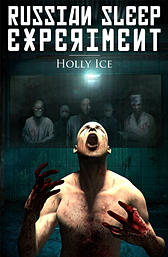
Holly Ice. The first thing I read by Holly was the story 'Trysting Antlers' in the NewCon Press anthology La Femme. It was one of my favourites in there, and I was surprised to learn it was one of the author's first publications. She's followed it up with further short stories and the novella The Russian Sleep Experiment. 

Take it away, Holly:

What’s in a Love Story?

It’s impossible for me to choose one love story which has stayed with me to shape my writing and my personality. There are simply too many. My parents have been together for over 25 years and rarely argue, and I grew up with an abundance of Mills and Boon books to pilfer and read in the dark. Now, ebooks offer the chance to sneak a romance book onto trains without judging stares and the awkward conversation about what the book is about.  
Love is a great starting point for any story from chick lit to the darkest of horror. It is one of the strongest emotions a human being can feel and it branches from the strongest positivity to the sickest depths of despair, hurt, bitterness, and anger. It’s one of the great building blocks of the world: love, sex and death.
In terms of fiction, the most memorable stories to me are the ‘Merry Gentry’ and ‘Anita Blake’ series by Laurell K Hamilton, and the book ‘Lavender Blue’ by Lorna Read. These sets of books came before my eyes when I was still in secondary school, and I loved both for different reasons. In Read’s, we see the nostalgia of yester-year, and witness a cross-class relationship pay off despite the odds. He’s even a musician to boot! With Hamilton’s series, we see love being worked at day to day and lovers respecting each other beyond all else (at least they are when her characters aren’t up shit creek). As much as I love a great romance, the dark side in me delights in the grey, and Hamilton’s series have this in spades.
If pushed, romance is what I’d talk about if asked about love. I love reading stories where one partner fights for the other and the couple comes out on top, happier than before. I enjoy reading about their struggles, only to have their struggles pay off. The idealist in me enjoys the comfort of a happy ending. 

But if you know me well, I’d tell you I hate endings involving weddings dresses and the cries of children. I’d much rather see love, warts and all, than the cherubic front often paraded before the public, and I’m inclined to think one size does not fit all.

What Horror Writers Talk About When They Talk About Love: Chloe N. Clark

I thought I'd have some guest pieces to celebrate the release of Trying To Be So Quiet, and I wanted to feature some writers that I've not had on the blog before. The theme came to me when Claire, who works for Boo Books, was interviewing me about TTBSQ and said she thought it was a love story as much as a ghost story. So a plan was born: I'd ask some horror writers who I especially admire to write a piece about their favourite love story. It could be a novel, poem, song; it could be happy, sad or despairing. Today's piece is by...

Chloe N. Clark, a writer whose work I first read in Supernatural Tales #25, where I thought her story Who Walks Beside You was fantastic; I voted for her in the ST best story poll for that issue. Additionally she's had work published in Apex, Bartleby Snopes, Diabolical Plots, and Menacing Hedge. She also writes for Nerds of a Feather and Ploughshares. She can be followed on Twitter @PintsNCupcakes.

Take it away, Chloe:

Trying to think of the single love story that has the most impact on me is hard. It’s hard because I’m maybe more of an anti-romantic (and read “maybe” as “positively”) and also because while I certainly can name love songs/poems/stories/films that are meaningful to me, I’m not really sure that I find them meaningful because they are love stories. So I decided to tackle the roundabout way of thinking about this subject. What love story really meant something to me because of the love story at its center?

The obvious choice seemed to be the love stories about friendships that always have called to me: Aubrey and Maturin in Patrick O’ Brian’s series of novels about naval warfare or the four boys in Stephen King’s The Body. These are some of the most impactful books on my life and my writing. 

However, these choices didn’t feel quite right either and then I thought about films and then I knew what to write about. Tarsem Singh’s 2006 film The Fall is not only one of my favorite films but also one of the purest evocations of love. The love in this case isn’t a romantic one, though there is a melancholic one of those at the center, but rather the love of storytelling itself. 

The plot of the movie is a friendship between an injured stuntman and a little girl, at a hospital in 1920’s Los Angeles. However, within this frame narrative is the story told by the stuntman to the little girl: a story of betrayal and bandits. Singh’s visual aesthetic has never been better (honestly, this is the only film I truly love—or even enjoy—by him though I can appreciate the visual scope of a film like The Cell) and it’s easy to get lost in the gorgeousness of the colors and imagery here. 

However, where the film truly stands out is in its depiction of how story can shape us and change us and ultimately betray us or save us just as much as any other kind of love. Lee Pace, as the stuntman, is phenomenal and then there’s the young Catinca Untaru as the little girl—and her performance is heartbreakingly stunning. Each of them plays a character who is so enthralled by stories, whether making them up or hearing them, that the rest of the world—and the logic and morality of it—falls away. Stories can convince us to do many things. They can also bring us back from the brink—of despair, of loneliness, of hopelessness.

To me, this film does exactly what any love story should do: it convinces you that there is something worth believing in. In this case, that something is the power of narrative, of telling tales. And, ultimately, that seems the most fitting love story for any writer to get behind.

5/18/2016

What Horror Writers Talk About When They Talk About Love: Tim Major

I thought I'd have some guest pieces to celebrate the release of Trying To Be So Quiet, and I wanted to feature some writers that I've not had on the blog before. The theme came to me when Claire, who works for Boo Books, was interviewing me about TTBSQ and said she thought it was a love story as much as a ghost story. So a plan was born: I'd ask some horror writers who I especially admire to write a piece about their favourite love story. It could be a novel, poem, song; it could be happy, sad or despairing. Today's piece is by...

Tim Major is an author and editor from Oxford (appropriately enough, as some key scenes in TTBSQ are set there). The first piece I read of Tim's was his excellent novella Carus & Mitch, which I reviewed for This Is Horror. His time-travel horror novel, You Don’t Belong Here, will be published by Snowbooks in September 2016


Take it away, Tim:
Neither of these men is Tim Major

I have a two-and-a-half-year-old son, and another son due to arrive within the next couple of months. So – with apologies to my wife – right now, when I think about love, it’s often parental love that occurs to me.

Two of my favourite films concern fatherhood. Rebel Without A Cause is more about children than parents, of course, but it contains one of my favourite depictions of a father-son relationship. The pent-up rage of James Dean’s Jim Stark is often aimed at his father, Frank, played by Jim Backus. The reasons are at first unclear – the anger seems arbitrary, and Frank is as well-meaning as parents come. At the one-hour mark of the film, Jim confronts Frank in a scene in which the dialogue is less interesting than the positioning of the characters within the frame. The camera tilts to accommodate the shifting, arguing pair, granting Jim the literal high ground and forcing Frank to peer in from the bottom corner of the frame, becoming all shoulders. It transpires that what Jim really wants from his father is a role model. The moment when Jim says, without even looking at his father, ‘Dad, stand up for me’, is quietly devastating, particularly as it’s then followed by Jim physically yanking Frank to his feet, then wrestling him to the ground. He’s attempting to shake his father up and reveal the real person inside. It’s motivated by love.

At another point in the film, Jim comes home to find somebody on their hands and knees on the landing. At first he assumes thinks it’s his mother, but it’s actually his father, wearing a frilly apron, picking up a dropped plate of food. As a comment on gender roles, it’s a few decades out of date (the gist is that Frank is henpecked and meek, when he ought to be in charge; as well as the frilly apron, he’s trapped behind the bars of the banisters), but the exchange between Jim and Frank is wonderful. There’s real love there, real laughter as they joke about Frank’s clumsiness, then real frustration about Frank’s anxiety over something so trivial. I find it hard to put my finger on what I adore about this scene. I think it’s Jim’s pleading intensity as he wills his father to be something more wonderful than he really is. I find the scene a useful reminder that love goes both ways and that, one day, my sons will be vocal about how they feel about me, too.

The other film is simpler, but stranger. We never find out much about the child in Stalker. We don’t know why she’s called Monkey. We don’t know the nature of her illness or whether it’s linked to her telekinetic powers, which we witness only at the end of the film. We don’t know for sure whether the Stalker keeps re-entering the bewildering and psychologically damaging area known as ‘the Zone’ for the sake of the child, although I suspect that’s the case. Following a bleak, monochrome scene when the travellers return from their ordeal in the Zone, we see Monkey, in jarring, alarming colour, her expression sombre, her hair hidden under a bright yellow shawl and her head bobbing as she walks. Then, slowly, the camera pulls out. As Monkey moves away from us, we see that she’s actually being carried on her father’s shoulders. They plod towards a filthy lake. I don’t know why. But it’s heartbreaking. We can’t see the Stalker, and we don’t need to, to understand that he loves the child more than anything in the world. He carries her, and that’s all.


5/17/2016

What Horror Writers Talk About When They Talk About Love: Kristi DeMeester

I thought I'd have some guest pieces to celebrate the release of Trying To Be So Quiet, and I wanted to feature some writers that I've not had on the blog before. The theme came to me when Claire, who works for Boo Books, was interviewing me about TTBSQ and said she thought it was a love story as much as a ghost story. So a plan was born: I'd ask some horror writers who I especially admire to write a piece about their favourite love story. It could be a novel, poem, song; it could be happy, sad or despairing. First up:

Kristi DeMeester is a short story writer who's appeared in the likes of Black Static,  Year's Best Weird Fiction and The Dark, and deservedly so because her stories are always bloody ace. (She had entries in both my 2014 and 2015 favourite short story lists).

Take it away, Kristi:

“Walking the Haunted Wood” by Kristi DeMeester
My first literary crush was Gilbert Blythe. With his acidic and then apologetic teasing of the future red-headed knock out Anne Shirley, he reminded me very much of the boys in my own elementary school classes. We fought over who was the fastest runner and spent ourselves racing across the concrete parking lot of our school and ignoring skinned knees and aching lungs. We competed for the highest grades, for accolades, for smiles from our teachers when we stood and teased Bible verses from our memories and delivered them with perfect inflection. During the day, we’d insult each other in the only way Fundamentalist Christian children know how.

“Not even dogs like you,” I said once.

The boy’s lip quivered before he hissed back. “You look like you don’t wash your hair.”

We spent our days fighting and competing, but at night, I’d lie awake and burn and burn, wondering what it would be like to touch their hands, their faces. What it would be like if we grew up and one of them decided to marry me.

More than anything, however, I loved Gilbert Blythe because he was good. The streak of cruelty that was the underlying chorus of my childhood was absent from his life in Avonlea. He and Anne belonged to an alien set of people who were genuinely kind and should they do wrong, they’d stew in regret, apologize, and mean it. He did not scream or push or threaten or raise his hand in anger. Gilbert and Anne were everything my mother and father weren’t.

And so I fell in love with Gilbert and his dark, curling hair and his hazel eyes and boyish charm. More than anything, I wanted him to show up at my doorstep, his arms full of starflowers, and take me away from the nightmare world my parents had spent their lives building and then forced their children to occupy. His hands would be gentle, and he would sweep my hair behind my ear, and press his lips to my cheek, and our love would be pure, and chaste, and sweet.

I grew up. My parents divorced, and I saw firsthand the ramifications of what it meant to love someone. The brokenness that follows. I longed for Avonlea. Longed to pull those flowing dresses over my head and to go traipsing through Hester Gray’s garden while Gilbert ran ahead of me, everything sun dappled and smelling of dust and overripe apples. Longed for a love that was so simple that it felt like breathing instead of like razor blades pressed to thin skin.

By the time boys were interested in me, I’d pushed Gilbert Blythe to the back of my mind in favor of the feeling of warm hands against the curve of my back and lips pressed too hard against mine. There was a feeling I was trying to capture, a romantic ideal that faded like smoke, and when I couldn’t find it, I found other things. Other ways of chasing after the sense of breathlessness and desire I thought meant something greater than the sum of its parts.

I got older. I married a wonderful man, and he is everything I need when life is easy. He makes me laugh in a way I didn’t know I could. He’s held my hand and pulled me out of dark water.

But he isn’t Gilbert Blythe. He’s real, and he’s honest when I don’t want him to be. He does stupid things like buying yet another project vehicle to “fix up in his spare time.” He argues, and he’s stubborn, and he keeps his dirty laundry piled neatly next to our bed instead of putting it in the hamper. He throws our child into the air high enough to give me heart palpitations. He rolls his eyes when I start crying. Again. For the thousandth time that week.

And I love him. Oh, oh! How I love him.

3/03/2015

My Dad, IT, And Me

A quick heads up to say that I've a guest blog up over at the King For A Year site. The brainchild of Mark West, the project aims to get 52 reviewers to review 52 Stephen King books throughout 2015.

My own piece is a rather personal take on what is, to my mind, one of his greatest books: IT (or CA  as it always pleases me to see it called in French bookshops). You can read my review here.


2/17/2015

Do As I Say...

I'm guesting on the brilliant Gingernuts Of Horror site today, with a post entitled Do As I Say Not As I Do - Some Hypocritical Advice On Writing Episodic Fiction.

There's also a picture of me eating a sausage, for some reason.

And whilst we're here, want to see a sneak preview of the cover for the second episode of The Quarantined City? Oh go on then.


The first episode is available here (UK) and here (US).

2/05/2015

The Story Behind The Quarantined City

"It was a really bad time to begin writing a monthly serial..."

I've a guest post up at the Upcoming4me site, as part of their 'The Story Behind...' series. Find out about the slightly hectic gestation of The Quarantined City serial here.

9/28/2014

Guest Post: The Strange Stories of Marie Luise Kaschnitz by Tilman Breitkreuz

Today's post comes courtesy of Tilman Breitkreuz, who emailed me after reading the Strange Stories piece I wrote about Joanna Russ's The Little Dirty Girl, to ask me if I'd ever heard of a German author called Marie Luise Kaschnitz; I had to confess I hadn't, and after a few emails back and forth Tilam agreed to write me a piece about her work for this blog. Her stories sound fascinating (I hope not just to me but other readers of this blog) and although difficult to find in English translation there are copies out there.

Thanks to the author for this wonderful piece and for drawing my attention to a new author of the strange..


The Strange Stories of Marie Luise Kaschnitz
An elderly couple imposes a blackout on their home because they are afraid that their adopted son and his street gang might come and kill them (Thaw). Realizing that she has literally lost all feelings, a woman sets herself on fire (Die Fuesse im Feuer). A young man takes part in a superstitious ritual and evokes a malevolent homunculus (Der Tunsch). On the face of it, it is hard to imagine why Marie Luise Kaschnitz once stated that she wanted to express "commiseration with people…"

Born into a family of high nobility and a military background in 1901, Marie Luise Kaschnitz did not rise to fame until the 1950s. While these years are often glorified on account of an economic boom and a regain of confidence, Kaschnitz shows them in a different light: despite their relative security and comfort, her characters seem to be wedged between a guilty and traumatic past and an impending doom in the future (sometimes identified as the nuclear threat).

Like Flannery O´Connor, who wrote her classic stories in the same era, Kaschnitz often implies supernatural elements in order to confront her protagonists with crucial questions and unwelcome answers. But it is not these supernatural features, usually adopted from myths or folk lore, that make her stories worth reading. Using a sober style of writing comparable to Dino Buzzati (with whom she shared the experience of having to live in a totalitarian state) and shy of graphic content, Kaschnitz's central point is not about conjuring a supernatural apparition (maybe that is why her only classic ghost story - bluntly entitled Ghosts - turns out somewhat flat). Wraiths (like in Polar Bears) and demons only serve to reveal a state of general uneasiness, some sort of gloomy detente based on knowing that what has happened to others might as well happen to you. Remedies are scarce. In one of Marie Luise Kaschnitz's strongest pieces the ghost of a woman painter who starved herself to death lets us know that human existence is inevitably tragic and therefore happiness can only be found in tragedy (Zu irgendeiner Zeit). This approach - probably based on Schopenhauer's philosophy instead of rive-gauche-existentialism - resonated with a large audience. So did the accessibility of her prose and Marie Luise Kaschnitz became sort of a household name in Germany.

English-language collections of Marie Luise Kaschnitz´ stories usually feature her own favorite Das dicke Kind (The Fat Girl). The caterpillar-like stranger who invades the life of a single woman (note the similarity to Truman Capotes Miriam) is too ugly to be pitied and only provokes the narrators contempt and curiosity. When the two of them go ice-skating the fat girl becomes a menace first and finally she isn't a stranger any more. There is a striking resemblance to Joanna Russ's The Little Dirty Girl. The bottom line in both The Black Lake and Musical Chairs is that certain conditions require a human sacrifice. Kaschnitz's interest in Greek myths and rites of passage resounds in Home Alone when a young boy finds out that his parents have thrown away his shabby toys (one of them being a toy SA-man) because they think he has outgrown playing with them. He finally agrees - and ignites the gas stove trying to find out if he might talk to the flames like he once talked to his toys. Other non-supernatural stories of note are the aforementioned Thaw and Christine, a grim piece told from the perspective of a woman who once urged her husband not to interfere when a criminally insane man killed a little girl.

In Street Lamps we find the supernatural competing with the horrors of reality. A teenager who has always been eager to do heroic deeds without actually being noticed learns a strange trick that controls other peoples minds. When he challenges the most powerful mind controller of his times (whose name is not mentioned because it is obvious), he fails and later lives a bleak and unhappy life trying to make up for his mistake. In the end we find him a soldier, dying on the pavement somewhere in Russia. Realizing what has gone wrong he has finally found peace as well as freedom but both seem to equal death.

A swim in the Mediterranean sea takes a wrong turn in A Noon Hour In Mid-June while back home an uncanny stranger calls at the neighbour's door. Marie Luise Kaschnitz´s own fate somehow resembled this story. In the fall of 1974 she over exhausted herself swimming in the cold Mediterranean sea, caught pneumonia and died in Rome on the 10th of October 1974.

Some of her work might seem dated and some readers might wish for more action. But those who would like to explore the frailer parts of the human condition could do worse than look into what Marie Luise Kaschnitz has to offer.

10/07/2013

Guest Post: Hannah Kate & Impossible Spaces

So here's a guest post from Hannah Kate, editor and contributor to one of the most interesting anthologies I've read this year: Impossible Spaces from Hic Dragones. As you might gather from the title, the anthology collects together stories from across multiple genres that deal with places not on any maps, with weird locations and twisted geometries. Hannah's own story, Great Rates, Central Location, was one of my favourites - a story of shifting identities in a very singular hotel (if you've read The Other Room you'll know why that would appeal to me...) so I'm pleased to welcome her here for this guest post...

Take it away Hannah:

I'm really pleased to have been invited as a guest poster on James’s blog as part of the blog tour for Impossible Spaces, a new collection of strange and dark short stories from Hic Dragones. As you might see from the cover of the book, I edited this collection. As you might see from the website, I am also the founder and editor-in-chief of the publishing company.

Impossible SpacesBut I'm also a writer myself, and it’s nice to be invited to talk about my own story in the collection, Great Rates, Central Location, which is set in a budget hotel in Manchester. I've written a piece for my own blog about the hotels that gave me the idea for the story, so I thought I’d write something today about the books that I enjoy reading (and which may or may not have inspired my own writing).

I've been a fan of horror and dark fantasy since I was a kid - when your dad teaches you to read using The Hobbit and The Lord of the Rings, then gives you Titus Groan and Gormenghast when you hit ten, it’s impossible not to be. But my tastes have changed a little over the years. As a teenager, I liked my horror Gothic. I read Dracula and Frankenstein, but what I really loved were the Gothic novels of the late eighteenth century: The Castle of Otranto, The Monk, The Mysteries of Udolpho. If you’ve read Jane Austen’s Northanger Abbey, and can picture Catherine Morland, you can picture me as a teenage reader.

I still love a bit of high Gothic – it’s like a delicious, melodramatic treat –but as time has gone on, I’ve found myself drawn more to a different mode of horror writing: the urban, the contemporary, the everyday. I particularly like horror (and fantasy) that is as realistic as possible, scenarios that could almost (almost) be real life… but that are just a little bit off.

I suppose part of this change of tastes could be down to a choice I made at university. I wrote my undergraduate dissertation on Roald Dahl, and while I had a lingering, nostalgic love for his children’s fiction, I became fascinated by his short stories for adults (several of which were adapted for the Tales of the Unexpected TV show – though this was ever so slightly before my time). My favourite short stories were always those that presented an ordinary – even mundane – world, which is unsettled by one piece of odd (or unexpected) behaviour: ‘Stairway to Heaven’, ‘Lamb to the Slaughter’, ‘The Landlady’.

Tales of the Unexpected has been a big influence on my writing. I never watched The Twilight Zone or The Outer Limits, so when I imagine a strange and off-kilter world, where ordinary people get dragged into something different, something ‘off’, it’s the Tales of the Unexpected theme music I hear, not the Twilight Zone.


As well as weird and twist-in-the-tail fiction, I also enjoy fiction that’s more easily described as horror. 

Again, I like stories that are grounded in the everyday – but an everyday that’s dark and wrong. It kinda goes without saying that Stephen King is the master of this type of tale. One of my favourite stories by King is his novella The Sun Dog. The story’s opening is so beautifully ordinary – a kid gets a Polaroid camera for his birthday; he’s quite excited about it, and gathers his family together to take his first photo… but as the picture develops in front of his eyes, there’s something wrong with it. It’s the perfect set-up (in my opinion) and the gradual reveal of the ‘wrongness’ is expertly timed.

I recently reread The Sun Dog, and followed it up immediately with Ramsey Campbell’s The Influence. Again, Campbell’s status as a master of horror doesn't need to be stated, and I'm over-the-moon to have been able to include his short story ‘The Place of Revelation’ in Impossible Spaces. This story is a wonderful example of the way Campbell can evoke ordinariness, whilst simultaneously undercutting it with a deep, ancient sense of dread. This is also apparent in The Influence, in which supernatural menace is combined with commonplace family life. Although the ‘evil’ in The Influence is not the eldritch, grand terror found in some of Campbell’s other novels, it is a more claustrophobic, creeping horror – and that always works for me.

Finally, there are a couple of up-and-coming horror writers whose work I'm really enjoying at the moment. Simon Bestwick – whose short story ‘Trading Flesh’ can be found in Impossible Spaces – is one of them. Although ‘Trading Flesh’ is a dark, twisted steampunky (in the twisted, post-apocalyptic way) tale, Simon’s novel The Faceless (which I can never recommend highly enough, no matter how hard I try) is grounded in a more ‘real world’ realm of children’s bogeymen, family relations and the historical trauma of war. It’s a truly terrifying read, and Bestwick is brilliant at conjuring up a thoroughly believable world that is riddled with seriously disturbing secrets.

And just in case you thought I was only plugging writers I've had the good fortune to edit… I also want to mention Tom Fletcher. Fletcher’s début horror novel The Leaping is a chilling tale (which gave me actual nightmares). I've seen reviews of this book that have concentrated on the second half of the story, which is set in a bleak Cumbrian landscape redolent with ancient terrors and barely-hidden trauma. But the book actually begins in Manchester, and Fletcher’s descriptions of the unsettling nothingness of city centre living and call centre employment is, perhaps, even more frightening than the rural Gothic of the Lake District. As a Cumbrian-by-birth, adopted Mancunian, The Leaping is, perhaps, closer to my ‘real world’ than any of the other stories I mentioned in this post, and that made me love it even more.

Thank you for indulging this little glimpse into my reading preferences. As I said at the beginning, I don’t know for sure how much any of these books have influenced my own writing… but I know I've had countless hours of enjoyment either way.  

Impossible Spaces: buy here...

8/28/2013

Falling Over Things

 A few ripples from Falling Over's release into the world:

Firstly, a review over at the Dark Musings site here. I read the reviews on this horror blog anyway, so it was a nice surprise to suddenly see my own name up there. Especially with comments like this:

"It’s a special moment when you read a new author and immediately get the feeling that you’re onto something special and such was the case here. The stories in this collection are evidence of great talent at work, both emotionally and intellectually stimulating."

That's one for the to-be-read-at-my-funeral list. 

Secondly, The Story Behind Falling Over, a piece I wrote about the links, deliberate or otherwise, between the stories in the book is up on the UPCOMING4ME site: you can read it here.

And finally, I'm quoted talking about novellas in this article in Forbes (yes, that Forbes) by Suw Charman-Anderson. Actually, this one hasn't got anything to do with Falling Over really, but I've pretended it has so I can crowbar a bad pun into this blog post's title... 

(Various links to buy Falling Over in paperback and all manner of electronic formats are here.)