Showing posts with label Undertow. Show all posts

12/03/2021

The Year's Best Dark Fantasy & Horror: Volume 2

Very pleased to say my story 'The Sound Of The Sea, Too Close' has been reprinted in The Year's Best Dark Fantasy & Horror Volume 2, edited by Paula Guran and out now for Pyr. The lineup selected for the book lives up to the title and I'm proud my story found a place in among such great authors. 


The book is available here: The Year's Best Dark Fantasy & Horror Volume 2, Pyr 2021 (UK | US)


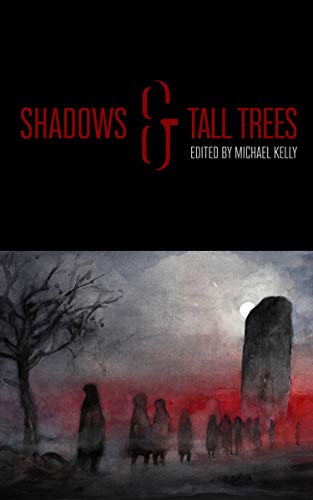
The story was originally published by Micheal Kelly in the brilliant anthology Shadows & Tall Trees #8 (Undertow Publications).


3/17/2021

The Year's Best Dark Fantasy & Horror #2

Thrilled to say my story ‘The Sound Of The Sea, Too Close’ has been selected for forthcoming The Year's Best Dark Fantasy & Horror #2, edited by Paula Guran. You can see the whole lineup for the anthology here; I'm in good company.

My story was originally published in the brilliant Shadows & Tall Trees #8 from Undertow.

3/03/2020

Shadows & Tall Trees 8: 'The Sound Of The Sea, Too Close'

Shadows & Tall Trees 8, which features my story 'The Sound Of The Sea, Too Close', is officially released today. This is a story I'm especially proud of, and I'm pleased that its found a home with the utterly wonderful Undertow Press. As regular readers will know, I've often sung the praises of the work that editor Michael Kelly releases, and getting a story into S&TT is a genuine writing bucket-list moment for me. Especially seeing what other great authors are included, not least Alison Littlewood, Neil Williamson, Steve Rasnic Tem, V.H. Leslie, and... well, they're all brilliant.

Aside from where it's been published, I'm proud of 'The Sound Of The Sea, Too Close' because it achieved something I'd tried and failed at a few times: to write about climate change (and climate fear), in a way that was still speculative and 'weird'. (Maybe 'Heatstroke Harry' from Holding On By Our Fingertips was also a success in this regard.)

I've wrote before on this blog about climate change and fiction, but that piece was called Background Fears and that was largely how I'd tackled the theme in my stories up till now: as a background worry, a bit of atmosphere, a throwaway line. I wasn't sure how to present it as the main focus of a strange story without losing that very strangeness that interests me as a writer; I wasn't sure if it was possible to do so. 'The Sound Of The Sea....' didn't start out as an attempt to untangle that knot, it was originally gong to be a relatively simple and untroubled ghost story, set in an abandoned school. But what the school caretaker found in that abandoned school, in those ghostly classrooms, wasn't a ghost—without knowing I was going to, I wrote something very different and all the better for it. The climate fear—and the guilt—moved centre stage, but the ghostly air remained. Whether it's fully successful as a work of fiction, I'll leave others to judge. But as a way forward for my own work, it feels like an achievement to me.

You can purchase the gorgeous paperback and hardback editions of Shadows & Tall Trees 8 directly from Undertow, or get the ebook from Amazon (UK | US)

(Pathway to Paris brings together musicians, artists, activists, academics, mayors, and innovators to help raise consciousness surrounding the urgency of climate action and offers solutions to turning the Paris Agreement into action.)

8/24/2019

Incoming: Two New Tales

I've had two stories accepted for publication in the last couple of weeks. They're two recent-ish stories that I think are among my best work, while being at opposite ends of the spectrum in terms of style. And I'm really proud and flabbergasted to say that they are both appearing in the latest volumes of two publications that I regard as absolutely essential for anyone with an interest in weird horror fiction:

'Defensive Wounds' will appear in Tales From The Shadow Booth #4 (ed. Dan Coxon)

'The Sound Of The Sea, Too Close' will appear in Shadows & Tall Trees #8 from the mighty Undertow Publications (ed. Michael Kelly)

I know, right?

3/21/2018

All The Fabulous Beasts: Priya Sharma Interview

I couldn't have been more excited than when I heard Undertow Press were going to be publishing the debut collection from Priya Sharma. The stories I've read of hers over the last few years have always been superb, by turns creepy, beautiful, tender and terrifying. A whole book-load of them? Count me in. Especially one with such stunning cover art and design as this one.

I asked Priya a few questions about All The Fabulous Beasts, particularly focussing on the two stories new to the collection, 'Small Town Stories' and 'A Son Of The Sea' (spoiler: both brilliant).

So, without further ado...

JE: So, to warm us up, how do you think of your stories? Weird fiction, fantasy, horror? I wouldn’t know how to classify them myself (which I absolutely think of as a good thing). Do you find such categories useful as a writer, or limiting?

PS: Hello James! I find that a hard question, even now. I hope that All the Fabulous Beasts is all of the above. When Mike Kelly of Undertow put this collection together he was very careful about what he felt should go in (thankfully) as I've also dabbled in fairy tales, mythology and alterative history. If they'd been included, certain stories might have jarred with others.

The story that I'm writing dictates the form and flavours. I've had lots of rejections along the lines of "I like this but it's not horror". I certainly don't find strict definitions of genre helpful, but I think definitions are getting broader and more blurred.

My favourite books don't adhere to strict definitions and I think I've drawn on them. Things that are between the lines or bend genre are more interesting, such as novels like Beloved by Toni Morrison, Slaughterhouse Five by Vonnegut, and in the work of David Mitchell, Calvino, Helen Oyeyemi, to name a few.


JE: Regardless of how you think of them, your stories nearly all feature a supernatural element. What is it about the supernatural or surreal that appeals to you as a writer? What does it allow you to do that ‘straight’ realism couldn’t?

PS: I remember listening to Thana Niveau on a panel about horror and she said that she was drawn to it because it was hardwired in there somewhere, which I thought was very thoughtful, rather than it just being about exploring our personal fears. I feel like that about most speculative fiction.

The supernatural allows for a whole new level of allegory. Also, when it's done well it does double duty as there are thrills to be had.


I wish I could write straight fiction, and probably read more straight fiction than genre fiction. When I try and write 'literary' fiction it seems very flat on the page. I feel confined. I think I write speculative fiction because I am, in truth, an escapist. It's the perfect type of fiction for exploring big ideas, feelings, and for extrapolating, but also for having fun and pushing the limits. Human beings are all about the impossible (even at risk to ourselves and the planet).

JE: In both of the new stories in your collection, there’s a very strong sense of place — from the more exotic locations of 'A Son Of The Sea' to the very English, parochial English setting you use in 'Small Town Stories'. So I wondered how important you think a evocation of specific place is, to you as a writer?

It's a crucial part of worldbuildng for me, as important as character. We're all affected by our environments. You can character build in how a person interacts with that world. I always do more research for stories than I need and have to be selective about what I use. It's the same with the world that I'm writing about. There's more happening off page that never makes the cut. Sometimes it's as much as what I imagine for the characters themselves.

I love stories with a strong setting, that's crucial to the story. It's what I enjoyed most about The Loney by Andrew Michael Hurley, for example. The Titus novels by Mervyn Peake blew my mind.

JE: I was especially taken with the titular setting of 'Small Town Stories' — a lot of British horror fiction seems to be either city based urban horror or rural folk horror, but these kind of backwater small towns seem very British and very scary to me. Was it a conscious decision, to write about the kind of place normally ignored?

PS: No, in that it wasn't a conscious decision - I just wanted to explore feelings I had about the town I grew up in- a smallish Cheshire market town, and when I think about that era it brings back the child in me, for reasons good and bad. That place still has a lot of power over me. When I go back I realise that I'm a stranger there.

The thing is, I don't recognise the place that I knew, not really. New build homes are where the industries that employed most of the town once stood. Supermarkets have replaced the veg shop and the butchers. There are more coffee shops and hairdressers, but nowhere to buy books or music. There used to be a thriving market each week but now it's just a carpark. And I'm not sure who shrunk the schools I went to.

Every small town has its urban legends and outsiders, and I wanted to explore that concept as well. Births, deaths, affairs. Nothing was secret for very long.

I wanted to write my own love story to it all.

JE: As well as a strong sense of place, both of these new tales seem to be about the past being something we can’t escape from, or even move on from - was this a conscious theme?

PS: Sometimes it is, sometimes it just seeps in there. It's a form of haunting, isn't it? The past is important to most people I know, whether they're trying to recreate/relive it or escape from it. I read a lot of Fay Weldon in my teens (thanks to The Lives and Loves of a She-Devil) and one of my favourite lines by her is "Wherever we go, we take ourselves with us". We can't escape our pasts. We can only learn to live with the horrors and joys of it.

It's funny that you've brought that up. I don't think I've ever started a story at the beginning of a character's journey. I'd actually find that too difficult to chart, in some ways. I like flawed people, in the thick of their struggles. What does that say about me?

JE: And finally, can you tell me a secret - name an author who’s an influence on your work that no reviewer or commenter has ever picked up on...

PS: Jim Crace. I think he's woefully neglected in the UK. His novels vary widely in subject matter but there's something about his prose that is poetic. It has a rhythm that I find addictive, almost iambic pentameter, which some people will mock. Reading his work, I get the feeling that every single word is considered and deliberate. I think his style is unique, and can only hope that one day, if I work hard enough, I might develop a unique style too.

My favourite works of his are Arcadia, The Pesthouse, Being Dead and The Devil's Larder.


You can buy All The Fabulous Beasts from the Undertow Press site, in both paperback or hardback editions.

3/16/2018

In Praise Of Non-Themed Anthologies

In relation to a few things seen on social media recently, I just wanted to say: non-themed anthologies of original fiction are brilliant, aren't they? Especially, I feel, for weird, supernatural & horror fiction. Why? Well:

1. They can give you a real sense of where the genre is right now, its trends & obsessions
2. Paradoxically, they also provide a purview of the breadth & depth of the genre, irrespective of current trends
3. So they provide homes to stories you sense wouldn't quite 'fit' anywhere else, especially for newer writers
4. They're the best place to find new writers to love in the future, writing from the gut & heart, alongside ones you already know can deliver the goods
5. And you can get a real sense of an editor's personal taste too, their own take on this genre of ours
6. In the best ones, you never know what the next story will bring

But... I confess I find them really hard to review on this blog. There's no theme, so you can't mention that: any connections you see between the stories are likely all in your own mind or too general & obvious to be worth mentioning. And writing about each individual story can feel too repetitive, too much of a time-drain. Especially as there seems to be a tendency for these anthologies to push 20 stories or more.

So I've been remiss on that score, but to repeat, I do love a good non-themed anthology of original horror or supernatural fiction. So here's a link to a few of my favourites of recent years:

Shadows & Tall Trees #6 (ed. Michael Kelly, Undertow)
Shadows & Tall Trees #7 (ed. Michael Kelly, Undertow)
Looming Low #1 (ed. Justin Steele & Sam Cowan, Dim Shores)
New Fears #1 (ed. Mark Morris, Titan)
Nightscript #1 (ed. C.M. Muller, Chthonic Matter)
Nightscript #2 (ed. C.M. Muller, Cthhonic Matter)
A Book Of Horrors (ed. Stephen Jones, Jo Fletcher Books)
Darkest Minds (ed. Ross Warren & Anthony Watson, Dark Minds Press)
For The Night Is Dark (ed. Ross Warren, Crystal Lake)
Strange Tales V (ed. Rosalie Parker, Tartarus Press)
Hauntings (ed. Ian Whates, NewCon Press)
The Shadow Booth #1 (ed. Dan Coxon)
ETA: The Black Room Manuscripts #3 (ed. J.R. Park & Daniel Marc Chant, Sinister Horror Company - suggested by Penny Jones)

Any further suggestions welcome in the comments!

10/12/2017

Author Priya Sharma has picked a selection of 'Halloween Reads' over on her site. Lots of great suggestions to add to your 'to read' pile if you're a fan of the spooky and horrifying (and there's a nice shout out for The Quarantined City, too).

Priya is a superb writer of the spooky stuff herself; her debut collection is out from Undertow Publications in 2018.


12/12/2016

Recommendation: Almost Insentient, Almost Divine by D.P. Watts

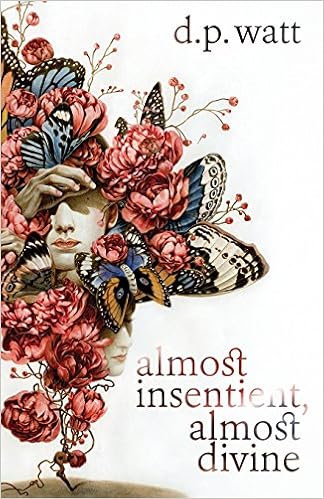
Almost Insentient, Almost Divine is an excellent collection of short fiction from author D.P. Watt, a very British but also very modern feeling set of weird fiction. The influences of Beckett, M.R. James, Ligotti and (especially) Aickman are evident, but they are just that, influences. The world of D.P. Watt is firmly his own and this collection is proof of the surety of his vision.

The stories here initially seem to use comfortably familiar genre concepts, but by the end of each the reader has been swept far from known reference points, dragged under by the bizarre and mysterious. (And this is an accurate description of the fate of many of Watt's protagonists, too.) The reader will encounter within strange puppets, shifting identities, doomed lovers, the desperate inhabitants of a violent city, and the sleeping beings of a world of snowy wastes. 

These stories are ambiguous, but not in any lazy sense of the word. Watt skillfully crafts what he leaves out of his tales as much as what he includes, and these empty spaces & silences all add to the unease he generates. Only in a few cases did the conclusion seem too enigmatic to me, but even these pieces intruiged me enough to want to reread them soon. Maybe their secrets will be revealed then.

Not everything here aspires to Aickman levels of mysteriousness. Mors Janua Vitae and Honey Moon both had what could be seen as conventional horror denouements; the former being an especially clever tale built entirely on the skillful use of dialogue to convey a one side of a conversation.
 
My favourite pieces here were the opener With Gravity, Grace; the sublimely creepy Shallabalah; and most of all The Usher, the story of a man who attends a very strange theatre performance. It's a story that exemplifies many of the themes and techniques of this collection, and it seemed to me outstanding, a piece of weird fiction for the ages. Special mention must also go to Timothy Jarvis's Introduction to the collection, a fictional exploration of Watt's literary predecessors, and a bravura piece of fiction in its own right. It's a testiment to Watt's talent that his support act doesn't overshadow his own performance.

Almost Insentient, Almost Divine (UK | US)
 

9/28/2016

Fantasycon 2016.


The view from the bar on Day 1: Sunny Scarborough
Fantasycon this year took place in sunny Scarborough (and it really was sunny) amidst the faded, peeling glamour of the Grand and Royal hotels. As ever it was a long and intense weekend, so I'm just going to mention some of the highlights here...

John Gilbert; Sue Moorcroft; Neil Williams; me; Priya Sharma; Phil Sloman; Mark West; Lisa Childs; Ross Warren; Wayne Parkin; Cate Gardner


Panels:
On the Saturday, I featured on the 'Bright Lights' panel, which was about awards and new talent coming through in genre fiction. I wasn't quite sure how it would go, but it was really well moderated by Penny Reeve, with interesting contributions from my good friend Kit Power, Donna Scott and Liz de Jager. When the questions from the audience came there was the inevitable one about the rabid/sad puppies in America and in our own different ways both Kit and I made our thoughts quite clear...

I may have said "dickheads".

My favourite panel that I saw was 'Is Reality The New Horror' - it featured Paul Finch, Mark West, Tracy Fahey, Victoria Leslie, Helen Marshall, and Ramsey Campbell. With that calibre of talent it couldn't fail to be interesting - I'd have quite happily watched them talk for longer.

Great British Horror Launch:
Steve Shaw was launching both This Twisted Earth (edited by Dion Winton-Pollock) and Great British Horror #1:Green & Pleasant Land, a collection of horror stories with a stunning lineup of authors. Present at the launch were Victoria Leslie, Laura Mauro, Adam Millard, Simon Kurt Unsworth, Ray Cluley, Jasper Bark and Alexandra Benedict. I think all of them felt as thrilled as I did when Steve presented us with our contributor copies - wrapped & with a scroll of the artwork for each of our stories. Laura and Jasper read from their stories; Dion gave a very personal introduction to This Twisted Earth (complete with heckling gulls); Victoria gave a brief chat about the influence of Virginia Woolf on her (wonderful) novel Bodies Of Water, and then it was onto the signing. And we seemed to sign a lot of books. It was one of the most wonderful launches I've done and I left on a real high.

Best contributor
copy ever?
GBH Launch:
Laura Mauro,
Ray Cluley, me,
Simon Kurt Unsworth


Adam Nevill Launch:
I bought *cough* a few books over the weekend, but none were so handsome as Adam Nevill's latest,  Some Will Not Sleep. It's Adam's first collection of short stories and people were literally queuing out the doors for it. I for one can't wait to read it.

Hersham Horror Launch:
The launch for my novella Paupers' Graves, as well as novellas from good friends Phil Sloman, Stephen Bacon and Mark West, and a collection from Marie O'Regan. It had all been organised by head honcho Peter Mark May and I had an absolute blast. Lots of people seemed really interested in buying books and getting them signed, and it was a real pleasure to be launching alongside some of the first friends I made when I started attending conventions. The fact they're all fine writers helped too, of course.


Hersham Horror launch: Phil Sloman, Stephen Bacon, Mark West, me


D.P. Watt Launch:
An intersting one, this. I didn't really know anything about this book other than the fact Undertow published it - which was good enough for me, as I love what they put out. It was a very interesting reading: some of it delivered in the normal way, some via a preprepared recording. It made me instantly think of Samuel Beckett's Krapp's Last Tape. And the story itself seemed brilliant - needless to say I picked up a copy of Watt's collection, Almost Insentient, Almost Divine.

The People:
As well as the folks mentioned above, the following all helped make my weekend a brilliant three days: Conrad Williams (a nice prologue to the con on the train); Wayne Parkin; Andrew Hook & Sophie Essex; Jim McLeod (sorry I lost the t-shirt!); Ross Warren; Lisa Childs; Sue Moorcroft; Chris Barnes; Charlotte Courtney-Bond; Steve Shaw; Chris Teague; Jay Eales & Selina Lock; Neil Williams; Priya Sharma (congratulations on the award!); Cate Gardner; Simon Bestwick (telling rude jokes, natch); Richard Farren Barber; Laura Mauro (still no idea about that wrestling thing, sorry!); Gary Couzens; Ren Warron (told you we would have a proper chat this time), Victoria Leslie and Tracy Fahey (great cow stories!), Ben Jones (Whitby? Whitby??); CC Adams; Dion Winton-Pollock; Ray Cluley and his partner Jess; Kit Power, Helen Marshall; Des Lewis; Neil Snowden; Georgina Bruce; Steve Byrne; Amanda Rutter; Graeme Reynolds; Jasper Bark; John Travis; Terry Grimwood; Lynda E. Rucker; Gary Fry (thanks for the book!); Tim Power, and Tim Jarvis (a nice epilogue to the con in a cafe)

Horror writers are scary, serious people
Lisa Childs, Mark West, Laura Mauro (hidden), Ross Warren, Phil Sloman, Gary Couzens, Peter Mark May, me, Richard Farren Barber, Stephen Bacon


1/29/2016

Recommendation: Year's Best Weird Fiction Volume Two

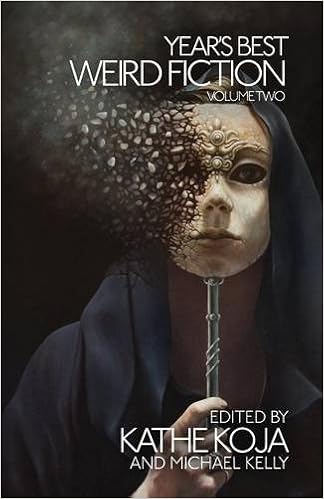
Undertow Publication’s Year’s Best Weird Fiction series reaches its second volume, this time guest-edited by Kathe Koja alongside Michael Kelly. In comparison to the first volume (which I reviewed here), there are less stories this time that draw from the horror tradition of Lovecraft, Aickman, Ligotti & the like, and more dark fantasy. Whereas my memory of the first book is, perhaps erroneously, of stories of people isolated and alone, the stories here seem more concerned with the relationships between characters as a source of weirdness, whether those relationships be familial, romantic, civic, or more ambiguous. There seems to be more focus, too, on linguistic experiment and playfulness–exemplified by the two stories included by Carmen Maria Machado, once of which has the fantastic title Observations About Eggs From the Man Sitting Next to Me on a Flight from Chicago, Illinois to Cedar Rapids, Iowa. And it does exactly what it says on the tin.

There are twenty stories here, and as always each reader will likely have their favourites. Here are mine, with a few brief words why.

Wendigo Nights by Siobhan Carroll – the wendigo has, of course, been part of horror fiction dating back to at least Algernon Blackwood’s tale, but this story finds a new angle on it, featuring not an external creature (probably) but the internalised idea of ‘wendigo psychosis’. Centred around an stranded team of scientists at an Arctic research camp, it also owes something to The Thing's creeping paranoia. No bad thing.

Headache by Julio Cortázar­–not, of course, a new story, but one newly translated. And what a joy it is to read a ‘new’ Cortázar­ story; whilst maybe not quite up there with something like House Taken OverHeadache still has that characteristic aura of matter-of-fact strangeness. It tells of a group of people looking after creatures known as ‘mancuspias’, the exact nature of which is deliberately hard to visualise for the reader. The creatures’ keepers do not seem to know exactly what they are doing (or why) and as conditions deteriorate they increasing suffer from ailments like vertigo and migraines…

Nanny Anne and the Christmas Story by Karen Joy Fowler–a nanny tells the children in her charge a story, which may or may not have some relevance to their life. A story with an ambiguous, skilful blurring of what is real and what isn’t, and which plays on all sorts of childhood fears.

The Air We Breathe Is Stormy, Stormy by Rich Larson–a story similar in tone to some of the more horror themed material from Volume 1, the central character here is a man fleeing society and his responsibilities to work on an oil rig. There’s a mounting sense of tension as he thinks he sees someone or something in the dark and stormy waters, before an unforeseen emotional pressure change at the climax.

The Husband Stitch by Carmen Maria Machado–the other story by Machado might have the better title, but it doesn’t have the narrative and emotional punch of this one. A story of a woman’s sexual awakening and marriage, the weird element here only subtly intrudes, and the full, horrifying significance of it is only revealed towards the end.

Resurrection Points by Usman T. Malik­­–a story which uses the weird to explore political and religious conflict, Resurrection Points is centred on a young boy in Karachi with a miraculous power both to heal and make dead bodies move. As his sense of power grows so does the conflict and violence around him; the two strands of the allegory intertwine and together create a dramatic and disturbing climax.

Exit Through the Gift Shop by Nick Mamatas–a second-person post-modern riff of on the horror campfire tales of ghostly hitchhikers, this generates laughs as much as unease. At least for awhile... Clever, playful, and with some of the most horrific imagery in the anthology: a combination that shouldn’t work but in Mamatas’s hands really does.

Migration by Karin Tidbeck­–the weird is a self-contained world (or series of worlds) in Tidbeck's fascinating story where the inhabitants of a settlement that exists only as a vast staircase are forced to move to every weirder dwelling places.

As my selection above hints at, one of the highlights of Year’s Best Weird Fiction 2 is the range of authors it includes in its comprehensive and generous definition of ‘the weird’. There are new names and old faces; horror, science-fiction and fantasy; works in translation, an almost equal representation of women as men, and writers from a wider variety of countries than in most of anthologies. There’s even stories by writers a few years dead alongside those living, which is another kind of diversity I guess…

Both volumes of Best Weird Fiction come highly recommended by this reader, then, and it will be interesting to see where Undertow take the series with the third volume.

Year’s Best Weird Fiction 2 (UK | US)

11/03/2015

Recommendation: Skein & Bone by VH Leslie

VH Leslie's is a writer who I first became aware of via her work in Black Static and Shadows & Tall Trees, in which her stories were consistently among the best featured. So I've been looking forward to her debut collection for a long time, and by god Skein & Bone from Undertow Publications doesn't disappoint. In fact, it's one of the best collections of quiet, strange horror I've read for a long time.

Namesake, the opening story, perhaps sums up Leslie's approach: the story of a woman named Burden, trying to lose her unfortunate surname by finding a husband is intricately constructed from the outset, with every detail note perfect. When Burden meets Blithe, a man at a bar, the reader knows her anticipated happy ending isn't on the cards, but the actual ending is both chillingly ambiguous and clear like fine crystal. Namesake showcases Leslie's skill both at wordplay and literary allusion, neither of which detract from the horrific denouement.

There are almost too many highlights in this collection: the deeply unsettling haunting in The Quiet Room; the fantastic allegory of The Cloud Cartographer, the dark, dark comedy of Ghost and the hotel-based psychological horror in The Blue Room. There's plenty of uncanny things happening in these stories but what makes the unease really hit home is the emotional charge behind them all. Grief, loss and missed opportunities haunt Leslie's characters as much as the supernatural or ghostly.

Many of the stories use as a central metaphor something that is handmade, traditionally crafted: old dresses in Skein & Bone, the decoration of a new house in Ulterior Design (with yellow wallpaper, natch), the cooking of preserves in Preservation. There's a similar feel to the stories themselves: these are handcrafted, every allusion and metaphor woven together to make something unique. For this reason, Leslie excels at the endings of her stories: both the literal and the symbolic come together. Indeed, in the perfect last line of Preservation you know longer know or care which is which.

Absorbing, subtle, scary, exquisite - you really, really need to read Skein & Bone. (UK | US)

12/22/2014

Favourite Short Stories of 2014

I've been keeping a list of the best short stories I read this year - they weren't all necessarily published this year, but they're all relatively recent. I read a lot of short stories, so although there's nearly a hundred below that doesn't mean I've not been very strict in selecting what to include. Each story had to impress me enough to make a note of it in the first place, and then still seem as impressive when I whittled the list down for this post.

I've tried not to include too many stories from any single author or from any specific book; in all cases I've listed the publication I read the story in, not necessarily where it was originally published.

Last year I had a few emails from readers saying they discovered some new stories from the 2013 list, so I hope that's the case this time. And a big cheesy thank you to all the authors & publishers, for the inspiration, exhilaration (and not a little envy) your stories gave me.

Nina Allen: Seeing Nancy (The Mammoth Book Of Ghost Stories By Women)
Stephen Bacon: Apports (Black Static #36)
Stephen Bacon: I Am A Creation Of Now (Peel Back The Sky, Gray Friar Press)
Stephen Bacon: The Trauma Statement (Peel Back The Sky, Gray Friar Press)
Richard Farren Barber: Bus Routes Through the Sticks (The Horror Fields, Morpheus Tales Publishing)
Richard Farren Barber: Where The Stones Lie (The 13 Ghosts Of Christmas, Spectral Press)
Jasper Bark: How The Dark Bleeds (Stuck On Your & Other Prime Cuts, Crystal Lake)
Laird Barron: Nemesis (Primeval: A Journal Of The Uncanny #1) 
Simon Bestwick: A Kiss Of Old Thorns (The Condemned, Gray Friar Press)
Michael Blumlein: Success (Year's Best Weird Fiction, Undertow)
Eric Brown: The Disciples Of Apollo (Ghostwriting, Infinity Plus)
Eric Brown: The Man Who Never Read Novels (Ghostwriting, Infinity Plus)
Pat Cadigan: Chalk (This Is Horror chapbook)
Chloe N Clark: Mud (The Rain, Party, & Disaster Society Feb 2014)
Chloe N Clark: Who Walks Beside You (Supernatural Tales #25)
Ray Cluley: The Festering (Black Static #36)
Ray Cluley: Water For Drowning (This Is Horror chapbook)
Ray Cluley & Ralph Robert Moore: The Space Between (Shadows & Tall Trees 2014, Undertow)
Erin Cole: Between Feathers & Furs (February Femme Fatales)
MR Cosby: Necessary Procedure (Dying Embers, Satalyte Publishing)
MR Cosby: Turning The Cups (Haunted, Boo Books)
Anthony Cowin: The Brittle Birds (Perpetual Motion Machine)
KT Davies: Zombie Worms Ate My Hamster (Worms, Knightwatch Press)
Kristi DeMeester: Like Feather, Like Bone (Year's Best Weird Fiction, Undertow)
Paul M Feeney: The Weight Of The Ocean (Phrenic Press)
Gary Fry: Biofeedback (Best British Horror 2014, Salt)
Terry Grimwood: Red Hands (The Exaggerated Man & Other Stories, The Exaggerated Press)
Terry Grimwood: Soul Masque (Spectral Press chapbook)
Stephen Graham Jones: The Elvis Room (This Is Horror chapbook)
Rachel Halsall: The Conch (Hauntings, Hic Dragones)
Frances Hardinge: Slink-Thinking (La Femme, NewCon Press)
Hannah Kate: Lever's Row (Hauntings, Hic Dragones)
Holly Ice: Trysting Antlers (La Femme, NewCon Press)
Jane Jakeman: Adoptagrave (Supernatural Tales #16)
Carole Johnstone: Scent (The Bright Day Is Done, Gray Friar Press)
Carole Johnstone: Stomping Ground (The Bright Day Is Done, Gray Friar Press)
Joel Lane: Like Shattered Stone (Joel Lane Archive, Spectral Press)
Emma Lannie: There Is A Light & It Never Goes Out (After The Fall, Boo Books)
VH Leslie: Namesake (Black Static #36)
VH Leslie: The Quiet Room (Shadows & Tall Trees 2014, Undertow)
Alison Littlewood: The Dog's Home (The Spectral Book Of Horror Stories, Spectral Press)
Livia Llewellyn: Furnace (Year's Best Weird Fiction, Undertow)
Sean Logan: The Tagalong (Supernatural Tales #27)
Johnny Mains: Aldeburgh (Frightfully Cosy and Mild Stories for Nervous Types, Shadow Publishing)
Usman T Malik: Ishq (Black Static #43)
Nick Mamatas: And Then, And Then, And Then... (Innsmouth Free Press)
Amelia Mangan: If I Were You (X7, Knightwatch Press)
Amelia Mangan: These Blasted Lands (After The Fall, Boo Books)
Helen Marshall: Death & The Girl From Phi Delta Zeta (Gifts For The One Who Comes After, Chizine)
Helen Marshall: In The Year Of Omens (Gifts For The One Who Comes After, Chizine)
Helen Marshall: We Ruin The Sky (Gifts For The One Who Comes After, Chizine)
Laura Mauro: When Charlie Sleeps (Black Static #37)
Gary McMahon: For The Night Is Dark (Knightwatch Press chapbook)
Gary McMahon: The Ghost Of Rain (Tales Of The Weak & Wounded, Dark Regions Press)
SP Miskowski: This Many (Little Visible Delight, Omnium Gatherum)
Alison Moore: Eastmouth (The Spectral Book Of Horror Stories, Spectral Press)
Alice Munro: Queenie (Penguin chapbook)
Scott Nicholay: Eyes Exchange Bank (Year's Best Weird Fiction, Undertow)
Thana Niveau: And May All Your Christmases (The 13 Ghosts Of Christmas, Spectral Press)
Thana Niveau: Stolen To Time (From Hell To Eternity, Gray Friar Press)
Antony Oldknow: Ruelle Des Martyrs (Supernatural Tales #26)
Jonathan Oliver: Baby 17 (British Fantasy Society Journal #11)
Reggie Oliver & MR James: The Game Of Bear (The Mammoth Book Of Best New Horror #21)
Stephen Palmer: Palestinian Sweets (La Femme, NewCon Press)
Sarah Pinborough: Collect Call (The Mammoth Book Of Ghost Stories By Women)
John Llewellyn Probert: The Secondary Host (Best British Horror 2014, Salt)
Iain Rowan: The Grey Ship (52 Songs, 52 Stories)
Iain Rowan: Waiting For The Man (52 Songs, 52 Stories)
Nicholas Royle: Dead End (X7, Knightwatch Press)
Nicholas Royle: The Reunion (The Mammoth Book Of Best New Horror #21)
Lynda E Rucker: Beneath The Drops (The Moon Will Look Strange, Karoshi Books)
Lynda E Rucker: The Moon Will Look Strange (The Moon Will Look Strange, Karoshi Books)
Karen Runge: The Philosopher (Pantheon July 2013)
Daniel I Russell: Following Orders (Phobophobias, Western Legends Publishing)
Ray Russell: Company (Supernatural Tales #16)
Eric Schaller: To Assume The Writer's Crown: Notes On The Craft (Shadows & Tall Trees 2014, Undertow)
Robert Shearman: Granny's Grinning (The Mammoth Book Of Best New Horror #21)
Robert Shearman: It Flows From The Mouth (Shadows & Tall Trees 2014, Undertow)
Angela Slatter: Home & Hearth (Spectral Press chapbook)
Phil Sloman: P Is For Pathophobia (Phobophobias, Western Legends Publishing)
Michael Marshall Smith: Author Of The Death (Best British Horror 2014, Salt)
Elizabeth Stott: Touch Me With Your Cold, Hard Fingers (Best British Horror 2014, Salt)
Simon Strantzas: The Nineteenth Step (Year's Best Weird Fiction, Undertow)
Cameron Suey: East (After The Fall, Boo Books)
Adrian Tchiakovsky: Lost Soldiers (The 13 Ghosts Of Christmas, Spectral Press)
Steve Rasnic Tem: The Night Doctor (The Spectral Book Of Horror Stories, Spectral Press)
Stephen Volk: The Magician Kelso Dennett (Best British Horror 2014, Salt)
Mark West: The City In The Rain (Strange Tales, PenMan Press)
Mark West: A Quiet Weekend Away (Strange Tales, PenMan Press)
Conrad Williams: The Jungle (Nightjar Press chapbook)
Neil Williamson: Amber Rain (The Ephemera, Infinity Plus)
Mercedes M Yardley: Black Eyes Broken (Little Visible Delight, Omnium Gatherum)
Rio Youers: Outside Heavenly (The Spectral Book Of Horror Stories, Spectral Press)