"The triumph of Everington’s first novel is that, while hinting at lofty literary precedents, it cumulatively takes on an unsettling voice all of its own." The Guardian
Music For Writers this week features none other than Neil Williamson, a writer whose work I always both admire and enjoy. I recently read his BSFA-nominated novel The Moon King and (all to be predictably) loved it; you'd do well to check out his short story collection Secret Languagetoo.
Based on the below his taste in music—and films, and creepy French TV shows—is spot on too.
Take it away, Neil: As a writer who works mostly in public spaces, I started using writing music initially as a means of boxing my attention off from my environment. With the right music and noise cancelling earbuds, I find I can dial into the right mindset for thinking about my story and getting the words down on the page even when people are talking and doing things around me. It has to be the right kind of music though: something that in itself won’t be distracting (my best writing sessions are the ones where I’ve barely been aware of the music). This usually means no words and no huge dynamic or stylistic shifts. I used classical music for years, but these days I’m turning more and more to modern TV and film composers.
Here are some of the perennials on my Spotify playlist:
Olafur Arnalds - Only The Winds
Arnalds’ composing style is the perfect example of what I look for in writing music. It’s evenly tempered and paced with enough body to block out most background noise. It’s also heartbreakingly evocative. See also: his soundtrack to the TV show, Broadchurch.
This Will Destroy You - Dustism For louder environments, I tend to turn to post rock. I first saw This Will Destroy You at Glasgow’s Art School at around midnight after a long day of watching various bands. They utterly melted my head. This track is typical of their ocean-like blend of layers of noise and musicality. Blast this up to 11 and nothing gets through.
Max Richter - The Departure Suite
Richter has rightly found favour in the genre community for his wonderful soundtracks for the likes of Arrival (along with Johann Johannson) and Black Mirror, but I really adore this soundtrack for the TV show The Leftovers. 'The Departure' is a recurring theme that turns up now and again in different arrangements and I find it really transportational. Maybe one day I’ll find time to watch the actual show.
Nick Cave & Warren Ellis - Song For Bob
Several years ago I went to see a cowboy movie starring Brad Pitt. Several people left the cinema within the first half hour on realising that it wasn’t “a cowboy movie starring Brad Pitt”, it was The Assassination Of Jesse James By The Coward Robert Ford, a nuanced indie movie about hero-worship featuring terrific performances from Pitt as well as Casey Affleck and Sam Rockwell (who is never less than terrific in anything). One of the best things about the movie is the lonesomely plaintive soundtrack by Nick Cave and Warren Ellis. (Cave actually turns up as a barroom troubadour late on in the film too.) I recommend both the film and the music wholeheartedly.
Mogwai - The Messiah Needs Watching
Kind of coming back to post rock here, but not really. It’s been interesting watching Mogwai explore their composing chops in a succession of soundtracks in recent years. This is from the first one I heard them do, the spooky French TV show, Les Revenants. It was a toss up between this and Atomic. Both full of great music, absolutely band on the brief for their projects but still unmistakably Mogwai.
I first came across Neil Schiller's fiction when I read his debut collection, Oblivious. And what a debut it was: dark, brooding tales of people dealing with (or failing to deal with) everyday life, written with such an eye for detail, both physical and emotional, that saying things such as he's like a British Carver didn't seem entirely stupid. Or, if you prefer a more genre-related comparison, he's like a Gary McMahon without all that supernatural stuff.
Schiller's new collection, (Slight Return) is a set of stories based around music, with nearly all taking their title from a song, usually from the 90s (you can listen to a Spotify Playlist of them all here). If you think this might mean these stories are more hopeful and upbeat than those in Oblivious then, um... no. Not noticeably in most cases. While music might provide temporary release for some of the characters here, it's also a source of frustration for failed musicians, an indication of the lack of communication between father and daughter, a reminder of a lost and irrecoverable past.
If this all sounds to bleak, then it's worth pointing out that it's all wrapped in prose as insightful and gorgeous as this:
"There's something exciting about waking up in a city. Not the suburban sprawl that most of us spend our lives in[...] I mean right in the middle of a proper city—clattering heels, laughter, fast-moving traffic. The clamour of the stirring sheets reverberates; it echoes back from the municipal stonework and spirals up into a vast empty sky [...] I've felt this every time I've opened my eyes in London, no matter how grey and dirty the bed or couch or floor I've been on, and I feel this way now."
I guess if that doesn't convince you to buy this book (and Oblivious, if you haven't already) no further words of mine will. So I'll just end this review with one of my favourites of the title songs from this brilliant collection of stories. Play on:
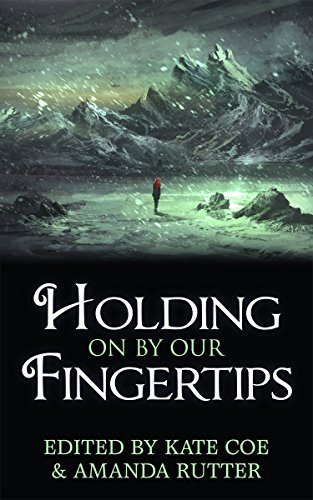
The anthology Holding On By Our Fingertips, which features my story 'Heatstroke Harry', is out now from Kristell Ink/Grimbold Books, and mighty fine it looks too. It's a set of stories about the end of the world—so perfect cheery holiday reading—and features apocalypses from Ren Warrom, Phil Sloman, Terry Grimwood and Charlotte Bond, among others.
'Heatstroke Harry' is a story about climate change, cognitive dissonance, addiction, and prophecy. It's not strictly speaking horror, but it is a story about what scares me, about the unease I feel contemplating what's likely to come. Like the central character in this tale, I try not to think about the future too much.
The book launches at Waterstones Oxford and I'll be in attendance. Hope to see a few of you there.
This week on Music For Writers, we have Stephen Palmer, whose inventive and brilliant science fiction novels like The Girl With Two Souls and Hairy Londonyou really should be checking out. But what music does he find inspiration from for such original works, I hear you say. Well, funny you should ask...
Take it away, Stephen:
Like many authors I never listen to music when writing, and when editing or tidying-up I only listen to instrumental music. Words plus mental words equals problems. Music is a huge part of my life, so my other rule is never to listen to anything I know well or which has strong melodies. What I use is tranquil, usually ambient music which is too diffuse or improvised to remember in any detail. This music "sets a mood" for me, in that it allows me to settle down in front of the screen. Here's five from the iTunes list on my Mac…
1. Arvo Pärt - Tabula Rasa.
A beautiful piece by a much admired composer, which slowly unfolds and which is ideal for soothing the fevered brow at keyboard...
2. Loop Guru - The Third Chamber.
Although these remixes by the much-missed world music explorers do have a melodic heart, their repetition makes the music ideal for 'getting lost in' so that the mind is not too distracted. A really wonderful CD this, which is also great for long-distance driving.
3. Toumani Diabaté - The Mandé Variations.
Like many, I was completely seduced by the sound of the kora when I heard it, and have subsequently bought lots of this master's albums (and a kora). Quite the most beautiful sound from Africa.
Alas Carolyn Hillyer and her other half Nigel Shaw suffer from the New Age tag, which is a shame, as these two musicians - amongst the most exceptional I know - are both superb and deserve a wider audience. Cave Of Elders is completely improvised, consisting of multi-tracked wordless voice. Perfect for sinking into without realising it.
Tangerine Dream, Klaus Schulze and Robert Schröder was the soundtrack I grew up to, but almost all subsequent Berlin School music suffers from people just copying the classics. This album however manages to mix keyboards and sequencing into something more.
After a pause for holidays, Music For Writers is back, this week with selections from Ray Cluley. Ray is one of my favourite authors writing at the moment (his was the first story for The Hyde Hotel); if you're reading this blog chances are you'll agree with me; on the off-chance you aren't aware of his work why not try his collection Probably Monsters or the chapbook Water For Drowning...
And if the below is anything to go by, he likes some good tunes as well, so let's get this show on the road.
Take it away, Ray:
Like many other writers (such as this lot James has gathered up), I like to use music when I’m writing. Music can put me in the zone. Music can lend a helpful atmosphere or provide a suitable emotional backdrop. Music can inspire (muse-sic).
Usually I favour scores and soundtracks from films and TV – I could fill an entire blog with my favourites of those, easy – taking what has been used to support an existing narrative and using it to either support my own or inspire one. If it’s the former, I’ll pick something in keeping with the mood I want or the genre and put it on repeat. Not only does it get me in the right mood-set but I’m convinced it affects my word choices and the structure of the work as well.
Listen to how Angelo Badalamenti so beautifully describes and performs (with a passion that is practically sexual!) the relationship between narrative and music here:
Incidentally, the Twin Peaks score, and the soundtrack used for Fire Walk with Me, are two of my favourites albums for writing to. However, for this ‘Music for Writers’ project I’m going to (try to) list music that does not fall into the score or soundtrack category…
I’ve made it pretty clear once or twice in the past that I’m a huge fan of this Icelandic band. Their music (avant-rock, apparently) is ethereal, elegiac, mournful… They have some happy songs, too, but it’s the more otherworldly contemplative material I like best. The melancholy music. The haunting music. Like ‘Lúppulagiđ’:
Sigur Rós were most directly influential regarding my novella, Within the Wind, Beneath the Snow, which I wrote entirely while listening to a repeated mix of their albums. I did the same recently for a story called ‘The Whalers Song’ which I wrote for Ellen Datlow’s horror stories of the sea anthology, The Devil and the Deep.
[Disclaimer: Okay, so their music has been used plenty of times in films and TV, but that wasn’t how I discovered them and so it doesn’t break my self-imposed rule.]
I was lucky enough to see Pook perform at St George’s in Bristol and I’ll be treasuring that memory forever (not least of all because I went with the wonderful Volks). This song – ‘Backwards Priests’ – is one of my favourites:
Again, it breaks my own self-imposed rules a little as part of this particular track was used in Stanley Kubric’s Eyes Wide Shut, but I’m allowing it (I’m generous like that) because I didn’t know it from a film when I first came across it. A dance teacher I once knew used it (brilliantly) for a piece she choreographed with her students, and I in turn used the music in my Creative Writing class. I showed the students a clip from The Ring remake – the black and white images and sequences from the cursed video footage – and then played this music and asked them to write their own version of the cursed tape, just free-writing to the music, noting anything and everything they thought of while it played. They came up with some beautiful ideas. I do the same thing myself as a writing warm-up sometimes.
Right, turns out I’m rubbish at not including scores or soundtracks. I discovered Clannad via the wonderful Robin of Sherwood series, and they provided the theme to Harry’s Game, as well as a superb song for The Last of the Mohicans. But this one, ‘Coinleach Glas An Fhómhair’, is my favourite.
I like folk music a lot and, as with Sigur Rós, I like it when lyrics are foreign so I can’t understand the words, otherwise I’d likely be distracted and/or overly influenced by them. When I first started writing I was a fantasy nerd and Clannad were great for that genre (not least of all because of the Robin Hood link). I may not write that kind of fantasy often any more, but I do still listen to Clannad while I write. There’s a great deal of comfort in the familiarity. I also like the music of former band member Enya, and also Loreena McKennitt, for the same sort of vibe.
[Note: By fantasy nerd I mean I was a huge fan of Dungeons & Dragons and other roleplaying games, and there’s a lot to be said for the benefits of such a hobby when it comes to honing narrative skills and ideas concerning character creation and development. Besides, it’s great fun. I fully recommend it.]
I heard their debut album – Dummy – in a record shop back in 1994 and bought it immediately. I’d never felt so instantly compelled to buy an album before (and only once again since – see below). I’d heard less than one full song before handing over my cash and did not regret the purchase one tiny bit: Dummy is not only one of my favourite writing albums, but one of my favourite albums of all time. I love the second album, too (Third, not so much) and desperately wish there were more.
Portishead are trip hop, but I just thought the music sounded spooky. Melody Maker described it as “musique noire for a movie not yet made”. Perfect for writing, in other words.
Turns out Facebook can be good for some things, sometimes. Nathan Ballingrud once posted a link to this song he liked, ‘Both Sides’, by She Keeps Bees, and – curious – I had a listen. I bought the album immediately afterwards (this being the only time post-Portishead that I’ve been so compelled).
Goes well with whiskey.
Bonus track: Elton John (sort of)
I’m not really a fan of Elton John’s music at all. In fact, I really dislike Elton John’s music, if I’m being honest. But when I was writing ‘Pins and Needles’ I made a play list of space-themed songs (something the main character had in the story) and included at as part of that mix. There were songs like ‘Out of Space’ by The Prodigy and ‘Space Dog’ by Tori Amos and a fair few songs by David Bowie (I love The Prodigy, and I love Tori Amos, and who doesn’t love David Bowie?) but it was Elton John’s ‘Rocket Man’ that proved crucial for the story’s… climax. And because of that, because the song (which I’ve never voluntarily listened to ever again since) was so directly important to the story itself, it feel it needs to get a mention here.
[Ray is right, never voluntarily listen to this song - JE]
Note: The only other time a song has had such a direct impact on a story was ‘Red Right Hand’ by Nick Cave and the Bad Seeds, which I used with more subtlety in ‘When the Devil’s Driving’.
So there you are, a few of the songs and albums that help me write. Thanks for inviting me to share, James. I’m looking forward to seeing what other people use…
This week's Music For Writers is courtesy of Tim Major, an author of some of my favourite stories of the last few years (I first read his work when I reviewed his debut novella Carus & Mitch). And - hurrah! - it looks like he has a great taste in music too, based on his selections below.
Take it away, Tim:
I always listen to music when I’m working and when I’m writing. Nowadays I work from home as a freelance editor; without a commute, the time I spend at my desk is my main opportunity to listen to music. Incidentally, when I was younger I daydreamed about a jukebox that would allow you to play any song from any point in history, and today Spotify comes close to fulfilling that dream. I listen to around 300 new albums each year and replay many of those, and old favourites, a great deal more.
The music I choose when I’m writing needs to function as a background – dreaminess is a must. This also means the only music with lyrics I can write to are those that are so familiar that they don’t intrude, or performed by singers I can’t understand – either because of a quirk of delivery, audio effects, or because they’re singing in another language. Finland’s Fonal Records is a great source of ethereal albums, my favourite being Lau Nau’s HEM. Någonstans, which Last.fm tells me is the album I’ve listened to most in the last five years, which I’ll confess comes as something of a surprise until I start playing the album again: it taps into something in my brain. Immediately, I feel serene. Other vocal artists that fit the bill include Grouper, Julia Holter and Thom Yorke (at least, his first solo album, TheEraser). This year’s debut album from Holy Motors, Slow Sundown, contains a raft of songs that would have all fit as Roadhouse end-credits songs for Twin Peaks: The Return and which settle at the back of the brain rather than prodding at the front. But for my first selection I’m going to go with Hope Sandoval and Kurt Vile’s ‘Let Me Get There’ from Until the Hunter: ever since her time fronting Mazzy Star, I’ve found Hope Sandoval’s voice to be a shortcut to bliss.
I’m not afraid of dullness or repetition, as everyone I know socially will attest. Take one of my favourite films, Stalker – I’ve watched it half a dozen times and I swear I’ve fallen asleep every time. (See also, to lesser degree, Pickpocket, In the Mood for Love, Les Vampires.) The first recording of modern minimalist music I heard was Steve Reich’s Music for 18 Musicians, a performance staggering in its precision and hypnotic power. (Possibly, the roots of repetitive were sown early for me: when I was a baby, Mike Oldfield’s Tubular Bells was the only album that would soothe me to sleep.) Albums in the same vein that put me in the zone for writing include Donato Dozzy’s Plays Bee Mask, Porter Ricks’ Biokinetics, Kara-Lis Coverdale’s Grafts, Rafael Anton Irisarri’s A Fragile Geography, Mind Over Mirrors’ The Voice Rolling, Folke Rabe’s What?? and William Basinski’s The Disintegration Tapes. But I’m going to pick a track from one of Alex Zhang Hungtai / Dirty Beaches’ ‘minor’ works, the soundtrack to Water Park (I haven’t seen the film – see note below). I couldn’t begin to estimate how many of my stories have been written to this music.
There are two artists that deserve their own category in a list of my listening tastes. Jim O’Rourke is one of the most prolific experimental musicians imaginable, having worked with Wilco, Sonic Youth, Joanna Newsom, as well as making up half of my favourite post-rock band, Gastr Del Sol, and also finding time to create a handful of sublime pop albums for Drag City. His experimental work with Fennesz (It’s Hard for Me to Say I’m Sorry) and Fire! (Unreleased?) are some of the albums I often return to while writing. Oren Ambarchi has had a similar stellar, and similarly collaborative, career, and his solo albums make me cross-eyed with contentment. Selecting an Oren Ambarchi album means immediately shutting out the world and retreating to a comfortable, secluded place which I imagine to be rather like Roald Dahl’s writing hut. I’m picking ‘Remedios the Beauty’ from my favourite of Ambarchi’s albums, Grapes from the Estate. It’s 15 minutes long, but usually after the first couple of minutes I can barely hear it, like the hubbub of a café, except it’s a café filled with customers that hum happily instead of chatting.
I love jazz, but I listen to it only rarely as a background to writing – usually when I want a hit of adrenaline, and often at the editing stage when my motivation may be flagging. Charles Mingus’ Ah Um hits the spot, as does Thelonious Monk’s Monk’s Music and Sun Ra’s Sleeping Beauty. The one I’ve been returning to most recently while editing my most recent novel is Duke Ellington’s Money Jungle, so that’s my next pick.
Sometimes intensity is what’s required as a background. I rarely write action scenes – possibly a failing of mine – and so when I do, I really need to gear up. Splazsh by Actress works fantastically well, as does the space-techno STRGTHS by SHXCXCHCXSH. For now, I’ll pick an incredible, disorienting live recording from Throbbing Gristle and Factory Floor supergroup, Carter Tutti Void, included on Transverse.
I know that soundtrack albums are often popular with writers, but I find that anything that specifically recalls a film I like is problematic – I wouldn’t want to unconsciously adopt things half-remembered from a favourite film. Soundtracks that are more tonal than melodic work fine: Geoff Barrow and Ben Salisbury’s score to Annihilation being a case in point, or the contextless drones of Dean Hurley’s soundscapes for Twin Peaks: The Return, released as Anthology Resource Vol. 1: △△. This will sound obtuse, but I like listening to scores of films I haven’t seen. I’m planning a novel right now, and the laborious process of creating a synopsis has been soundtracked by Ennio Morricone’s score to Senza Sapere Niente Di Lei, a film about which I know literally nothing. It’s my bonus pick.
First off, on 8th June at Oxford Waterstones I'll be attending the Grimbold Books/Kristell Ink launch for three fine looking anthologies, including Holding On By Our Fingertips, which features my story 'Heatstroke Harry'. Edited by Amanda Rutter & Kate Coe, this is an anthology of stories about the end of civilisation, so why not come along and have a glass of wine before the world goes bang? It also contains stories from Phil Sloman, Charlotte Bond, Terry Grimwood and Ren Warom, among others.
Secondly, assuming the world hasn't actually ended by then, I'll be one of the guests at this year's Edge-Lit convention in Derby on the 14th July. I'll be on two panels and running a workshop, all on spooky ghostly weird things. Other than that, I'll hanging around and chatting and drinking and having a good time. Edge-lit is always a brilliant day and I'm already immensely looking forward to it.