Showing posts with label M.R. James. Show all posts

6/18/2021

Recommendation: Casting The Runes RPG by Paul StJohn Mackintosh


In my younger days, I used to regularly play RPGs, including AD&D, Paranoia, and most relevant here, Call Of Cthulhu, a role-playing game based on the writings of H.P. Lovecraft. It's a bit hazy in my memory, but I think I encountered Lovecraft's mythos via the game first, and then starting reading the fiction. So along with reading Campbell and King for the first time, Call Of Cthulhu was probably another formative stage on my journey to being a writer. (Although other than a tale in The Outsiders, I don't really write Lovecraftian mythos stuff.)

The new RPG Casting The Runes is based on the ghost stories of M.R. James (and mid-40s me much prefers M.R. James to Lovecraft). After getting the rulebook, I didn't know how I'd actually play the game, but via the wonders of Zoom, I revived the gaming group I'd played with 20 years previously, and ran a few sessions.

The rulebook for Casting The Runes is organised exactly as you might expect, with some introductory remarks followed by sections on character creation (characters here are called 'Investigators'), the game mechanics, monsters and magic, the historical time period, running games, and two sample adventures. The rules themselves are somewhat different to RPGs I've played before, especially when it comes to using 'Investigation Skills' which aim to avoid ludicrous, game-damaging situations where a highly trained investigator rolls a 1 and so misses a really obvious clue like a huge bloodstain right in front of their nose. As you might imagine, while combat features, players aren't super-heroes, and fighting the supernatural beings is likely to be more of a last resort than a significant feature of every play session. I thought the 'Stability' mechanic, allowing for the psychological impacts of player encounters with ghosts, black magic and like, was really well done, and adds a sense of tension and danger to even non-physical confrontations.

Where the book really shines is in the setting specific sections, both in giving the background for the Edwardian time-period, and information about running games in the style of M.R. James.  The two example adventures in the book are excellent introductions to the game. The book itself is really nicely presented, with period B&W photographs and creepy illustrations throughout really helping to set the tone.

The only downside of the rulebook for me was that I could have done with a few more examples of character creation and the rules in play. (The rules are tweaked versions of a more generic ruleset called Gumshoe, which I looked into online to get a feel for it.)

But overall this was a really interesting game, and both me and my friends had great fun playing it. And it was really enjoyable to come back to RPGs after all these years. Hopefully, we'll keep playing.

In summary, if you're an experienced role-player and are interested in an investigation focussed supernatural game, I'd highly recommend this. If you're new to RPGs and intend to be the run the sessions, there are probably easier first games out there, but if the M.R. James connection appeals to you don't let that put you off, you just might need to do a bit of online reading before stating your first game. There's also an friendly Facebook group run by the author where you can ask questions & find character sheets etc.

You can purchase the game online, in physical or PDF formats, at The Design Mechanism or DriveThru RPG.

10/05/2018

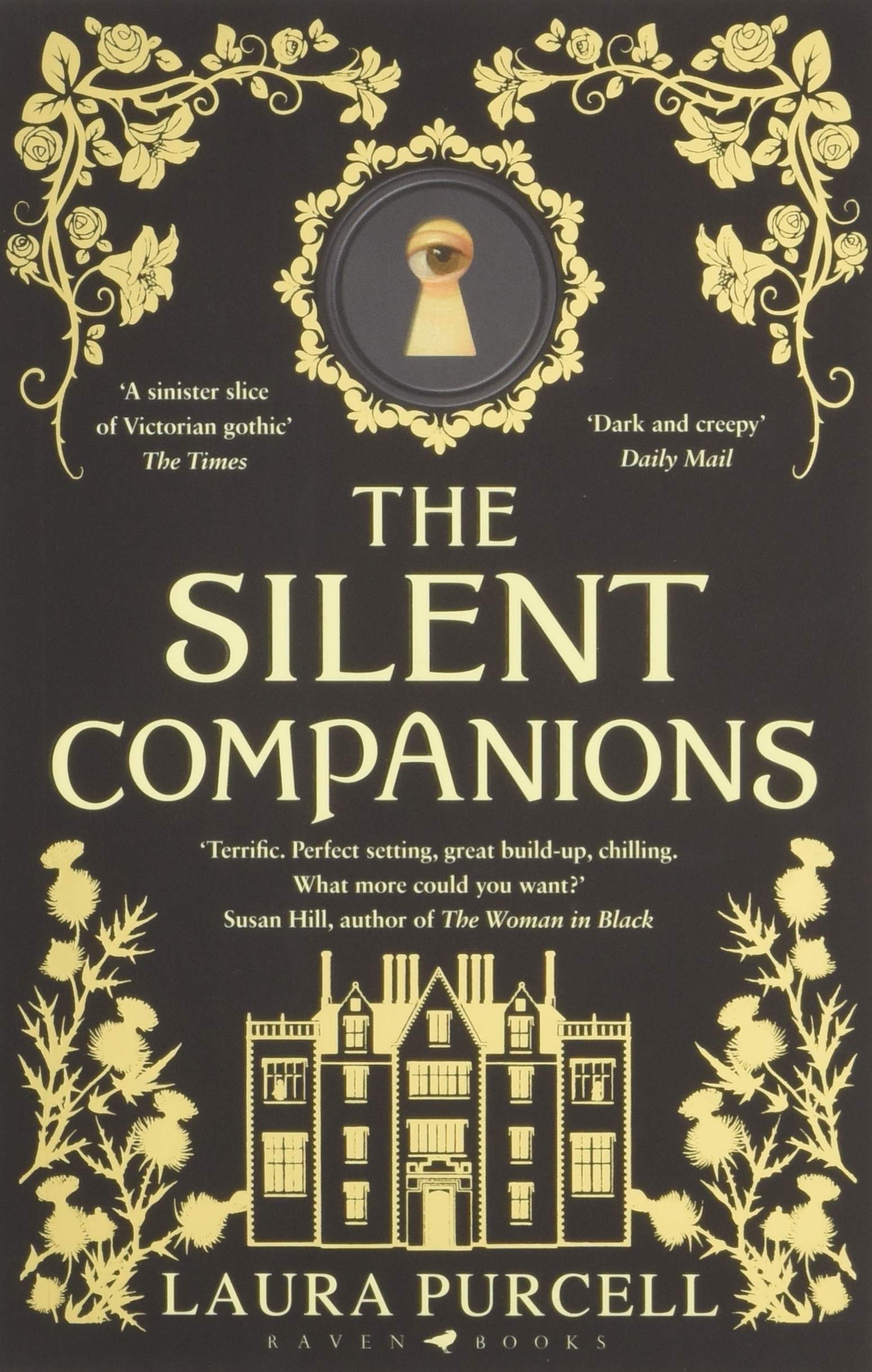
Recommendation: The Silent Companions by Laura Purcell

I had the pleasure of being on a couple of panels with Laura Purcell at Edge-Lit this year, and in a like-the-cut-of-her-jib moment I bought her novel The Silent Companions as a result. And I'm very glad I did, because I enjoyed it immensely.

It's a story about a Victorian widow called Elsie, sent out to The Bridge, a country estate with requisite surly staff, strange noises, and locked rooms. Its structure is intriguingly modern, switching between three time-frames with ease, but at its heart this is a modern take on the gothic novel.

So, a confession: beyond the classics, I'm not a massive fan of the gothic mode in horror fiction. Something like The Woman In Black, for example, I found slightly underwhelming, the most disturbing thing being the faint but persistent sense of deja-vu its tropes induced. And The Silent Companions sure ticks all the gothic boxes: its period setting; its isolated country house; the cursed past implicit in present misfortunes; the gradual escalation of its haunting.

But there's a pleasing darkness and grit to The Silent Companions which to my mind elevates it behind mere literary mimicry. It's there in the intrusion of industrial London into its rural setting, in the way its doesn't flinch from the cruelty of the times it evokes, or draw back from the violence of its narrative. The spirit of both Henry and M.R. James can be felt, the former in the ambiguity about how much the haunting is real or psychological, the latter in the way any sense of a cosy narrative is punctured by scarily physical manifestations of the supernatural—like James, Purcell has the gift of being able to suggest such things with a single sentence or image that are all the more powerful for their compactness.

Its wonderfully done, and manages that rare trick of slowly building a sense of unease while also being a genuinely page-turner. I'd heartily recommend it.

The Silent Companions (UK | US)

10/10/2016

Recommendation: You'll Know When You Get There

I've been a fan of Lynda E. Rucker's fiction since reading her debut The Moon Will Look Strange, a fantastic collection of strange and haunting fiction. Her second collection, You'll Know When You Get There, is if anything even better.

The first story, The Receiver Of Tales, is the perfect opener, introducing the reader to many reoccurring themes in the collection as a whole. Rucker's central character is isolated, both physically and emotionally, leaving her vulnerable to the events that follow. The Receiver Of Tales is a story about stories and how they might shape us: a idea represented here by the fact the titular tales are physically scrawled into the protagonist's body. Stories might be things we literally can't escape from.

Many of the finest tales in this book are about the intersection between fiction and reality and the darkness to be found there. Rucker's knowledge of the writers who have come before her is clear, but never deployed in an obvious, derivative or cheap way. There are nods to M.R. James, Charlotte Perkins Gillman, Robert W. Chambers and Shirley Jackson, but Rucker's work stands proudly apart from any of her influences. Indeed, a story like Who Is This Who Is Coming?, a narrative set firmly in M.R. James country, might be considered a warning about the dangers of identifying too closely with such past masters of horror, lest what we see in their works turns out to be all too true. It's quite simply a masterpiece.

What also comes across is how damn good Rucker is at evoking a sense of place, both the physical character of a landscape and how it might affect the people within it. The stories take us from the Irish countryside of Widdershins (one of the scariest stories here), via the American lakes in This Time of Day, This Time Of Year, to a strange and decaying forest which doesn't appear on any map in The Wife's Lament. Into these places stumble Rucker's characters, unsure of the rules that govern these landscapes until it might be too late.

One of the finest pieces here, quietly devastating, is Where The Summer Dwells. A nostalgic, elegaic piece about the American South and the way we might be haunted by our memories, it's a horror story which aspires to more than mere scares. It is, in the most heartbreaking sense of the word, beautiful.

And then, there's not one but two stunningly original takes on the haunted house story. The House on Cobb Street is a twisted masterpiece: the titular house may or may not be real, and its unclear if those haunted were real either. Also in doubt is the reality of the abode in The Haunting House; does it exist outside the confused narrator's dreams of it? Regardless, she leaves her life behind to try and find it (and maybe find the mysterious being she has dreamt might be inside it) as if it were calling to her. "Journeys end in lovers meeting", indeed.

It's a brilliant end to what is, quite simply, one of the short story collections of the year. You'll Know When You'll Get There is available in a beautiful hardback edition from Swan River Press. You can order it here.